Former Mexican governor charged in case of 43 students who vanished in 2014

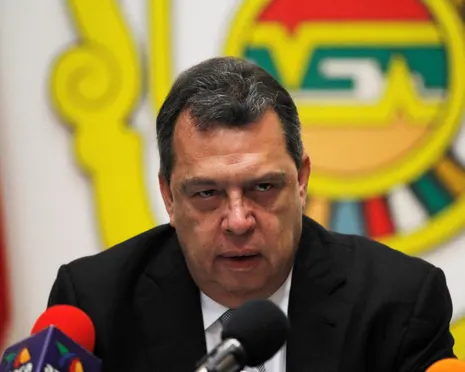
Table of Contents
Justice Moves Forward in Mexico’s Most Haunting Student Disappearance Case
Wanderstayfinder.com – Mexico’s legal system has taken a significant step toward accountability in one of the nation’s most devastating cases of state-sponsored violence. Ángel Aguirre, the former governor of Guerrero state, now faces formal charges connected to the mysterious vanishing of 43 young students more than a decade ago. The accusations center on forced disappearance and obstruction of justice, with prosecutors alleging that Aguirre personally directed the destruction of critical surveillance footage that could have revealed the truth about what transpired on that fateful autumn night.
Charges Filed After Judicial Review
A Mexican judge confirmed on Wednesday that the attorney general’s office had accumulated sufficient evidence to proceed with formal charges against Aguirre. The ruling also mandated that the former governor remain detained in a maximum security facility while awaiting his trial. This development marks a pivotal moment in a case that has captivated the nation and drawn international attention to systemic failures within Mexico’s justice apparatus.
The charges specifically relate to events surrounding the students from the Raúl Isidros Burgos teacher training college, commonly known as the Ayotzinapa institution. On September 26, 2014, these young men boarded buses in the city of Iguala, intending to travel to Mexico City for a political demonstration. Instead of reaching their destination, they disappeared into the night, becoming symbols of the brutal cartel violence and government impunity that have plagued Guerrero state for years.
Defense Challenges the Prosecution’s Case
Guillermo Baradas, representing Aguirre, immediately contested the allegations against his client. Speaking to journalists following the judicial ruling, Baradas emphasized that his legal team had submitted compelling evidence showing that Aguirre participated in a high-level meeting when the surveillance videos were supposedly transferred into his custody.
“We presented evidence demonstrating a high-level meeting attended by Mr Ángel Aguirre at the time the videos were allegedly handed over to him.”
The defense attorney’s statement suggests that Aguirre may not have had the opportunity to order the destruction of the tapes, or that the timeline of events does not support the prosecution’s narrative. This argument could prove crucial as the case moves toward trial proceedings.
A Case That Transformed Mexican Justice
The Ayotzinapa case has become emblematic of Mexico’s struggle with organized crime and institutional corruption. What began as a local incident quickly escalated into a national crisis when the government’s initial investigation appeared to cover up the involvement of federal forces. Both police and military personnel were eventually implicated, either through direct participation in the students’ abduction or through their failure to intervene as the young men were taken away, presumably to be killed.
The government at the time attempted to shift blame entirely onto a local criminal gang and municipal police officers. Suspects were reportedly tortured into providing false confessions, and physical evidence from the crime scene was allegedly manipulated to support the official narrative. This elaborate coverup only deepened public distrust and fueled years of protests demanding genuine accountability.
Historical Context and Current Significance
Aguirre’s indictment represents the most substantial breakthrough in the Ayotzinapa case since the 2022 arrest of Jesús Murillo Karam, who served as Mexico’s attorney general during the students’ disappearance. Murillo Karam’s detention signaled a renewed commitment by Mexican authorities to pursue those responsible for the tragedy, regardless of their political standing.
More than ten years after the students vanished, the human toll remains staggering. Only three of the 43 young men have had their remains positively identified through forensic analysis. The fate of the remaining 40 students continues to haunt families, communities, and the entire nation. The uncertainty surrounding their disappearance has become a powerful symbol of the countless victims of Mexico’s drug war who never received justice.
Voices from the Families Demand Truth
Meltión Ortega, speaking on behalf of the 43 students and their families, articulated the collective frustration that has built over more than a decade of inadequate responses. The families have witnessed numerous investigations, arrests, and promises, yet many feel that the system continues to prioritize political expediency over genuine accountability.
“We want no more deception; we want to be told the truth and for those responsible to be punished. The victims from Guerrero deserve to have the actual perpetrators and the masterminds punished, rather than just seeing a charade, as has happened in serious cases of human rights violations.”
The Sheinbaum Administration’s Commitment
President Claudia Sheinbaum has placed the Ayotzinapa case at the center of her administration’s justice agenda. Last year, she established a dedicated investigative unit specifically tasked with examining all aspects of the students’ disappearance. The president has publicly committed to exhausting every avenue to uncover the complete truth about what happened to the young men from Ayotzinapa.
During a recent news conference, Sheinbaum emphasized her personal dedication to the cause. “I’m going to put all my effort, all my energy, all my willpower [towards obtaining truth and justice],” she declared to reporters. Her administration’s approach reflects a broader recognition that resolving the Ayotzinapa case is essential for restoring public confidence in Mexico’s institutions.
Looking Ahead
As Aguirre awaits trial in maximum security, the case continues to evolve. The surveillance tapes, if they can be located or reconstructed, may provide additional clarity about the events of September 26, 2014. The ongoing investigation has already revealed layers of complexity that challenge the official narrative established more than a decade ago.
The outcome of this case could have far-reaching implications for how Mexico addresses similar instances of state violence and institutional failure. For the families of the 43 students, and for millions of Mexicans who have suffered under cartel violence and government corruption, the pursuit of justice remains an ongoing struggle—one that Aguirre’s charges suggest may finally be moving toward resolution.
Related Reading
Frequently Asked Questions
What is Former Mexican governor charged in case?
Former Mexican governor charged in case is the main topic of this guide. The article explains the context, practical details, and next steps readers should understand.
Why does Former Mexican governor charged in case matter?
Former Mexican governor charged in case matters because readers are looking for a useful answer, not just a short summary. Good content should match search intent and help them decide what to do next.