
British national shot dead in Kashmir by Pakistani security forces

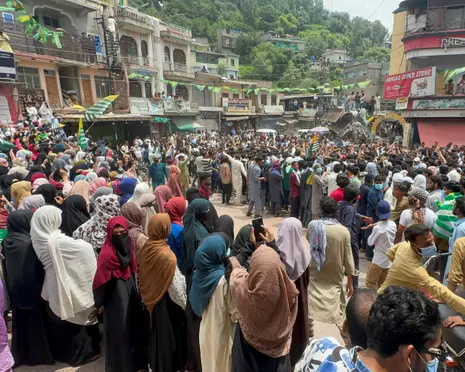
Table of Contents
British Citizen Killed as Kashmir Clashes Intensify Under Crackdown
Wanderstayfinder.com – A British national has died after being struck by a stray bullet during violent confrontations in Pakistan-administered Kashmir, marking one of the most serious incidents to involve foreign nationals in the region’s ongoing turmoil. Mohammad Akhtar, a 50-year-old resident of Peterborough, was killed on 9 June when security forces opened fire on demonstrators demanding economic and electoral reforms in the disputed Himalayan territory.
The incident has drawn attention to the growing risks faced by British citizens with connections to the region, where protests have claimed dozens of lives and presented Pakistani authorities with their most significant domestic challenge in recent years. Akhtar was staying in the city of Kotli, near the epicenter of the clashes, when he was hit by a bullet while not directly participating in the demonstrations.
A Family’s Tragedy Amidst Unrest
Mohammad Saad, Akhtar’s cousin, provided details about the fatal incident. “He wasn’t taking part in protests but the demonstrations were happening close to his house,” Saad explained. “There was firing by the forces that day and he was hit by a stray bullet. There was a bullet wound on the side of his chest.”
He wasn’t taking part in protests but the demonstrations were happening close to his house. There was firing by the forces that day and he was hit by a stray bullet.
Despite the circumstances, Akhtar’s children chose not to pursue the matter with British authorities. According to Saad, the family could not register a police complaint in Kashmir and feared that highlighting the case might expose them to further targeting by security forces.
Another Briton Detained Without Charge
Compounding the concerns for British families in the region, Waqas Arif, a 38-year-old from Nottingham, has been held in a regional prison for more than two months. Arif was detained in the Kashmiri city of Mirpur on 5 June following protests, though his family maintains he was not involved in the demonstrations.
Waqas was not involved in any kind of protests. But since my other two brothers were involved and they went for the protests with everybody else, the Pakistani forces along with the Rangers came into my house and they took my brothers away.
Sumera Arif, Waqas’s sister, described how security forces entered their home and detained multiple family members. “There is no charge. He hasn’t done anything. This is my brother, but I think there are thousands of other brothers like him from everywhere who they have put in [prison] so they can minimise the protest power,” she stated. She noted that Arif has not even been taken to court since his detention.
British authorities have been unable to establish direct contact with Arif since he was transferred to the Mirpur prison. A Foreign Office email dated 26 June confirmed that consular staff had reached prison officials and learned that Arif was in good health, though no direct communication with him had been established.
Political Context: Elections and Crackdown
The violence in Kashmir has been closely linked to the activities of the Joint Awami Action Committee (JAAC), a civil society organization that initiated protests months before a three-phase electoral process began on 27 July. The JAAC has characterized the current elections as a “sham” conducted “at gunpoint,” alleging that Pakistani authorities are attempting to suppress legitimate dissent.
Pakistan’s government has responded with a severe crackdown, declaring the JAAC a terrorist organization and imposing a communications blackout across the region since 5 June. Security forces have been accused of fatally shooting at least 30 people during demonstrations in the past month, allegations that the government has firmly rejected.
The JAAC reports that scores of its supporters have been detained, many of whom are described as ordinary Kashmiris caught up in the broader suppression of protest activity. These detentions appear to be part of a strategy to reduce the momentum of demonstrations ahead of and during the electoral process.
UK Government Response
The Foreign, Commonwealth & Development Office has expressed deep concern about developments in Pakistan-administered Kashmir. FCDO ministers and the UK high commissioner in Islamabad have maintained contact with their Pakistani counterparts regarding the situation.
UK travel advice was updated on 7 August, continuing to recommend against all but essential travel to affected areas. MP Hamish Falconer, who previously served as a Foreign Office minister, raised the Kashmir situation during talks with Pakistani officials during a visit to Islamabad on 16-17 June. Stephen Doughty, who currently holds the relevant Foreign Office role, has also been in touch with his counterparts.
Pakistan’s foreign ministry and its high commission in London did not provide responses to inquiries about the incidents involving British nationals.
Broader Implications
The deaths and detentions of British citizens highlight the human cost of the political crisis in Kashmir, a region claimed by both India and Pakistan. The area has experienced periodic unrest, but the current wave of violence represents an escalation that has drawn international attention.
The communications blackout and mass detentions have made it difficult for families abroad to monitor the wellbeing of their relatives in the region. For British nationals with familial ties to Kashmir, the situation has created uncertainty and anxiety, particularly as the electoral process continues amid ongoing security operations.
The inability to register formal complaints or secure court appearances for detained individuals, as in Akhtar’s case, raises questions about due process and the rights of those caught in the crackdown. As the situation evolves, the UK government faces pressure to ensure adequate consular support for its citizens while navigating diplomatic relations with Pakistan.
Related Reading
Frequently Asked Questions
What is British national shot dead in Kashmir?
British national shot dead in Kashmir is the main topic of this guide. The article explains the context, practical details, and next steps readers should understand.
Why does British national shot dead in Kashmir matter?
British national shot dead in Kashmir matters because readers are looking for a useful answer, not just a short summary. Good content should match search intent and help them decide what to do next.


