
‘Fearless and quietly astonishing’: the dragonfly that migrates further than any other insect

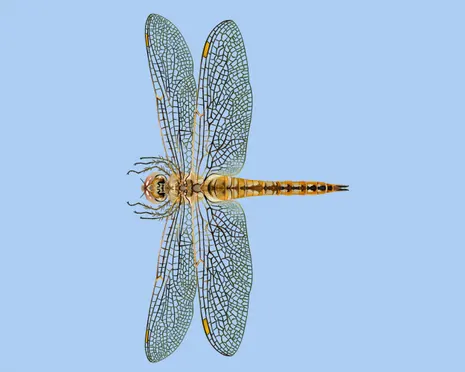
Table of Contents
A Global Traveler: The Dragonfly That Crosses Oceans Without Rest
Wanderstayfinder.com – High above our heads, darting through the air with effortless grace, lies one of nature’s most remarkable long-distance travelers. The wandering glider dragonfly, a creature so ubiquitous that we rarely stop to appreciate its extraordinary capabilities, completes a journey spanning up to 18,000 kilometers between India and eastern Africa. This migration, which unfolds across multiple generations, represents the longest known insect migration on Earth. Despite its small size—measuring just 4.5 centimeters and weighing only a fraction of a gram—this insect has conquered distances that would challenge human travelers.
An Ancient Lineage with Modern Marvels
Dragonflies are living fossils in the truest sense. As members of the order Odonata, they descend directly from griffin flies, among the earliest winged insects to evolve approximately 317 million years ago. The dragonfly lineage as a whole has persisted for roughly 200 million years with remarkably little modification to its fundamental design. This evolutionary stability speaks to the effectiveness of their form and function. When you observe a dragonfly capturing prey mid-flight with precision, you are witnessing a hunting strategy perfected over hundreds of millions of years.
What makes the wandering glider particularly fascinating is its refusal to remain confined. Unlike many species that evolved when continental arrangements differed dramatically from today’s geography, this insect never settled into a single region. It appears on every continent except Antarctica, thriving from sea level to elevations exceeding 6,000 meters in the Himalayan range. It has even established populations on the most isolated oceanic islands, demonstrating an extraordinary capacity for dispersal.
Rapid Reproduction Enables Ocean Crossing
One critical adaptation that enables this remarkable migration is the wandering glider’s accelerated reproductive cycle. While most dragonfly species require several years for their aquatic larvae to mature, wandering glider larvae can complete development in as little as 38 days. This rapid growth allows females—which can lay up to 2,000 eggs—to exploit temporary water sources, including ephemeral pools and even swimming pools. This flexibility is essential for a species that must time its movements with seasonal weather patterns across vast distances.
The migration route follows monsoon patterns with remarkable precision. Dragonflies arrive on islands like those in the Maldives during October monsoons, then continue their journey to Seychelles. From there, they travel to eastern Africa, where monsoon rains provide ideal conditions for reproduction. After breeding, the next generation continues the journey back toward Asia, completing the circuit over multiple generations.
Scientific Discovery in the Modern Era
Despite the wandering glider’s presence in human consciousness for millennia, its extraordinary migration remained hidden until recently. Ben Price, principal curator of entomology at the Natural History Museum in London, noted that this “miraculous migration had been discovered only this century.” The hypothesis was first proposed in 2009 by Charles Anderson, a marine biologist residing in the Maldives. Anderson observed the dragonflies arriving with October monsoons and subsequently continuing toward Seychelles, suggesting a continuous journey.
Scientific confirmation arrived through multiple lines of evidence. Isotope analysis in 2012 provided chemical proof of the migration route, while a comprehensive genetic study published in 2016 revealed that wandering gliders worldwide interbreed as a single global population. This genetic connectivity confirms that individuals from India, the Maldives, Seychelles, and Africa are all part of one interconnected migratory network.
“That a common, familiar insect could hide the greatest migration on the planet until our own century is a perfect reminder that the natural world is still full of discoveries. Ubiquitous, fearless, and quietly astonishing. My vote goes to the wandering glider.”
Some individual dragonflies demonstrate even more remarkable capabilities, crossing 3,500 kilometers of open Indian Ocean water by riding high-altitude monsoon winds. This feat is particularly impressive given that dragonflies are not typically considered ocean-crossers, and such distances would be challenging for any small insect.
Recognition and Ongoing Discovery
The wandering glider’s significance has been formally recognized through its selection as invertebrate of the year. This designation highlights not only the species’ biological importance but also serves as a reminder that scientific understanding continues to evolve. Even as we catalog and study known species, new discoveries about their behaviors and capabilities emerge regularly.
The article’s publication details reveal the care taken in documenting this species. An amendment on 8 August 2026 corrected an image captioning error, ensuring that readers see an accurate representation of the wandering glider. Such attention to detail reflects the importance of accurate visual documentation in scientific communication.
For readers interested in learning more about invertebrate diversity, daily profiles of nominated species are available throughout August 3-12. Those wishing to share observations or suggestions can contact the editorial team at environment.desk@theguardian.com with “Invertebrate” in the subject line. The wandering glider stands as testament to the fact that even the most familiar creatures can still surprise us with their capabilities.
Related Reading
Frequently Asked Questions
What is Fearless and quietly astonishing?
Fearless and quietly astonishing is the main topic of this guide. The article explains the context, practical details, and next steps readers should understand.
Why does Fearless and quietly astonishing matter?
Fearless and quietly astonishing matters because readers are looking for a useful answer, not just a short summary. Good content should match search intent and help them decide what to do next.


