
From ‘Ghost Sharks’ to ‘Death Ball’ Sponges: Scientists Find More Than 1,100 Wild and Unusual Ocean Species
A New Wave of Marine Discoveries
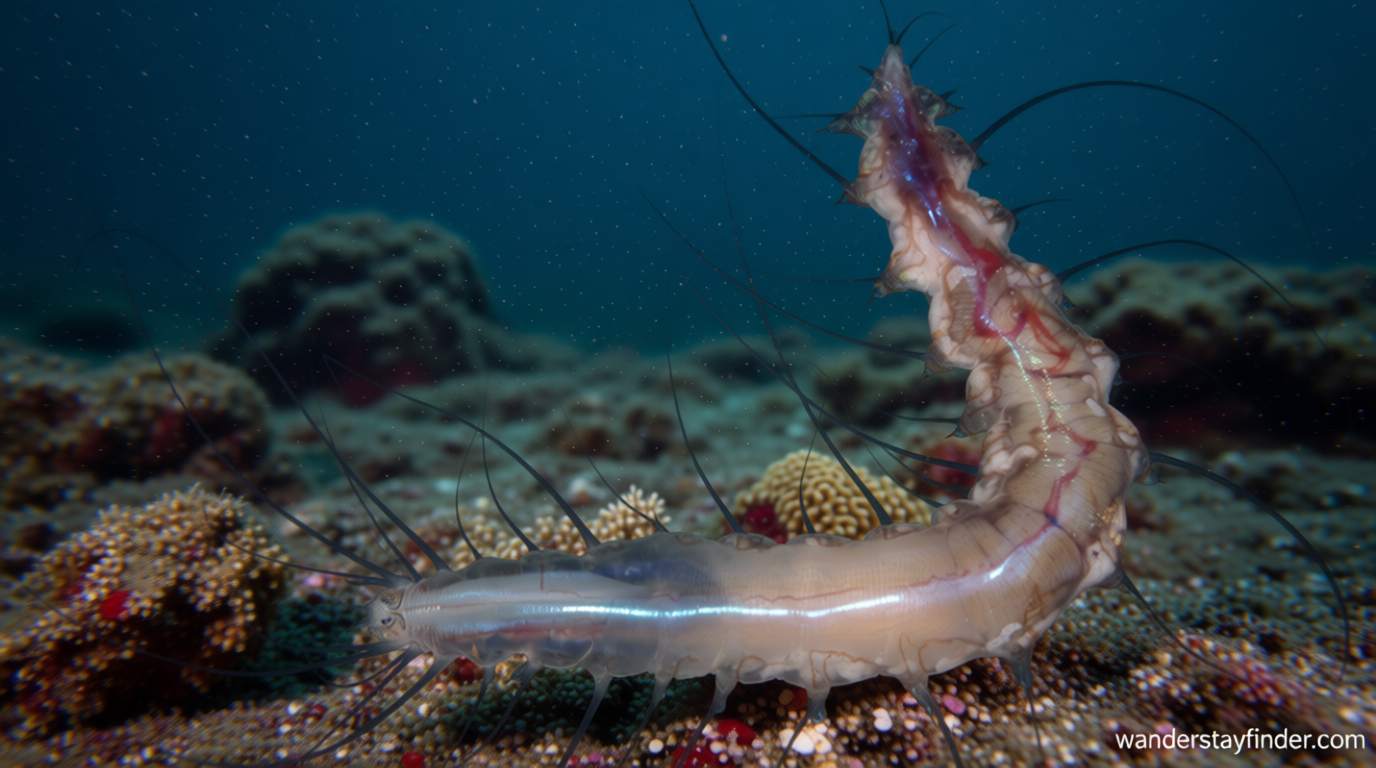
From ghost sharks to death ball – Beneath the waves, in the uncharted depths of the world’s oceans, researchers have uncovered a diverse array of life forms, many of which defy conventional understanding of marine ecosystems. Among these revelations are a worm that resides within a “glass castle,” a mysterious “ghost shark” species, and a carnivorous “death ball” sponge—just a few of the 1,121 newly identified organisms revealed by the Ocean Census, a global project dedicated to mapping oceanic biodiversity. This year’s findings, announced on Tuesday, represent a 54% surge in annual species identification compared to previous years, according to the organization’s latest report. Led by the Japan-based Nippon Foundation and Nekton, a UK ocean exploration institute, the Ocean Census has mobilized over 1,000 scientists across 85 nations to catalog life in the deep sea, where visibility is limited and the mysteries of existence run deep.
The Hidden Realm of the Deep
The deep ocean remains one of Earth’s least explored frontiers, teeming with organisms that challenge assumptions about life’s adaptability. For decades, scientists believed that extreme pressures, perpetual darkness, and cold temperatures would stifle biological activity. Yet recent expeditions have upended this notion, revealing vibrant ecosystems brimming with strange and captivating creatures. These discoveries underscore the ocean’s role as a repository of untapped biological diversity, with each new species offering clues to evolutionary processes and ecological resilience.
One of the most striking finds is a bristle polychaete worm discovered in a glass sponge at depths near 2,600 feet off Japan’s coast. This sponge, with its crystalline, lattice-like skeleton, is colloquially dubbed a “glass castle.” The worm, identified as a previously unknown species, has adapted to live symbiotically within this delicate structure. By inhabiting the sponge’s framework, the worm gains protection from predators and access to nutrient-rich environments, while simultaneously clearing debris from the sponge’s surface. This mutualistic relationship highlights the intricate interdependencies that define deep-sea life.
In the waters surrounding Australia, scientists documented a “ghost shark” chimaera at approximately 2,700 feet. These ancient fish, closely related to sharks and rays, diverged from their ancestors nearly 400 million years ago. Their translucent bodies and elusive behavior earned them their eerie moniker, though their ecological significance is profound. Chimaeras, like many deep-sea species, play critical roles in maintaining the balance of their habitats, yet they remain poorly understood due to their remote environments and infrequent sightings.
Meanwhile, in the remote waters of Timor-Leste, researchers identified a ribbon worm measuring just an inch in length, adorned with vivid orange stripes. This feature, scientists speculate, serves as a warning signal to potential predators, reflecting the worm’s potent chemical defenses. The toxins it produces have sparked interest in medical research, particularly for their potential applications in treating neurodegenerative diseases such as Alzheimer’s and schizophrenia. Such discoveries underscore the ocean’s value as a source of pharmaceutical innovation, even as its ecosystems face mounting threats.
Threats to the Deep
Despite the excitement surrounding these new species, the ocean’s inhabitants are under siege from multiple pressures. Rising sea temperatures driven by climate change are disrupting food webs and altering habitats, while pollution from industrial and agricultural runoff contaminates vast regions. Additionally, the burgeoning industry of deep-sea mining poses a significant risk, as it threatens to destabilize fragile ecosystems and extract critical minerals at an accelerating pace. “With many species at risk of disappearing before they are even documented, we are in a race against time to understand and protect ocean life,” said Michelle Taylor, head of science at the Ocean Census, emphasizing the urgency of conservation efforts.
The discovery process itself is both time-consuming and complex. On average, it takes 13.5 years between the initial identification of a species and its formal recognition in scientific literature, according to the Ocean Census. This delay complicates efforts to respond swiftly to environmental threats, as many organisms may vanish before their existence is formally acknowledged. To address this, the organization has introduced a new classification: “discovered” species. This designation allows researchers to immediately log findings in an open-access database, ensuring rapid visibility for both the scientific community and policymakers.
“This makes the species immediately visible to the scientific community and policymakers,” explained an Ocean Census spokesperson. The initiative aims to streamline the documentation process, bridging the gap between initial detection and official classification. However, Tammy Horton, a research scientist at the UK’s National Oceanography Centre, cautioned that not all discoveries are definitive. “Sometimes a species believed to be new to science turns out not to be after a detailed examination,” she noted. “But I don’t think that is a very common occurrence.” Horton stressed that formal descriptions are essential, as they provide the “passport” for a species—its official record—enabling targeted conservation strategies and legal protections.
Speeding Up the Pace of Discovery
By adopting the “discovered” status, the Ocean Census seeks to accelerate the identification and classification of marine life. This approach not only expedites data sharing but also encourages collaboration among researchers worldwide. The expeditions, which included 13 missions to the least explored regions of the ocean, have uncovered species that range from microscopic plankton to towering sponges. Each of these organisms contributes to the ocean’s ecological complexity, offering insights into adaptation, survival, and the interconnectedness of marine systems.
The North Trench of the South Sandwich Islands, an isolated region in the south Atlantic, yielded one of the most peculiar discoveries: a carnivorous “death ball” sponge. Found at depths of nearly 12,000 feet, this sponge is covered in microscopic velcro-like hooks that snag passing crustaceans. Once ensnared, the sponge envelops its prey and consumes it, demonstrating an evolutionary leap in predatory behavior. Such findings challenge existing classifications and suggest that even in the most extreme environments, life has developed remarkable strategies for sustenance and survival.
These breakthroughs are not merely academic curiosities. They have far-reaching implications for conservation and resource management. The ocean’s biodiversity supports industries, provides sustenance for millions, and holds secrets to climate regulation and medicine. Yet, without accurate documentation, these species risk being overlooked in global efforts to protect marine environments. “The important thing is that scientists are continuing every year to make numerous interesting discoveries of species new to science throughout the global ocean at all depths,” Horton added. Her words reflect a broader optimism about the potential for sustained exploration to reveal the ocean’s hidden treasures.
The Ocean Census is now calling for increased investment to support further research and conservation initiatives. As the project’s leaders highlight, the ocean’s uncharted depths still harbor countless undiscovered organisms, each with its own story of adaptation and survival. By documenting these species promptly, scientists hope to create a foundation for policies that prioritize marine protection and sustainable practices. The urgency of the task is clear: the deeper we explore, the more we realize how much remains unknown, and the more critical it becomes to act before it’s too late.
With the world’s oceans facing unprecedented challenges, the discoveries of the Ocean Census serve as both a reminder of nature’s resilience and a call to action. Every new species identified brings us closer to understanding the intricate web of life beneath the waves, but it also underscores the fragility of these ecosystems. As scientists continue their work, the hope is that these findings will inspire greater public awareness and drive meaningful conservation efforts to safeguard the ocean’s biodiversity for future generations.





