
Ways to Stay Safe While Traveling: Smart Tips for Every Trip
Travel should feel exciting, not risky. The good news is that most problems on the road are preventable when you plan with safety in mind and stay aware in the moment. This guide covers practical, real-world ways to stay safe while traveling for any destination, whether you are taking a short city break, a solo trip, or a long international journey.
The goal is not to travel in fear. The goal is to reduce avoidable danger, protect your money and documents, and make smarter decisions when something unexpected happens.
Plan Your Trip Like a Safety Checklist (Not Just an Itinerary)
One of the most effective ways to reduce travel risk is to prepare before you leave. Many incidents happen because travelers assume everything will “work out” and skip basic planning. Safety planning is not complicated, but it must be intentional.
Start with a quick destination scan. Check local crime patterns, common scams, and neighborhoods to avoid, especially at night. If you understand what is normal in the area, you will spot unusual situations faster.
Share a simple itinerary with one trusted person. Include your flight details, hotel name, and basic day-by-day plan. This is a low-effort step that becomes critical if you lose your phone or go missing for any reason.
Keep digital and physical backups of your key documents. Save copies of your passport, visa, travel insurance, and important reservations in a secure cloud folder. Also print one copy and store it separately from your passport.
Protect Your Money, Passport, and Personal Data
Most travel “danger” is not violent crime. It is theft, fraud, and identity abuse. Protecting your money and identity is one of the most important ways to stay safe while traveling, especially in busy tourist areas.
Use a layered approach for money. Carry a small amount of cash for daily use, and keep the rest locked in your accommodation. Avoid pulling out large stacks of cash in public, even if you are in a safe country.
Separate your valuables. Keep your passport, one bank card, and emergency cash in a different place from your main wallet. If one item is stolen, you still have a backup to continue your trip.
Use secure digital habits. Avoid logging into banking accounts on public Wi-Fi unless you use a trusted VPN. Turn on two-factor authentication, use a strong phone passcode, and enable remote tracking and remote wipe.
Be careful with charging in public places. Public USB charging ports can be compromised. Use your own wall adapter or a USB data blocker to reduce the risk of data theft.
Choose Safe Transportation and Move Smart in Public
Transportation is a major safety variable because it combines unfamiliar environments, time pressure, and distractions. Many travelers become less alert when they are tired or rushing. If you want consistent ways to stay safe while traveling, start with how you move from place to place.
Use official transportation options whenever possible. Book licensed taxis through a trusted app, your hotel, or an official taxi stand. Avoid unmarked vehicles, especially at airports and train stations where scams are common.
Know your route before you get in. Even if you are not driving, open a map and understand the general direction and expected travel time. This reduces the chance of being overcharged or taken somewhere unsafe.
In crowded areas, keep your bag in front of you. Use a crossbody bag with zippers, and keep your phone out of your back pocket. Crowds are ideal for pickpockets because distractions are constant.
Limit late-night solo travel when you do not know the area. If you must move at night, use well-lit streets and direct transport. “Just walking a few blocks” becomes risky when you are lost or when the street environment changes quickly.
Stay Safe in Hotels, Rentals, and Public Spaces
Where you stay affects your safety more than most people realize. Even a safe city can become risky if your accommodation has poor security. Smart lodging habits are practical ways to stay safe while traveling without reducing comfort.
Choose accommodation based on safety, not just price. Look for places with 24-hour reception, good reviews, and a secure entrance. A cheap room in a bad location often costs more in stress and risk.
Use the room safe for passports and spare cash, but do not treat it as perfect security. If you carry expensive items, consider using the hotel front desk safe. In rentals, use your suitcase lock for basic protection.
Check the door and locks as soon as you arrive. Make sure the door closes properly, the deadbolt works, and windows lock. If anything feels wrong, request a room change immediately.
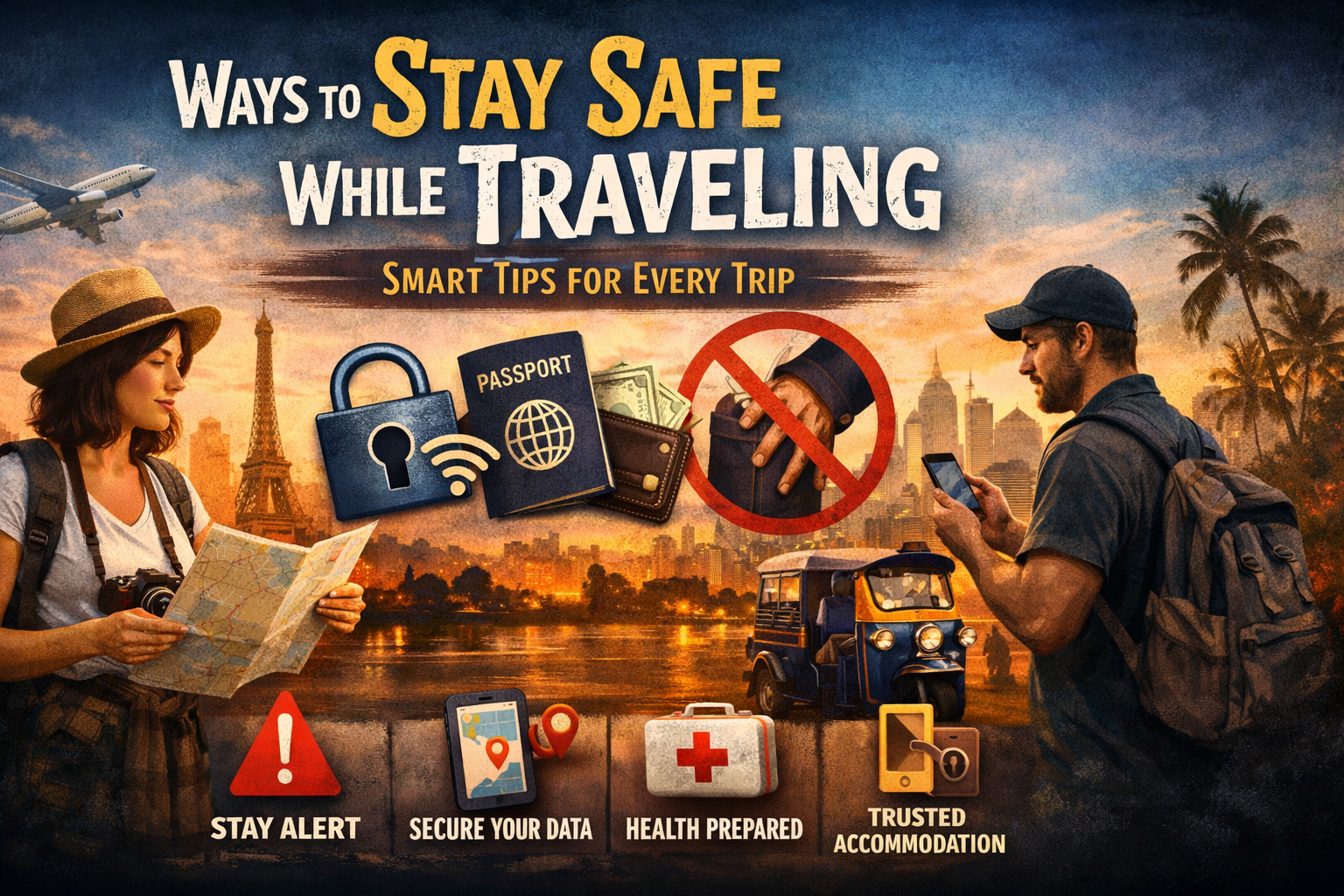
In public spaces, control your “attention budget.” The most common travel mistakes happen when people are distracted by photos, navigation, or texting. If you need to check directions, step aside, face a wall, and take 20 seconds to re-orient.
Health, Food Safety, and Emergency Preparedness
Many travelers focus only on crime, but health issues are a bigger risk for most trips. Dehydration, food poisoning, and minor injuries can ruin a trip and create serious complications. Strong ways to stay safe while traveling always include basic health strategy.
Pack a small medical kit. Include pain relievers, diarrhea medication, bandages, antiseptic wipes, and any personal prescriptions. In many places, finding the right medication quickly is harder than expected.
Be careful with food and water in high-risk regions. Choose busy restaurants, eat freshly cooked food, and avoid raw items if hygiene is uncertain. If tap water is not safe, brush your teeth with bottled water too.
Protect yourself from heat and fatigue. Many incidents happen when travelers are exhausted and stop thinking clearly. Prioritize sleep, drink water regularly, and do not overload your schedule.
Know how to get help before you need it. Save emergency numbers, your embassy contact, and your accommodation address in your phone and on paper. If you lose your phone, a written address can get you back safely.
Smart Behavior: Awareness, Boundaries, and Decision-Making
The most important safety tool is your decision-making under pressure. Many travelers ignore discomfort because they do not want to appear rude or paranoid. In reality, strong boundaries are one of the best ways to stay safe while traveling.
Trust patterns, not stereotypes. If someone’s behavior is too aggressive, too friendly, or too persistent, treat it as a risk signal. You do not need proof to leave a situation.
Avoid oversharing. Do not tell strangers where you are staying, how long you are alone, or how much money you have. Casual conversation can become intelligence for scams or theft.
Keep your alcohol use controlled. Being intoxicated reduces awareness, increases vulnerability, and makes you an easier target. If you drink, do it in safe environments and keep your drink in sight.
Use simple exit strategies. If you feel uncomfortable, create distance first. Walk into a hotel lobby, a busy shop, or a well-lit restaurant. The goal is not confrontation, it is safety through movement.
If something goes wrong, act fast. Cancel cards immediately, contact your bank, report theft, and get documentation. Many travelers lose money because they delay action and hope the issue will resolve itself.
Conclusion
The best ways to stay safe while traveling are not extreme or complicated. They are consistent habits: plan ahead, protect your documents and data, choose safe transport, stay alert in public, and make health and emergency preparation part of every trip. When you treat safety as a system instead of luck, you reduce risk dramatically while still enjoying the freedom that makes travel worth it.
FAQ
Q: What are the most important ways to stay safe while traveling alone? A: Share your itinerary, avoid risky areas at night, use official transport, and keep your valuables separated so one loss does not end your trip.
Q: Should I carry my passport everywhere while traveling? A: In many countries, a copy is enough for daily use, while the original should stay secured. Carry the original only when required for official checks or travel days.
Q: How can I avoid scams in tourist areas? A: Research common local scams, avoid unsolicited “help,” confirm prices before accepting services, and walk away quickly when someone becomes pushy.
Q: Is public Wi-Fi safe for travelers? A: Public Wi-Fi is risky for banking and sensitive logins. Use mobile data or a VPN, and enable two-factor authentication for key accounts.
Q: What should I do if my phone is stolen while traveling? A: Use remote tracking and remote wipe, change your passwords, contact your mobile provider, and report the theft so you can protect your accounts quickly.
