
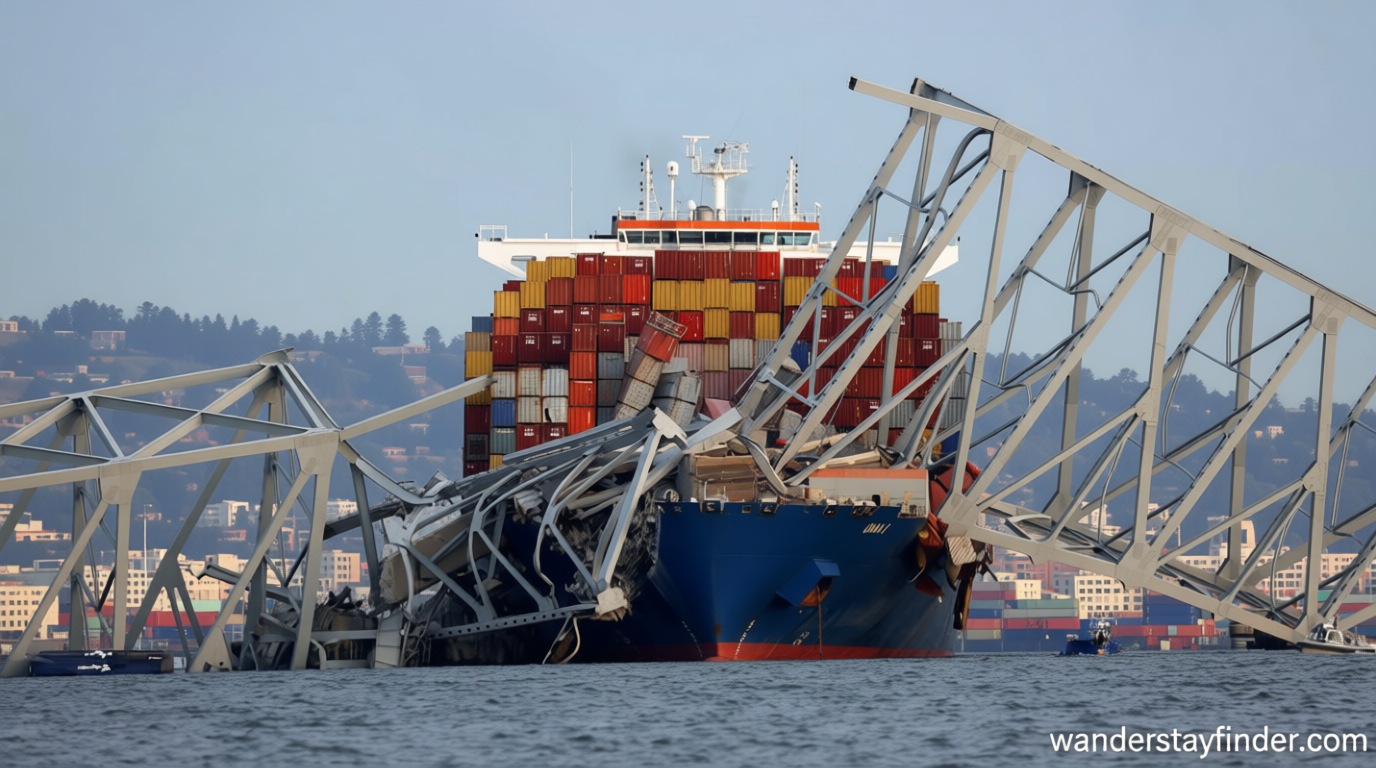
Justice Department Announces Criminal Charges in Key Bridge Collapse
Justice Department announces criminal charges in Baltimore – Two years following the catastrophic collapse of Baltimore’s Francis Scott Key Bridge, the Justice Department has filed criminal charges against two companies and the ship’s technical supervisor. The incident, which resulted in the loss of six lives and disrupted one of the nation’s busiest ports, has triggered a legal investigation into the safety lapses that contributed to the disaster. The charges highlight the systemic issues under examination, with the focus on operational failures that led to the structural collapse.
Companies and Crew Accused of Negligence
Synergy Marine Pte Ltd and Synergy Maritime Pte Ltd, based in Singapore and Chennai respectively, along with Radhakrishnan Karthik Nair, the ship’s technical superintendent, face allegations of conspiracy and obstructing the investigation. The indictment reveals that the companies allegedly falsified safety inspections and certifications, which were essential for the vessel’s operations. Nair, an Indian national, is currently in India, and authorities are prepared to use all necessary tools to apprehend him.
According to the federal investigation, the ship’s systems were modified to rely on a manual flushing pump for fuel distribution. This pump, designed for manual operation rather than automatic restart, became a critical factor in the power failures that preceded the collapse. The Justice Department argues that this modification significantly increased the risk of the vessel losing propulsion, leading to the collision with the bridge.
NTSB Identifies Root Cause of Power Outage
The National Transportation Safety Board’s final report, released last year, points to a loose wire label as the primary cause of the power loss. This label, which had shifted over a covering, disrupted the wire’s connection to the circuit breaker, causing the ship to lose power while leaving the port. Despite the crew’s efforts to restore propulsion, the report states that the Dali struck the bridge shortly after, triggering the collapse.
NTSB Chair Jennifer Homendy likened the discovery of the loose wire to finding a loose bolt in the Eiffel Tower, emphasizing how a minor oversight could have catastrophic consequences. The report also criticizes the Maryland Transportation Authority for not fully assessing the bridge’s structural vulnerabilities, which contributed to the disaster. These findings have strengthened the Justice Department’s legal case against the involved parties.
Special Agent Jimmy Paul, leading the FBI’s investigation, stated that the bridge was struck “because those responsible for the ship’s operation deliberately cut corners on safety.” He noted that the companies repeatedly failed to document and investigate critical risks, using fabricated records to conceal their negligence. The obstruction charge against Nair stems from his claim of unawareness regarding the ship’s reliance on the manual pump, which investigators believe is misleading.
Legal Proceedings and Civil Cases
A bench trial is set for June 1 in a civil case filed by Baltimore and other entities against the ship’s owner and operator. This case seeks to assign liability and secure damages, as the companies attempt to limit their financial responsibility. Synergy Marine has issued a statement asserting that the NTSB’s findings exonerate them from blame, citing the report’s conclusion that their role was not a direct cause of the incident.
While the NTSB identified the power outage as the main factor, the Justice Department’s criminal case underscores the companies’ alleged negligence in maintaining safety standards. The legal team argues that the fabricated inspections and certifications were deliberate, pointing to the technical superintendent’s role in ensuring the ship’s systems were compliant. The charges aim to hold these entities accountable for the human and economic toll of the collapse.





