
Jim Whittaker, first American to summit Mount Everest, dies aged 97
Jim Whittaker, first American to summit Mount Everest, dies aged 97
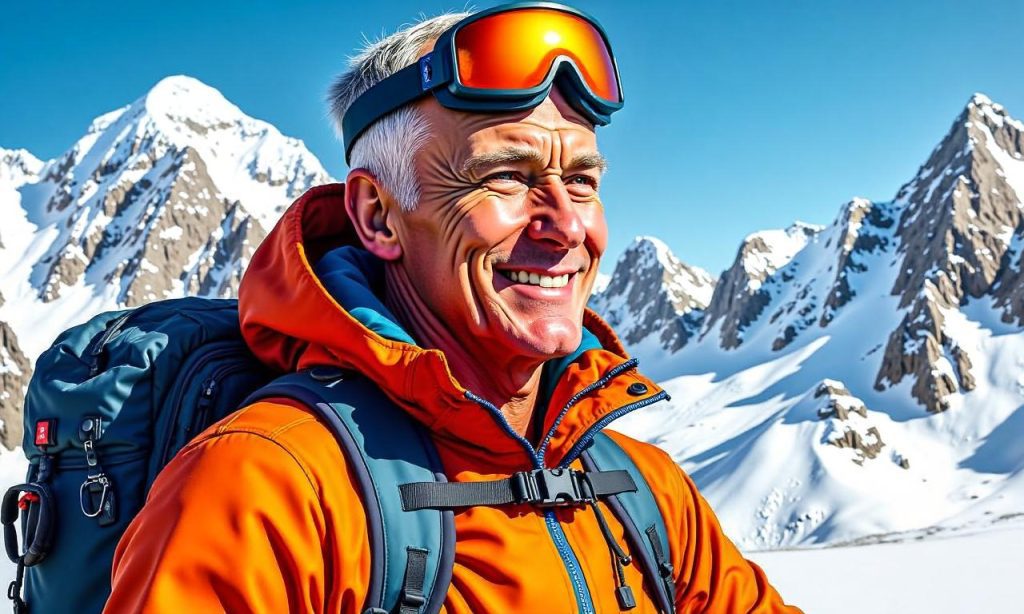
Jim Whittaker, the pioneering American climber who conquered Mount Everest, has passed away at the age of 97. His family confirmed his death on Tuesday, stating he was surrounded by loved ones at his home in Port Townsend, Washington. Whittaker’s journey to the summit of the world’s highest peak on May 1, 1963, remains a defining moment in his life, celebrated for decades as a symbol of resilience and exploration.
Decades after his historic climb, Whittaker returned to Everest at 83, bringing his family along for the adventure. Known affectionately as “Big Jim,” he was born in Seattle on February 10, 1929, and began climbing with his twin brother Lou during their time as Boy Scouts in the 1940s. The siblings achieved a notable feat at 16 by reaching the summit of Mount Olympus, the tallest mountain in the Olympic range west of Seattle.
“You learn, when you climb a difficult mountain, you leave your ego behind and learn that you’re just a little micro-speck in this life. You learn your weaknesses and have a little broader perspective,” he told the BBC.
Whittaker’s legacy extended far beyond the mountains. He played a pivotal role in shaping the American outdoor movement, serving as REI’s first full-time employee and later as its second president. His contributions to the company were recognized as foundational, helping redefine what adventure and community could mean in the realm of outdoor exploration.
His 1963 ascent of Everest, shared with Nawang Gombu Sherpa, marked a turning point for mountaineering in the United States. The achievement inspired a generation of climbers and earned him the Hubbard Medal from President John F. Kennedy. Reflecting on the climb, Whittaker noted that his height—taller than his teammate Gombu—offered a unique perspective on the scale of nature and human effort.
Later in life, Whittaker maintained a strong connection to the climbing world, leading initiatives with The Mountaineers, a Washington-based alpine club established in 1906. In 2013, he summited Everest again alongside his son Leif, who is also a climber and specializes in training athletes for high-altitude challenges. The experience was documented in his memoir, A Life on the Edge, which captured his enduring passion for the sport.
Washington Governor Bob Ferguson praised Whittaker’s impact, calling him “one of the great Washingtonians.” Ferguson highlighted how the climber’s influence extended to future leaders, including himself, and expressed gratitude for their shared experiences. Whittaker’s advocacy also reached political arenas, as he testified before Congress in 1968, contributing to the creation of key protected areas like the North Cascades National Park and the Pasayten Wilderness.
His friendship with the Kennedy family further solidified his national prominence. Whittaker served as a state chairman for Robert F. Kennedy’s presidential campaign and participated in a historic climb of a 14,000-foot peak in Canada. That mountain was later renamed Mount Kennedy in honor of the late president. REI, where he spent over two decades, described him as a “true trailblazer” who championed both adventure and environmental stewardship.
“Throughout his life, Jim measured success not by personal achievement, but by the communities he built, the responsibility he modeled, and the countless people he inspired to step outside and discover something larger than themselves,” REI said in a statement. His life’s work continues to resonate in the outdoor community, celebrated as a blend of courage, purpose, and family devotion.
Whittaker’s story is one of trailblazing, from his early days as a Scout to his role in shaping modern mountaineering. His influence on REI and the broader outdoor movement underscores a lifetime dedicated to expanding horizons—both literal and metaphorical.
