
Greek police using masked migrants to forcibly push other migrants back across border
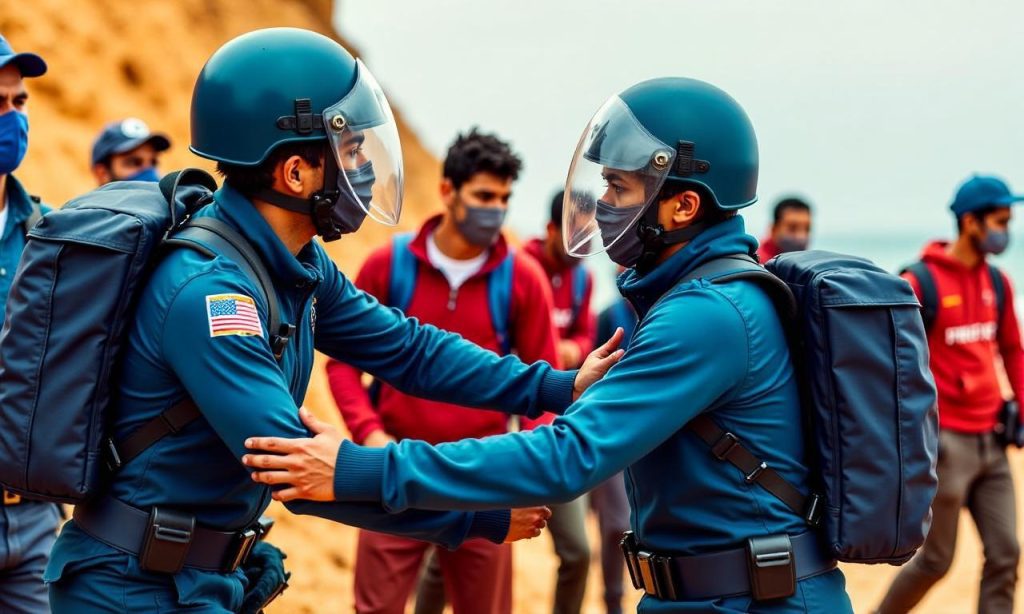
Greek Police Force Enlists Migrants in Border Repellent Operations
Greece’s police force has reportedly enlisted migrants to forcibly repel other asylum seekers across its border with Turkey, according to extensive evidence compiled by the BBC. Internal documents reveal that senior officers authorized and supervised the recruitment of so-called mercenaries, with guards describing the process in detail. These findings highlight claims of harsh treatment, including reports of migrants being stripped, robbed, beaten, and even sexually assaulted.
New Evidence Unveiled
Investigations by the BBC, in partnership with the Consolidated Rescue Group (CRG), began in autumn 2022 after receiving unsettling video footage allegedly depicting mistreatment by mercenaries. The footage, shared by a smuggler disillusioned with his network, suggests migrants were targeted in a coordinated manner. While the content remains unverified, it aligns with accounts from other independent sources.
Border Dynamics and Legal Concerns
The land border with Turkey stretches 200 kilometers along the Evros River, forming the EU’s eastern edge. Migrants entering Greece through this frontier are subjected to a militarized restricted zone, complete with watchtowers. A local police source stated that mercenaries have been used to expel hundreds of individuals weekly, with all personnel acknowledging the practice. Pushbacks—returning asylum seekers to Turkey without proper legal procedures—are widely deemed illegal under international law.
Merchants of Forced Returns
Those deployed as mercenaries are themselves migrants, often from countries such as Pakistan, Syria, and Afghanistan. They are reportedly rewarded with cash, stolen mobile phones, and documents facilitating passage through Greece. In June 2023, the BBC was shown footage of a group of migrants ambushed by masked individuals shortly after crossing into Evros. A Frontex report concluded that 10 to 20 “third-country nationals” had been directed by Greek officers to subject these individuals to physical and verbal abuse, including threats of death and rape.
Authorities’ Response and Ongoing Allegations
Despite the evidence, Greek authorities have yet to confirm the details. The prime minister, Kyriakos Mitsotakis, claimed during a March interview that he was “totally unaware” of the allegations, though he emphasized Greece’s efforts to secure its borders. The Fundamental Rights Office, an independent Frontex unit, has documented over 100 cases of alleged forced returns in Evros since 2020, with dozens involving non-Greek nationals in recent months. Maria Gavouneli, president of Greece’s human rights commission, called the situation “extremely significant” in terms of rights violations.
“There is no soldier, police officer, or Frontex agent in Evros who does not know pushbacks are occurring,” said a regional police source.
Frontex has dismissed the claims, but the BBC’s findings raise questions about the scale of the operation. With over a million arrivals since 2015, the border has become a focal point for both humanitarian and political tensions, as Greece strives to balance border control with international obligations.
