Albanese Clashes with Updated Labor Policy on Telehealth Euthanasia
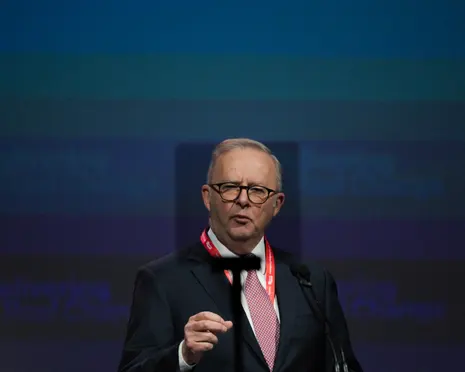
Wanderstayfinder.com – Labor faces mounting pressure to permit Australians to access voluntary assisted dying through telehealth services, as the Greens and independent Kate Chaney prepare legislation based on recent changes to the party’s national platform. Last week’s Adelaide conference revised the ALP platform, committing Labor to overturn a Howard-era prohibition on telehealth medical appointments for euthanasia. While new platform language grants Labor MPs a conscience vote, Prime Minister Anthony Albanese indicated on Sunday that the government may not advance parliamentary laws on the matter.
The party platform outlines policy principles, yet such changes do not always translate immediately into government legislation. Albanese expressed support for assisted dying—also termed voluntary euthanasia—but warned that the telehealth amendment could weaken essential medical safeguards. “It is important that people have the right to die … with dignity,” he told ABC TV. “But it’s also important that protections are placed around it. Now, if someone has a heart attack or an acute health condition, they need a doctor. They can’t do that over telehealth.”
Concerns About Safeguards and Misuse
“I think someone ending their life is just as important. I think it should be face-to-face recognition and face-to-face engagement. My concern is … the potential for misuse but also the potential it has to undermine the system itself,” Albanese explained. When asked whether the federal government would modify legislation to align with the updated national platform, he noted that cabinet would determine the course of action in consultation with MPs.
“Governments determine what governments do around our cabinet table. What the conference does is put the general direction of what they want, and it’s clear that it’s a matter of conscience,” he said.
Greens senator Sarah Hanson-Young signaled on Sunday that she would rapidly advance a private member’s bill on the issue, seemingly attempting to compel Labor’s position. Meanwhile, Curtin MP Kate Chaney stated on Friday that she would reintroduce her own private member’s bill in the lower house, arguing it would provide Labor “the earliest opportunity to bring this cruel anomaly to an end and give country people the same access as Australians in the big cities.”
“This overdue change in Labor policy on voluntary assisted dying should mean an end to the needless suffering of people in the final stages of life, particularly for those in regional areas who are currently forced to travel, sometimes repeatedly, just to access lawful medical care,” Chaney declared. Andrew Denton, a veteran campaigner and founding director of Go Gentle, emphasized that access to care must not hinge on geographic location.
“The PM is a supporter of end-of-life choice and he’s right to ask questions about the safety of using telehealth in the VAD process,” Denton commented on Sunday. “For reassurance, he need look no further than the expert advice from medical groups such as the Australian Medical Association and Royal Australian College of General Practitioners, who say telehealth can and should be a safe adjunct to VAD services, certainly where the patient is too sick to travel or when a doctor cannot reach the patient in time.”
“It makes no sense that advice cannot be given by videoconference or scripts sent by email. Palliative care routinely discusses life-and-death decisions via telehealth and describes it as ‘particularly important’ in providing comprehensive supportive care in the last weeks of a patient’s life. There is no good reason to treat VAD any differently.”
Legal Barriers and Patient Access
Doctors and advocates for voluntary assisted dying have long championed reforms, arguing that the telehealth ban disproportionately impacts patients residing in rural and remote regions, as well as those whose conditions restrict mobility or render travel painful. Under the federal criminal code, using a carriage service to incite or encourage suicide carries penalties, meaning health professionals risk violating the law if they employ telecommunications for numerous aspects of the VAD process. Fines of up to $300,000 are also possible for breaches.
Disparities between state and federal legislation currently contribute to delays in patients securing approval for voluntary assisted dying—a situation especially problematic for individuals experiencing rapid health decline who wish to die at home. Although state laws vary, patients typically must submit at least three requests to their doctor and undergo assessment by medical professionals on at least two occasions. Doctors require these appointments to occur in person to avoid breaching federal statutes.
Labor’s revised national platform commits the party to “remove barriers that exist in federal law to the provision of end-of-life care (including via telehealth) as part of lawful access to voluntary assisted dying in Australia.”
Frequently Asked Questions
What is the current status of telehealth for euthanasia in Australia?
The federal criminal code currently prohibits using carriage services to encourage suicide, creating a barrier for telehealth-assisted dying. Labor’s updated platform supports removing this federal barrier, though implementation depends on cabinet decisions.
Why is Anthony Albanese cautious about telehealth for euthanasia?
Albanese worries that telehealth could undermine medical safeguards, particularly for patients with acute conditions who need immediate face-to-face medical attention. He emphasizes the importance of proper protections alongside end-of-life choice.
How does the telehealth ban affect regional Australians?
Patients in rural and remote areas must often travel repeatedly to access lawful medical care for voluntary assisted dying, creating additional burden during their final stages of life.
What legislation is being proposed to address this issue?
Both Greens senator Sarah Hanson-Young and independent MP Kate Chaney are preparing private member’s bills to advance telehealth access for euthanasia consultations.