Ryanair Under Scrutiny for Mandatory Parental Seat Fees
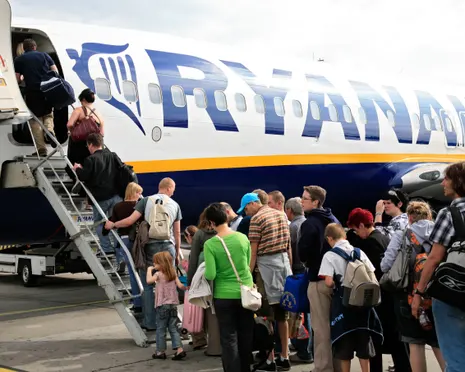
Wanderstayfinder.com – UK regulators have launched an inquiry into Ryanair’s practice of charging parents a separate fee to sit with their children during flights. The Competition and Markets Authority (CMA) alleges that the airline’s policy, which mandates that at least one parent accompany young passengers on UK routes, may constitute an unfair contract term under consumer law. This fee, estimated at £8 per journey, is applied to parents regardless of whether they already have a reserved seat for themselves. The CMA’s investigation aims to assess whether this charge unfairly disadvantages customers, particularly families with children.
How the Fee Works and Its Impact on Families
Ryanair’s terms and conditions require passengers traveling with children aged 2 to 11 to book at least one “family seat” for the parent. This seat is not free; it costs between €4.50 and €13.50, equivalent to £4 and £12, depending on the route. The airline claims this is a standard practice and does not charge adults for children’s seats, though parents must pay an additional booking fee to secure a seat next to their child. The CMA noted that this fee applies to both outbound and return trips, and it is common across most of Ryanair’s UK routes.
Ryanair defends its policy as a way to ensure child safety and compliance with aviation regulations. The airline argues that it aligns with its commitment to family-friendly travel and helps prevent the need for children to sit alone, which could pose risks for younger passengers. However, critics contend that the fee is an unnecessary burden, especially for families who already have a reserved seat for the parent. The CMA is now examining whether this practice forces parents to pay extra for the airline’s own obligations, such as meeting disability-related seating requirements.
The CMA’s Fairness Test and Consumer Concerns
The CMA’s investigation focuses on whether Ryanair’s contract terms are “unfair” under the UK’s consumer protection laws. According to the authority, an unfair term is one that disproportionately favors the business, creating an imbalance in the rights and responsibilities of customers. This test applies to the airline’s requirement that parents pay a separate fee for seating arrangements, even if they are already seated with their child. The CMA also highlighted that other airlines offer more flexible options, such as automatically assigning seats for families without additional costs or allowing free seat reservations for up to four children on the same booking.
“Our investigation will consider Ryanair’s approach to family seat reservations and how the cost is presented to consumers to determine whether they comply with consumer law,” said Hayley Fletcher, the CMA’s senior director of consumer protection. She emphasized that the authority has consistently urged businesses to display total prices upfront, warning that those failing to do so could face enforcement action. This includes practices like “drip pricing,” where customers are initially shown a low price but later hit with hidden charges, which were formally banned in 2024.
The CMA’s focus on transparency aligns with its broader mission to ease cost-of-living pressures and safeguard vulnerable consumers. This case is part of a larger effort to scrutinize pricing strategies in the aviation sector, particularly those that obscure additional costs. Ryanair, however, dismissed the investigation as “bogus,” accusing the Starmer government of using it as a political tool to mask its failure to address air passenger duty (APD) charges. The airline argued that APD, a tax on flights, could be eliminated to lower fares for all travelers and boost economic growth.
Comparing Ryanair’s Policy to Industry Standards
While Ryanair’s fee is a notable feature, it is not the only example of airlines implementing similar pricing practices. For instance, some carriers offer family seating packages at a flat rate, whereas others allow free seat assignments for groups of up to four children. However, the CMA highlighted that Ryanair’s approach is distinct because it charges parents for the airline’s own operational needs. This raises questions about whether families are being overcharged for a service that is mandated by safety and accessibility rules.
Ryanair’s response to the CMA’s claims stressed that its policy is legally sound and economically beneficial. The airline stated that parents pay a reserved seat fee, but this is part of a broader system where adults can select up to four children’s seats for free on the same booking. “This policy fully complies with all relevant laws and regulations and saves families money when traveling on the UK’s lowest fare airline,” the airline asserted. Critics, however, argue that the fee is an exploitative tactic, leveraging the necessity of parental supervision to extract extra payments.
Background on the CMA’s Consumer Protection Powers
Since 2024, the CMA has gained enhanced authority to fine companies for breaches of consumer law and secure refunds for affected customers. This has enabled the watchdog to investigate a wide range of industries, from ticketing to online reviews, and hold businesses accountable for unfair practices. The current investigation into Ryanair is one of several cases the CMA has taken on to address issues like hidden costs and misleading pricing. The agency has already launched probes into 15 businesses, focusing on sectors where consumers are most vulnerable to financial harm.
Hayley Fletcher added that the CMA’s scrutiny of Ryanair’s fee structure is part of a larger push to ensure transparency in the travel industry. “Consumers should not be surprised by additional charges after they’ve already paid for their tickets,” she said. The CMA is particularly interested in how the family seat fee is communicated during the booking process. If the fee is introduced gradually or without clear explanation, it could be classified as “drip pricing,” which the authority has previously targeted in its regulatory actions.
Ryanair’s Argument and the CMA’s Neutral Stance
Despite the CMA’s allegations, Ryanair maintains that its policy is fair and necessary. The airline pointed to the mandatory family seat requirement as a way to ensure child safety and meet aviation standards. “Parents are not being charged for the privilege of accompanying their children, but for the airline’s own obligations,” Ryanair explained. It also claimed that its approach allows for more efficient seat allocation, reducing the need for last-minute changes and ensuring smoother travel experiences for families.
The CMA, however, has not yet concluded whether Ryanair has violated consumer law. It emphasized that the investigation is ongoing and that the regulator is gathering evidence to assess the policy’s impact on customers. “We have reached no final judgment,” the CMA stated, underscoring its commitment to a thorough review. This approach reflects the agency’s balance between holding businesses accountable and allowing room for industry innovation and adaptation.
Broader Implications for the Aviation Sector
The Ryanair case highlights growing concerns about pricing practices in the aviation industry. As more families opt for low-cost carriers, the demand for flexible seating options has increased. Yet, airlines like Ryanair have capitalized on the necessity of parental presence to justify additional fees. The CMA’s investigation could set a precedent for similar cases, potentially prompting other airlines to reassess their policies. For instance, the agency noted that many competitors do not impose such charges, offering families the ability to sit together without extra costs.
Ryanair’s criticism of the CMA’s focus on the family seat fee also reflects a broader debate about the role of government in regulating the airline industry. The airline argued that the current investigation overlooks the bigger issue of APD, which it claims is a major contributor to high fares. By addressing APD, the Starmer government could alleviate the financial strain on consumers, according to Ryanair. Nonetheless, the CMA’s inquiry into the family seat fee underscores its dedication to ensuring that pricing practices are fair and transparent, even in the face of industry resistance.
The CMA’s decision to investigate Ryanair comes amid increasing pressure on airlines to improve customer service while maintaining profitability. As the aviation sector continues to evolve, the balance between cost efficiency and consumer protection remains a central issue. With the CMA’s strengthened powers, the outcome of this case could influence how airlines structure their pricing models, potentially leading to more equitable practices for families and other passengers. For now, the investigation is in its early stages, and the final determination will hinge on the evidence gathered during the process.