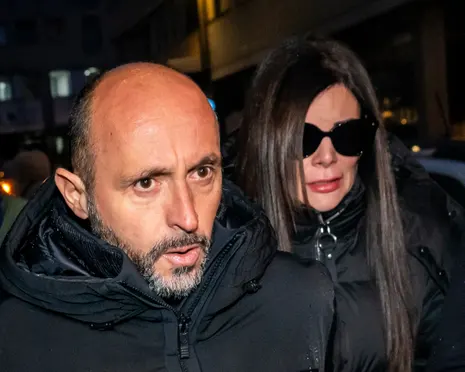
Bereaved Families Seek Murder Charges in Crans-Montana Fire Tragedy
New Year’s Eve Fire Claims 41 Lives, Sparks Legal Reassessment
Wanderstayfinder.com – The tragic fire that engulfed the Le Constellation bar in Crans-Montana on New Year’s Eve 2026 has ignited a fierce legal debate, with victims’ lawyers formally petitioning prosecutors to elevate the charges against the bar’s owners from negligence to murder with possible intent. The incident, which resulted in 41 fatalities and 115 injuries, is believed to have originated in the basement when sparklers affixed to champagne bottles were brought dangerously close to sound-insulating foam on the ceiling. This led to a rapid spread of flames, engulfing the space and trapping dozens of people inside.
At the heart of the legal push is the assertion that the bar’s owners, Jessica and Jacques Moretti, were fully aware of the fire risk and failed to take adequate precautions. Lawyers representing the victims, many of whom were teenagers, have presented text messages from a WhatsApp group that reveal Jessica Moretti’s warnings to staff about the danger of sparklers. These messages, dated as far back as 2019, suggest that the owners recognized the highly flammable nature of the ceiling foam and did not act to mitigate the threat.
Prosecutors in the Valais canton have acknowledged the request for upgraded charges, following a recent cross-examination of the Morettis by investigators in Sion. The couple now faces potential murder charges, a significant shift from their original manslaughter and arson by negligence accusations. The legal team of Sophie Haenni and Ludovic Tirelli, who have been advocating for the victims’ families, argued that the evidence demonstrates the Morettis’ deliberate acceptance of the risk, even as they were aware of the potential consequences.
Legal Arguments Highlight Intentional Oversight
Haenni, one of the lead attorneys, emphasized that the messages provide irrefutable proof of the Morettis’ knowledge of the fire hazard. She stated to Agence France-Presse, “The Morettis were fully aware of the bar’s susceptibility to flames. They knew the risk and chose to ignore it, which means the charge should no longer be based on carelessness but on potential intent.” This argument hinges on the Swiss legal definition of “possible intent,” which applies when a perpetrator knowingly accepts a risk, even if they do not explicitly wish for the outcome.
“The Morettis knew the bar could catch fire. They were aware of the risk and they accepted it. The charge should no longer be negligence but murder with possible intent.”
The bar owners’ legal team, Yaël Hayat and Nicola Meier, have contested the allegations, calling them “nonsense.” They argued that the accusation of intentional disregard for safety is unfounded, pointing to Jessica Moretti’s presence at the scene of the fire as a strong alibi. “How can anyone argue that the Morettis foresaw a mortal risk? Worse still, that they would have accepted it?” Meier questioned during a broadcast on RTS, highlighting the couple’s immediate response to the disaster.
Investigators have also revealed a new layer to the case: a forgery charge against Jessica Moretti. During a hearing on June 5, she was informed that the invoice for the sound-insulating foam panels had been altered, potentially implicating her in financial misconduct. The lawyers claim the 2015 document was simply recorded under a different name in the bar’s accounts and does not directly relate to the fire. However, the addition of this charge has intensified scrutiny of the couple’s actions and decisions leading up to the tragedy.
Community Impact and Investigative Challenges
The fire has left an indelible mark on the local community, with families and survivors demanding accountability. Beyond the immediate casualties, the incident has sparked broader discussions about safety standards in Swiss nightlife venues and the role of negligence in large-scale disasters. Investigators continue to examine whether the Morettis’ awareness of the foam’s flammability was a factor in their decision-making, and whether their actions could be classified as premeditated.
Legal experts are divided on the implications of the upgraded charges. While some argue that the evidence supports a shift toward intent, others caution that the prosecution must establish a direct link between the owners’ awareness and their failure to act. “It’s not enough to show they knew the risk,” said one analyst. “We need to prove they ignored it despite having the means to prevent the disaster.” This distinction is critical in Swiss criminal law, where intent is often a determining factor in the severity of a sentence.
As the case progresses, the Morettis’ defense remains focused on challenging the interpretation of the evidence. They have accused prosecutors of misusing the text messages to build a case of deliberate malice, despite the bar’s busy schedule on the night of the fire. “The messages reflect routine safety checks, not a calculated plan to cause harm,” Hayat asserted. “They were just following protocol, which was already in place.” The defense also highlighted the couple’s efforts to evacuate patrons as quickly as possible, emphasizing their commitment to minimizing casualties.
Public Reaction and Ongoing Investigations
The public outcry has been overwhelming, with many calling for stricter regulations in the hospitality industry. Social media platforms have become a battleground for opinions, with some supporters of the Morettis arguing that the bar owners are being unfairly targeted, while others see them as responsible for the loss of life. The Swiss government has also faced pressure to review safety standards for event spaces, particularly in areas prone to large gatherings.
Meanwhile, the criminal investigation continues to expand. In addition to the Morettis, 12 other suspects—ranging from local officials to employees—face charges related to the incident. Investigators are examining whether the foam’s installation or the sparkler setup was improperly handled, and whether any systemic failures contributed to the disaster. “This isn’t just about one couple,” said a spokesperson for the Valais canton’s prosecutor. “It’s about a chain of events that may have involved multiple parties.”
As the legal proceedings unfold, the families of the victims remain resolute in their demand for justice. They argue that the owners’ negligence was not just a mistake but a conscious choice to prioritize convenience over safety. “We want to hold them accountable for the lives they lost,” said one family member during a press conference. “Every second of inaction was a step closer to tragedy.” The outcome of this case could set a precedent for similar incidents, reshaping how negligence is judged in the context of public safety.
The Morettis’ trial is expected to draw significant attention, with witnesses and experts testifying about the night of the fire. The prosecution’s case will rely heavily on the WhatsApp messages and the invoice dispute, while the defense will likely focus on the complexity of the situation and the bar’s adherence to safety guidelines. As the evidence is presented, the legal battle between the families and the owners will continue to dominate headlines, underscoring the emotional and ethical weight of the tragedy.