How Will Australia s Emergency Services Cope If Satellites Go Down? Wanderstayfinder.com – How will Australia s emergency services manage when orbital
How Will Australia s Emergency Services Cope If Satellites Go Down?
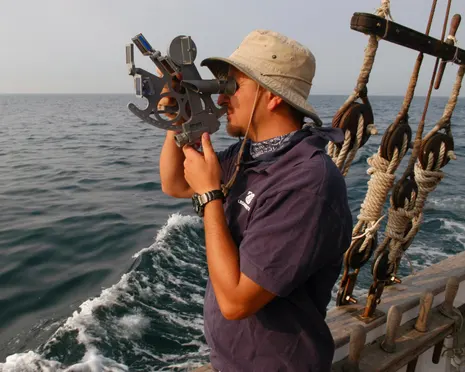
Wanderstayfinder.com – How will Australia s emergency services manage when orbital technology fails? This question drives new training initiatives across the nation’s response teams. Military personnel and first responders are learning to navigate using sextants, street directories, and celestial methods. These preparations emerged from discussions at the 19th Australian Space Forum in Adelaide, where experts analyzed scenarios involving sudden satellite infrastructure failures.
Understanding the Satellite Dependency Crisis
A comprehensive space-based service disruption would impact multiple sectors simultaneously. Satellite communications, GPS positioning, remote sensing, and secure data channels could all fail at once. Many Australians remain unaware of their deep reliance on orbital technology and its vulnerability to both solar phenomena and potential threats.
Nick Leake, who leads Optus satellite and space systems, emphasized that this scenario represents more than theoretical possibility. He outlined multiple cascading failures including ATM network collapses, emergency services losing situational awareness, aircraft navigation degradation, Defence communications breakdowns, and remote communities becoming completely isolated.
Aviation, freight logistics, energy grid operations, and financial systems all depend heavily on satellite connections. Monetary networks could experience immediate cascading failures under such circumstances. Most people only recognize their dependence on space technology when services suddenly disappear.
Traditional Navigation Returns to the Forefront
Jackie Craig AM, an adjunct professor at Flinders University specializing in cyber and virtual warfare, highlighted how emergency services have grown increasingly dependent on increasingly vulnerable technological systems. As a volunteer with South Australia’s state emergency service, she observed that training programs now emphasize street directories and paper maps over mobile devices.
“What we discovered is the young people of the digital revolution can’t actually use a UBD [street directory]. They’re also very poor at reading and using maps,” Craig noted. “A lot of us can’t navigate.”
She explained that satellite failures would force emergency responders back to pencil-and-paper documentation, radio communications, and printed procedure manuals. This represents a significant shift from modern digital operations to more traditional methods.
Michael Murphy, deputy chief executive of the Royal Flying Doctor Service for South Australia and the Northern Territory, provided insight into operational continuity during satellite outages. He explained that their organization could maintain normal operations for approximately twenty-four hours through built-in contingencies and redundant systems.
After this initial period, priority would shift to life-saving missions using manual procedures and alternative communication channels. Murphy described potentially adopting high-frequency radio technology and utilizing what he termed “the bush telegraph” for information sharing through analogue means.
“If you’re familiar with the land, you’ll get around pretty well,” Murphy observed.
Defence Force Sextant Training Programs
Air Commodore Chris Robson from the Australian Defence Force clarified that satellite loss planning represents honest preparation rather than doomsday scenarios or fear-mongering tactics. The Defence Force has already implemented sextant training programs enabling personnel to navigate by stars alongside terrestrial navigation exercises.
“I don’t think that you will see too many people sitting on the bridge looking at a sextant,” Robson remarked, noting that while such training exists, it would not see frequent daily use.
Robson identified solar activity as the primary threat rather than enemy attacks. He described the sun as capable of disrupting satellite operations through geomagnetic storms and radiation events that can affect both orbital and ground-based systems simultaneously.
“Most Australians have no idea that space is part of their everyday life,” Leake stated. “This isn’t science fiction. This is how critical satellite infrastructure is. Australia has one of the highest per capita dependencies on satellite infrastructure in the world. Right now, it’s largely unguarded.”
Related SEO Topics
- Home
- Artikel terkait How will Australia s emergency services
- Pauline Hanson says domestic violence prevents police from dealing with ‘real crime’ in unearthed interview
- Brittany Higgins accuses Pauline Hanson of victim-blaming for calling domestic violence a ‘two-way street’
- News live: Penny Wong says Australia ‘bitterly disappointed’ in Laos poisoning charges as ambassador called in
- Why pay a premium fee for a service that isn’t? How the nationwide outage could hurt Telstra
Frequently Asked Questions
What is How will Australia s emergency services?
How will Australia s emergency services is the main topic covered in this article, with practical context to help readers understand the subject clearly.
Why does How will Australia s emergency services matter?
How will Australia s emergency services matters because it helps readers compare options, avoid common mistakes, and make a more informed decision.
How should readers use this How will Australia s emergency services guide?
Use the key points, examples, and related links in this page as a starting point, then review the latest details before making a final decision.