Sperm whales change vowel sounds when: hen Boats Are Nearby, Scientists Discover Wanderstayfinder.com – Marine biologists have made a remarkable
Sperm Whales Change Vowel Sounds When Boats Are Nearby, Scientists Discover
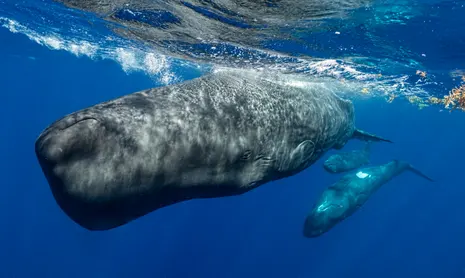
Wanderstayfinder.com – Marine biologists have made a remarkable discovery about how sperm whales adapt their communication in response to human activity. According to new research, sperm whales change vowel sounds when vessels pass through their habitat, modifying their distinctive clicking patterns in measurable ways. This behavioral adjustment is consistent and distinct enough that scientists can now use it as a reliable indicator to detect the presence of ships in ocean waters. The findings emerge from Project Ceti, formally known as the Cetacean Translation Initiative, a non-profit organization committed to decoding the sophisticated language systems of sperm whales. Over a four-year period, the research team observed fifteen whales living off the Caribbean coast of Dominica, carefully recording and analyzing their vocalizations.
Understanding Codas and Click Patterns
The research team identified specific variations in what scientists call “codas”—discrete, recognizable sequences of clicks that sperm whales use for communication. When these magnificent creatures encountered maritime traffic, their individual click sequences underwent noticeable transformations. The overall duration of the click sequences became shorter, and one particular variation became significantly more prominent compared to others. These findings were recently published in the scientific journal Ecological Informatics, providing valuable insights into how marine mammals respond to environmental changes caused by human activities.
What makes this discovery particularly significant is that sperm whales change vowel sounds in a way that correlates directly with the proximity and intensity of boat traffic. The researchers noted that the modifications were not random but followed a predictable pattern, suggesting that these whales actively adjust their communication to compensate for increased underwater noise pollution. This adaptive behavior demonstrates a level of environmental awareness that was previously underappreciated in marine mammal studies.
The Case of Atwood: Evidence of Clan-Specific Communication
One specific whale, designated as “Atwood,” provided compelling evidence for this phenomenon. Under typical circumstances, recordings captured Atwood producing a coda consisting of five clicks arranged in a 1-1-3 formation. This structure involves two initial clicks followed by three rapid ones, a pattern that researcher Gruber noted is exclusive to her clan located along the Caribbean coast of Dominica. When boats were nearby, Atwood’s click sequences showed clear modifications, reinforcing the broader findings of the study.
The significance of Atwood’s behavior extends beyond individual observation. Her clan-specific click pattern, combined with the consistent modifications made during boat encounters, suggests that sperm whales change vowel sounds in ways that maintain their social identity while adapting to external pressures. This dual response—preserving clan identity while adjusting to environmental noise—highlights the complexity of sperm whale communication systems.
The implications of this research extend to conservation efforts and maritime policy. Understanding how sperm whales change vowel sounds in response to shipping noise could inform the development of quieter vessel technologies and the establishment of marine protected areas where boat traffic is regulated. As Project Ceti continues its work, scientists hope to build upon these findings to create a comprehensive understanding of sperm whale language and its vulnerabilities in an increasingly noisy ocean environment.
Related SEO Topics
- Home
- Artikel terkait Sperm whales change vowel sounds when
- Health worker monitored for Ebola in London hospital after working in DRC
- ‘She was almost a Batman figure’: Mexico’s avenging Mother Courage
- ‘Pasta windows’: a charming Italian restaurant tradition – or the sign of a terrible tourist trap?
- ‘A guy did a runner in a Jaguar’: the petrol theft scandal – and the garage owner struggling to stop it
Frequently Asked Questions
What is Sperm whales change vowel sounds when?
Sperm whales change vowel sounds when is the main topic covered in this article, with practical context to help readers understand the subject clearly.
Why does Sperm whales change vowel sounds when matter?
Sperm whales change vowel sounds when matters because it helps readers compare options, avoid common mistakes, and make a more informed decision.
How should readers use this Sperm whales change vowel sounds when guide?
Use the key points, examples, and related links in this page as a starting point, then review the latest details before making a final decision.