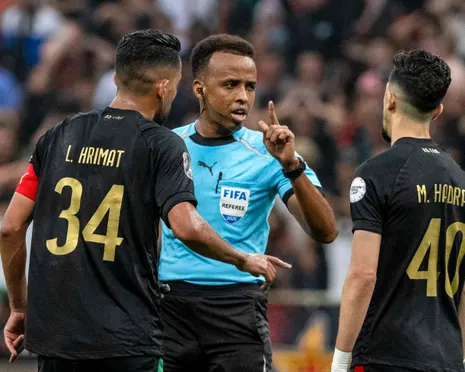
Omar Artan Banned from U.S. World Cup: A Test of Inclusivity
Wanderstayfinder.com – As the World Cup’s opening ceremony approached, Omar Abdulkadir Artan, a Somali referee, was denied entry to the United States. This decision, made by the Trump administration, contradicts the tournament’s reputation as a global celebration of unity. Artan, who was set to become the first Somali official at a World Cup, now watches the event from afar, raising questions about the true meaning of inclusivity in this year’s edition.
Contradictions in a Global Celebration
The World Cup, now featuring 48 teams and 104 matches over 39 days, is designed to showcase worldwide diversity. FIFA’s expansion has been praised for its commercial success, with projected earnings of $8.9 billion—a near doubling of the 2024 Olympics’ revenue. Yet, the exclusion of Omar Artan highlights a growing disconnect between FIFA’s ambitions and the U.S. government’s actions, challenging the notion of the most inclusive World Cup ever.
Artan, recognized as Africa’s top male referee in 2025, had earned FIFA accreditation since 2018. His inclusion symbolized progress in representing African talent on the global stage. However, the Trump administration’s abrupt ban leaves him as a stark reminder of how political decisions can overshadow the tournament’s inclusivity. “A symbol of inspiration for the new generation of Somalis,” said Somali President Hassan Sheikh Mohamud, underscoring the national pride tied to Artan’s participation.
FIFA’s Global Ambitions vs. U.S. Policies
FIFA has consistently promoted itself as a champion of global inclusivity, with record participation from African nations this year. Ten African countries are competing, marking a significant step forward from the Eurocentric World Cups of the 1930s and 1940s. Still, the U.S. remains an exception, using its immigration policies to control access for officials like Artan. FIFA’s assurance that all accredited personnel would receive visa access was challenged by the administration’s unilateral decision.
Despite FIFA’s efforts to ensure broad representation, the U.S. government’s actions have created a barrier. Officials from South Africa, Germany, and other host nations had previously pledged support for the tournament’s inclusivity. However, the Trump administration’s ban on Artan signals a shift in priorities, using the World Cup as a platform to enforce its own standards. “FIFA is not involved in host country immigration processes,” a statement clarified, but the decision still casts doubt on the tournament’s ability to embody its ideals.
The ban on Artan also reflects a pattern of political influence on international events. Earlier this month, Iran’s national team was forced to move its training base from Arizona to Tijuana, Mexico, due to visa denials. These incidents suggest that the U.S. is leveraging its policies to shape the World Cup’s narrative, even as it claims to support the “most inclusive” tournament ever.
Voices Silenced, Stories Unfinished
The impact of the ban extends beyond Artan, affecting journalists and staff who rely on visa access to cover the event. The International Sports Press Association (ISPA) criticized the “longstanding and unacceptable problem” of visa denials, highlighting the challenges faced by globally accredited professionals. “There are many cases,” said ISPA president Gianni Merlo, emphasizing the broader implications for the tournament’s global reach.
As the World Cup unfolds, the exclusion of Omar Artan serves as a cautionary tale. His story underscores the tension between FIFA’s vision of a unified global event and the political choices that can disrupt it. While the tournament is celebrated for its diversity, the U.S. ban raises doubts about its inclusivity, especially for those from regions with less diplomatic leverage. This moment reminds us that the most inclusive World Cup ever may still face hurdles, even in its final stages.