ICE Officers to Use Body Cameras During Vehicle Stops
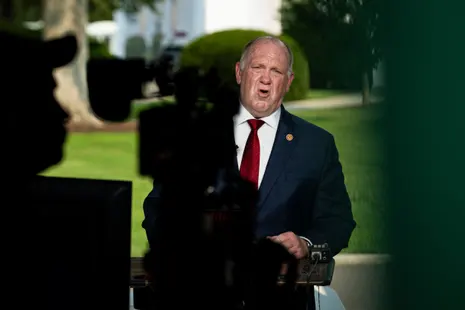
Wanderstayfinder.com – ICE officers to use body cameras as part of a new mandate, according to Tom Homan, the Trump administration’s “border czar,” who announced the policy on Sunday. The directive requires Immigration and Customs Enforcement officers to record all vehicle stops with at least one body camera. This decision arrives as the agency faces intensified scrutiny following the fatal shootings of two men during traffic stops earlier this month. “They exonerate more law enforcement than they convict, and I want officers to wear body cameras because I want the American people to see what the officers saw when they took that action,” Homan explained during his appearance on the Fox & Friends Weekend program.
Recent Incidents Spark Policy Change
Homan’s announcement follows a series of high-profile incidents involving ICE officers. Federal immigration agents fatally shot two men six days apart during separate traffic stops in Texas and Maine earlier this month. Notably, there is no body-camera footage available from ICE agents involved in either of those tragic incidents. In a separate interview on CBS’s Face the Nation show, Homan revealed that funding for the cameras had been delayed during the partial government shutdown earlier this year.
“The cameras have been purchased right now,” Homan said. “They’re training the trainer in deploying the cameras nationwide.”
The immigration agency’s enforcement tactics have once again drawn public attention in recent days. On July 13, an ICE officer in Biddeford, Maine—a coastal city located approximately 15 miles (24km) south of Portland—killed Joan Sebastián Durán Guerrero, a driver from Colombia. Just six days before that incident, another ICE officer in Houston fatally shot Lorenzo Salgado Araujo, a Mexican national.
Salgado was not the intended target of the operation when he was driving his construction crew to a job site. According to his family, Salgado had no criminal history, had resided in the United States for 35 years, and was close to obtaining legal status. Less than a week later, ICE agents shot and killed Durán during another traffic stop. Like Salgado, Durán was not the primary target of an operation. The Department of Homeland Security (DHS) stated that officers feared for their safety, while immigrant rights activists maintained that Durán was authorized to work in the US and possessed a social security number.
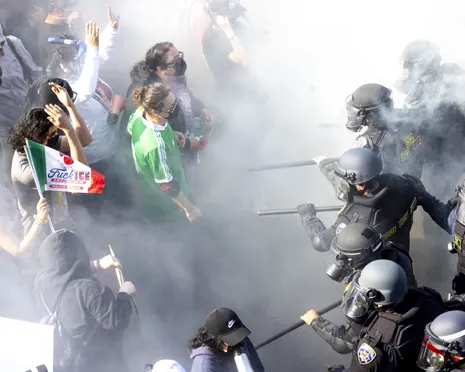
Homan announced last week that the agency would temporarily suspend most vehicle stops nationwide to review existing procedures. Within 24 hours of Homan’s comments, President Donald Trump directed federal immigration agents to resume them. The back-to-back shootings sparked protests in Maine, Houston, and Boston, and raised significant questions over ICE agents’ lack of body cameras during critical encounters.
ICE originally launched a body-camera pilot program in 2024, deploying cameras to officers in five cities: Baltimore, Buffalo, Detroit, Philadelphia, and Washington DC. The Trump administration moved last year to slow-walk the program, urging Congress to cut funding by 75%, according to a Reuters report from January. In February, following the killing of two US citizens during an immigration crackdown in Minnesota, Kristi Noem—then the DHS chief—stated that the body-camera program would be rolled out to ICE agents nationwide “as funding is available.”
The killing of Durán marked the 11th fatal shooting by federal immigration officials since Trump’s second term began, including the deaths of Renee Good and Alex Pretti in Minneapolis, according to a Guardian review of public reports. FBI agents will no longer be investigating confrontations with ICE agents, a New York Times report said, citing people briefed on the decision. Written notice of this decision had been sent on Thursday. Previously, these investigation cases could yield information that could be used to prosecute ICE agents involved in violent encounters. Dani Anguiano contributed reporting to this article.