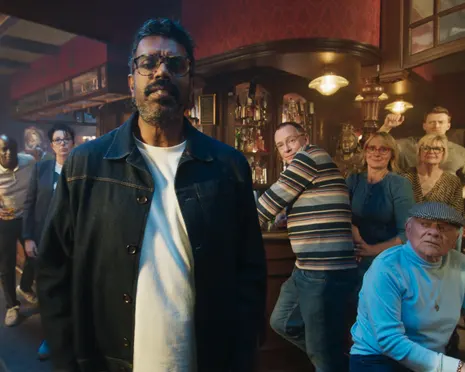
BBC Revives Classic Licence Fee Campaign with Romesh Ranganathan at the Helm
Wanderstayfinder.com – More than four decades after John Cleese delivered one of broadcasting’s most memorable appeals for public support, the BBC has unveiled a fresh iteration of its beloved advert. The original 1985 piece, featuring the Monty Python star questioning a crowded pub about the corporation’s contributions, remains a touchstone in public service broadcasting history. Now, as the organisation navigates a critical period for its future, it has brought the concept back to life with a musical twist led by comedian Romesh Ranganathan.
A New Generation Meets a Classic Format
The updated version, helmed by director Dougal Wilson—who previously worked on Paddington in Peru and several John Lewis Christmas campaigns—transplants the setting to EastEnders’ iconic Queen Vic pub. Ranganathan portrays a frustrated licence fee holder venting his grievances to a bartender, echoing Cleese’s original sentiment about the cost of television ownership.
“Fifty-eight quid for the privilege of sitting in your own home, watching your own television set. It’s diabolical. I mean, what’s the BBC ever given us for 58 quid?”
However, this time around, the crowd of familiar faces responding to his complaints includes contemporary stars such as Chris Martin, Claudia Winkleman, Greg James, and David Jason, who appeared in both versions. The comedian then embarks on a whirlwind musical journey through the BBC’s extensive portfolio, encountering approximately ninety celebrities along the way. The roster spans from Alan Carr and Cate Blanchett to the animated character Hey Duggee and news presenter Clive Myrie.
Challenges Facing the Corporation
The timing of this campaign could not be more significant. Matt Brittin, the BBC’s director general, has characterised the current situation as “a moment of real jeopardy” for the organisation. Several factors contribute to this concern, including declining licence fee payments and intensifying competition from digital platforms like YouTube, TikTok, and various streaming services.
Recent data reveals that the number of households paying the licence fee dropped more rapidly than anticipated over the past year. An additional half a million families chose to discontinue their payments, representing a substantial financial blow to the broadcaster. To visualise the potential consequences, the advert features Ranganathan being transported backstage at Strictly Come Dancing, where he encounters Louis Theroux. The journalist delivers a poignant message while gesturing toward a massive on/off switch labelled “BBC”:
“You know, none of this has to exist, if we don’t want it to.”
Public Reaction and Historical Context
The film received its television premiere during the World Cup final and was subsequently released across social media platforms on Sunday morning. Viewer responses have been mixed but generally positive. The Telegraph offered criticism, suggesting the selection of BBC programmes showcased in the advert was “notably middlebrow.” Meanwhile, the Times noted that the concept felt like a rehash of familiar territory, observing that this tendency is “sorely emblematic of so much TV content these days on the BBC, but also elsewhere.”
The BBC has produced numerous promotional films throughout its history designed to communicate its public service mission. These have included celebrity-studded renditions of the Beach Boys’ “God Only Knows” and Lou Reed’s “Perfect Day.” Cleese’s original advert, which drew inspiration from Monty Python’s Life of Brian scene asking “What Have the Romans Ever Done For Us?”, received particular praise from Chris Packham, who described it as “genius” while supporting an open letter defending the corporation.
Ranganathan’s Personal Connection to the BBC
When asked about his involvement, Ranganathan expressed genuine surprise and honour at being selected to front the campaign. He described his decision as a “no-brainer,” citing his deep appreciation for the organisation’s contributions to British culture.
“I strongly, strongly believe that the BBC should exist and, look, don’t get me wrong, I don’t think it’s without its flaws. There have definitely been times and issues where I wished it could have dealt with things differently – but I feel incredibly passionate about the fact that we should have it and it adds so much to our lives. And I’m really proud of it.”
He further emphasised his conviction: “I really do feel strongly that we should have a BBC and I think that there is nothing else that does what the BBC does.”
Reflecting on his childhood, Ranganathan credited the BBC’s Goodness Gracious Me with shaping his career aspirations. “I didn’t think people that looked like me could do comedy,” he explained. “I was doing standup as a little kid and then you watch something like Goodness Gracious Me and you think, yeah, I could do that.”
The advert cleverly acknowledges this personal connection by highlighting Ranganathan’s own contributions to the corporation. Clive Myrie points out his role hosting The Weakest Link, Sara Cox reminds viewers of his Radio 2 programme, and Chris McCausland draws attention to his “hip-hop podcast on Sounds.” Through this combination of nostalgia, celebrity appeal, and personal testimony, the BBC hopes to remind audiences of the value they receive through their licence fee payments.