Where Did They Go? The Human Cost of America’s World Cup Clean-Up
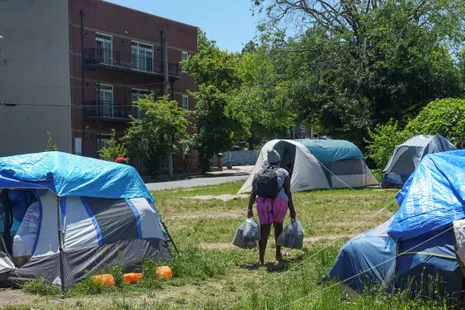
Where did they go – “Where did they go?” is the question echoing through Atlanta’s streets as homeless residents face sudden displacement. “We are more than just dollar signs to this city,” one resident explained, expressing the collective frustration of those pushed aside. “We are people. And we are deeply frustrated that they have chosen to treat us as less than human while the World Cup takes center stage.”
For many unhoused individuals, the tournament has brought not celebration, but displacement. One man recounted his experience being transported to an unfamiliar location overnight. “They dropped me off there in the middle of the night,” he said. “They call them Mormon centres or whatever, but it ain’t nothing but a warehouse of cops. It looked like a Fema camp. When I saw it, I left, I walked all the way back here. It’s because of the World Cup. They’re trying to make it look good for tourists. They don’t want the eyesores around.”
Parallel Journeys: Luxury and Displacement
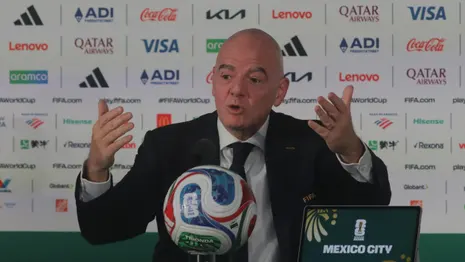
While homeless residents faced uncertainty, FIFA President Gianni Infantino traveled in style. One week before the World Cup final, he flew from Miami to Qatar aboard a luxury private jet. Infantino attended the funeral of former Emir Sheikh Hamad bin Khalifa Al Thani in Lusail—described as a “mentor, a visionary”—and was photographed frowning on a silver throne, embodying full global statesman mode.
That same Sunday, Donald Trump made an official visit to his Virginia golf complex. The property features a 50,000 sq ft clubhouse, an Olympic-sized swimming pool, and unobstructed views of the Potomac River, all made possible through a renovation that required chopping down 465 trees.
The Freedom Park Sweep
Also on that day, the Guardian published a story about the homeless clearance at Freedom Park, located less than a mile from one of Atlanta’s World Cup fan-watch areas. City employees entered the park without warning and removed the tents, personal ID, medication, and other belongings of people camping there.
A city official explained that Freedom Park was not an official encampment, so rules over process were not applied. The sweep was described as “routine park maintenance.”
A day before England’s semi-final against Argentina—the last of Atlanta’s eight World Cup matches—Freedom Park was almost entirely empty. The rolling green space, surrounded by handsome suburban houses, showed no mark of the tents and bags and chairs removed by the city.
Policy and Precedent
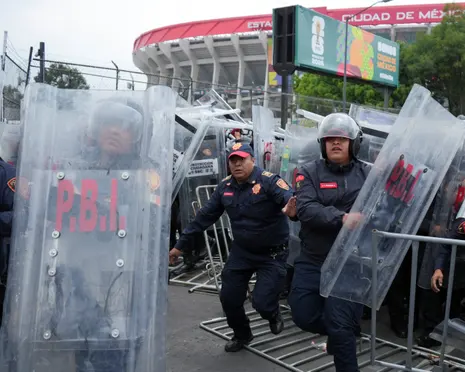
The clearance of homeless people from host city centres has been a feature of the World Cup in the US, Canada and Mexico. Andre Dickens, the mayor of Atlanta, has been clear about why this is happening. “We want to make sure those unsheltered individuals don’t come anywhere near downtown and throughout the city of Atlanta, not just during the World Cup but now,” he said last year.
This is also Trump administration policy. “You should not have to cross the street in downtown Atlanta to avoid a crazy person yelling at your family,” the vice-president, JD Vance, told an event in Peachtree City last August, using language that was criticised for its hostility.
Atlanta launched a World Cup-centred plan called Downtown Rising, designed to remove homeless camps in the city centre before the tournament. The campaign has funding, a laudable set of aims, and claims to have housed 500 people.
A Tragic Precedent
Freedom Park suggests the city has also been heavy-handed in its actions at times, tragically so in one case. In January last year, Cornelius Taylor was sleeping in his tent on Old Wheat Street, in the historic black neighbourhood of Sweet Auburn, when council workers arrived to conduct a clearance of the street.
Taylor was crushed to death in the street by a five-tonne bulldozer as he slept. His fiancee would later describe finding blood and body parts inside his possessions. His death led to promises for greater care and the introduction of new protocols in the city, which is home to an estimated 3,000 unhoused people.
Where Did They Go?
There is still uncertainty over how this has worked in practice. At the Center for Health and Rehabilitation in Fulton County, just across from the Freedom Park trail, workers treat homeless people with mental health and addiction problems. One care worker said she had noticed a drop in numbers of people on the streets during the World Cup and had read stories of the homeless being housed for the duration, but had no clear idea where they had been taken or whether there had been any choice in their relocation.
“I haven’t seen evidence of what has occurred, but we do know the people are gone. So where did they go? A lot of those people definitely wanted to be where they were within that vicinity. And I don’t know where they were taken. So they could have been displaced well away.”
The question remains: where did they go? As the World Cup continues, many wonder if these displaced residents will return to their familiar spaces or remain scattered across the city, their stories largely forgotten amid the global spotlight.