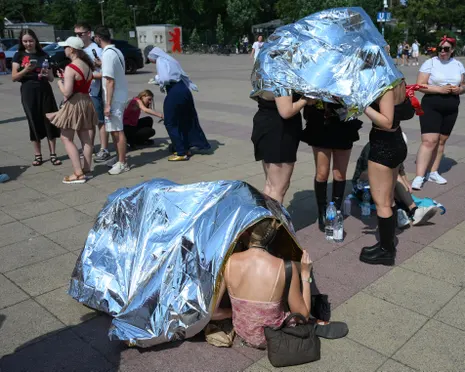
‘Woefully unprepared’: Extreme Heat to Double US Hospitalizations by 2040, Study Warns
Wanderstayfinder.com – As the climate crisis intensifies, the United States is bracing for a surge in heat-related health emergencies. A recent study projects that by 2040, hospitalizations linked to extreme heat will nearly double, with significant consequences for public health systems. The research, published in the American Geophysical Union’s *GeoHealth* journal, estimates that annual emergency department visits or hospitalizations due to heat-related illnesses will rise from approximately 109,000 to 237,000 over the next 15 years. This surge is expected to increase healthcare costs for such conditions by nearly 100%, surpassing $1 billion annually.
Heat-Related Deaths Outpace Other Extreme Weather Events
Heat has become the deadliest extreme weather phenomenon in the US, outpacing the combined toll of hurricanes, floods, and tornadoes. Over the past two decades, heat-related fatalities have risen by more than 50%, highlighting the growing threat posed by prolonged periods of intense heat. The study emphasizes that vulnerable populations—those without access to air conditioning, individuals working outdoors, and people with chronic health conditions—are disproportionately affected. Poorer communities, in particular, face heightened risks due to inadequate housing designs and limited financial resources to mitigate heat exposure.
“Heat is an amplifying event. If you’re already struggling with a pre-existing condition, there’s a good chance it will lead to some sort of illness like heatstroke or even death,” said Vivek Shandas, a professor at Portland State University and co-author of the research.
The new analysis examined 53 of the nation’s largest metropolitan areas, projecting the trajectory of heat-related illnesses under varying emission scenarios. Shandas and his colleague, Stephan Brown of CAPA Strategies, found that the burden of heat will not be evenly distributed. Regions such as California and Las Vegas are predicted to experience the highest concentrations of heat-related health issues, while areas in the northeast and Ohio Valley—unaccustomed to extreme temperatures—may see the most severe outcomes per event.
Climate Trends and Immediate Impacts
This year’s record-breaking March temperatures underscore the urgency of the findings. The US has already recorded its hottest March in history, with summer forecasts predicting above-average heat and an increased risk of wildfires. These trends are part of a broader pattern driven by climate change, which has steadily raised the baseline of heat across the country. The study warns that persistent heat waves, especially in regions unprepared for such conditions, will strain healthcare infrastructure and exacerbate existing health challenges.
“There is this staggering cost to society we are going to see over the next 15 years,” Shandas noted. “It’s not just a plateau of heat-related illnesses—we are looking at a sustained increase.”
Factors like urban heat islands and aging infrastructure are compounding the problem. In cities where green spaces are limited and buildings retain heat, temperatures can rise significantly beyond regional averages. Meanwhile, communities with older housing stock or those lacking modern cooling systems face prolonged exposure to dangerous conditions. The study highlights that economic and policy decisions also play a critical role in shaping the health impact of extreme heat.
Economic Pressures and Cooling Costs
A report by the National Energy Assistance Directors Association (NEADA) and the Center for Energy Poverty and Climate reveals that rising energy costs are worsening the situation. This summer, the average US household is projected to spend nearly $800 on electricity, a 10% increase from the previous year. Such expenses are creating a cooling affordability crisis, forcing families to choose between essential needs like food, rent, and medication and maintaining indoor temperatures during heatwaves.
“When temperatures break records, utility bills often do too,” said Mark Wolfe, executive director of NEADA. “For families already struggling to make ends meet, higher cooling costs can force difficult choices between paying utility bills and covering other necessities such as food, rent, or medicine.”
These financial pressures are linked to policy shifts under the Trump administration, which reduced funding for programs designed to combat extreme heat. The cuts have left cities with fewer resources to implement adaptation strategies, such as expanding tree cover or improving building insulation. As a result, regions with limited access to climate resilience initiatives are now more exposed to the health risks of rising temperatures.
Public Health Challenges and Future Projections
Public health agencies are under increasing pressure as heat events become more frequent and intense. Shandas warned that the combination of climate change and economic factors is creating a “perfect storm” for vulnerable groups. Elderly individuals on fixed incomes, for example, may struggle to afford cooling solutions, particularly during extended heatwaves. The study also suggests that the demographic most at risk will shift over time, with populations in hotter regions increasingly affected by health complications.
Experts stress that the threat of extreme heat is not isolated to medical outcomes. It intersects with broader societal issues, including housing quality, energy access, and socioeconomic disparities. In areas where air conditioning is unavailable or unreliable, heat exposure can lead to dehydration, cardiovascular strain, and respiratory distress. These conditions are further complicated by the aging population, which is more susceptible to temperature extremes.
The findings paint a grim picture of the future, with projections indicating that heat-related illnesses will become a major public health concern by 2040. The study underscores that while temperatures will continue to rise, the true danger lies in the convergence of environmental and economic challenges. “It’s a moment where a number of trains are heading towards each other on the same track,” Shandas added. “The heat risk isn’t growing just because of the temperature—it’s growing because more vulnerable people are living in places that are getting more extreme heat.”
With the nation’s cities increasingly unprepared for the heat, the study calls for urgent action. Investments in climate adaptation, energy affordability programs, and public health infrastructure are essential to reduce the projected surge in hospitalizations. Without intervention, the impact of extreme heat on health and society could become irreversible, threatening to double the number of annual emergency cases and straining healthcare systems nationwide. The research serves as a stark reminder that the fight against climate change is not just about reducing emissions—it’s about safeguarding the most vulnerable populations from its escalating health consequences.