Expert Identifies Likely Burial Site in Peter Falconio Murder Case
New Findings Point to Abandoned Racetrack
Peter Falconio murder – A British specialist has pinpointed what he believes is the most probable burial location for Peter Falconio, whose death in the Australian outback remains one of the country’s most enduring mysteries. Dr. Mark Harrison, who previously consulted with Australian authorities, now considers an abandoned racetrack just eight kilometers from where the original attack occurred as the prime candidate for finding the backpacker’s remains.
The tragedy began in July 2001 when Falconio and his girlfriend Joanne Lees, both from Yorkshire, England, were traveling along a remote highway in Australia’s Northern Territory. The incident took place roughly three hundred kilometers north of Alice Springs in one of the nation’s most isolated areas. During the ambush, Bradley John Murdoch shot Falconio beside the road and restrained Lees with cable ties in what investigators viewed as an attempted kidnapping. Lees managed to escape into the bushland and hid for several hours before being rescued.
Murdoch’s Silence and New Analysis
Bradley Murdoch was convicted of murder in 2005 but always maintained his innocence while serving his sentence. He never revealed where he had concealed Falconio’s body before dying in prison last year. This week, marking twenty-five years since the attack, Northern Territory police released video footage showing a distressed Murdoch refusing to discuss the burial site, repeatedly saying, “I know nothing.”
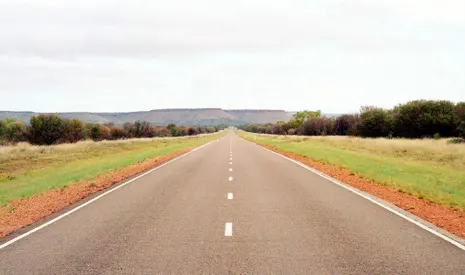
Police investigations have long operated under two key assumptions. First, searching for Falconio is like finding a needle in a haystack across vast stretches of red earth and sun-bleached vegetation, extending southward a distance similar to traveling from London to Leeds. Second, given this enormous geographic area, only Murdoch himself could possibly lead investigators to the exact location.
Harrison, who served as the United Kingdom’s national police search adviser during the early 2000s and specializes in homicide cases involving missing bodies, challenges this conventional thinking. He told Guardian Australia that the probability of discovering Falconio’s remains remains substantial. Using criminal profiling techniques alongside physical site analysis, Harrison originally identified five potential burial locations. This year, accompanied by retired FBI criminal profiler Kathy Canning-Mello, Harrison revisited these sites. Their assessments were documented for the television program Outback Terror: The Falconio Murder.
Why the Racecourse Stands Out
After collaborating extensively with Canning-Mello, Harrison narrowed his list from five candidates down to three. However, he now identifies the disused racecourse as the primary site for any thorough geoforensic investigation. Harrison explained the reasoning behind this conclusion: “We have a phrase in this type of work, whenever we work on a cold case we say, ‘You must clear the ground from under your feet.’ What we mean by that is that the nearest most proximate location must be considered.”
“If you had a map of the area, the racecourse is the most likely crime scene near the attack site. The geography is unique to this case. The nearest place to conceal a body is the racecourse, otherwise it’s just a stretch of road.”
Without a formal confession from Murdoch, psychological profiling offers perhaps the most reliable method for understanding the killer’s mindset. Analysis suggests Murdoch’s original intention when shooting Falconio and binding Lees was to abduct and assault her. As a former interstate drug courier who regularly traveled the Stuart Highway—the vital north-south artery cutting through Australia’s interior—Murdoch possessed intimate knowledge of the terrain. Investigators believe he intended to transport Lees to a predetermined isolated destination.
When Lees successfully escaped, Harrison proposes that this intended destination likely became Falconio’s burial site. The racecourse presents compelling advantages for this theory. Harrison noted that Murdoch, being an experienced long-distance driver, would have passed the racecourse numerous times over the years, potentially during its active period. Furthermore, the attacker selected the ambush location strategically for multiple reasons. Once darkness fell and they passed the racecourse, a perfectly straight road extended ahead, providing excellent visibility in both directions. The racecourse also offered rapid access and superior concealment through its old buildings and surrounding vegetation.