Regional Tensions Escalate as Iran and US Clash Across Multiple Fronts
Hospital Evacuation Sparks Outrage in Ahvaz
Iran reports fresh strikes near Qeshm – Iran has formally condemned what it describes as a “barbaric attack” targeting the vicinity of a pediatric cancer facility in the southwestern city of Ahvaz. According to Esmail Baghaei, the nation’s foreign ministry spokesperson, the incident necessitated an emergency evacuation of the medical center, leaving young patients and their families in a state of “severe suffering and anxiety.”
Shahid Baqaei Hospital, a children’s cancer treatment centre in Ahvaz, was evacuated last night after the US attacked a nearby location. This barbaric attack, reminiscent of Israel’s atrocities against healthcare facilities, caused severe suffering and anxiety upon the hospitalised children, and forced the emergency evacuation of 211 patients undergoing chemotherapy. This constitutes a cowardly war crime against the most innocent of human beings – children who are bravely fighting for their lives.
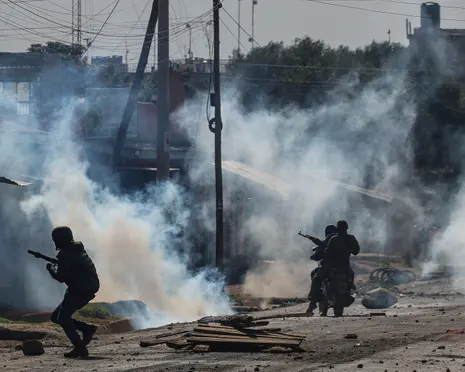
Baghaei characterized the incident as a war crime directed at vulnerable children battling illness. The United States military has not yet issued an official response to these accusations. Over the past several days, American forces have significantly increased the intensity and scope of their operations within Iranian territory. Iranian state television has broadcast footage of explosions occurring in multiple urban centers across both northern and southern regions, as well as in the vicinity of Tehran.
Qeshm Island Under Fire
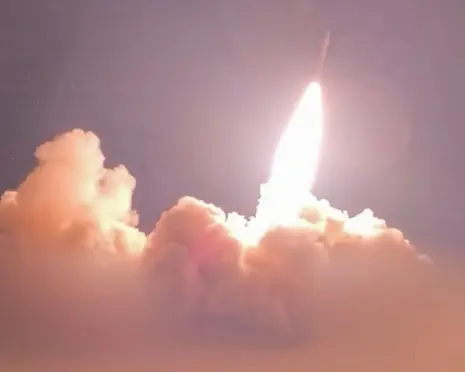
Iranian news organizations have confirmed that American forces conducted strikes near Qeshm Island, a strategic Gulf location situated close to the vital Strait of Hormuz. This development coincides with a sharp escalation in hostilities between Washington and Tehran. Fars news agency cited local officials who reported an “American missile strike in the vicinity of Qeshm.” Meanwhile, Tasnim news agency relayed that its field correspondents observed projectiles impacting areas surrounding the island, describing the source as “the American enemy.”
Regional Ripple Effects
The conflict’s impact extends well beyond Iranian borders. The Kuwaiti military announced it is actively responding to renewed drone incursions originating from Iran following overnight strikes. In a formal statement, the Kuwaiti army declared that “Kuwaiti air defences are currently engaging hostile drone attacks following the Iranian aggression.”
Meanwhile, Yemen’s Houthi movement has issued a stark warning to Saudi Arabia. Houthi leader Abdul Malik al-Houthi stated on Thursday that Riyadh’s oil infrastructure and other critical facilities would become legitimate targets for Houthi missiles and drones if the kingdom decides to intervene in what he termed “comprehensive aggression” against Yemen. This threat follows recent Houthi missile launches against Saudi Arabia, which came after the group accused the Saudi kingdom of bombing an airport under Houthi control on Monday, thereby ending a four-year ceasefire between the two nations.
Maritime Disruption and Diplomatic Developments
Maritime security concerns have also emerged in Iraq. Both AFP and Reuters reported that a drone hit a vessel positioned off the port of Basra in southern Iraq. According to oil and security officials, the ship, which had recently arrived from the United Arab Emirates and was “carrying American-branded cars,” was struck near an oil terminal. As a direct consequence, crude oil loading operations have been suspended at all Iraqi terminals.
In a separate development concerning the Middle East peace process, Donald Trump’s Board of Peace (BoP) has significantly scaled back its Gaza recovery initiative. What was once envisioned as an ambitious reconstruction blueprint for the entire territory has been reduced to a limited pilot program focused on the southern portion of the strip. Even this scaled-down version, which would establish a temporary camp for a small segment of Gaza’s two million displaced residents alongside a Palestinian administration, police force, and international security contingent, is not anticipated to materialize before the year concludes.
Additionally, Iraqi Prime Minister Ali al-Zaidi has directed an investigation into a thwarted effort to smuggle weapons to Hezbollah in Lebanon through Iraq’s border. Iraqi authorities confirmed they would “coordinate” with Syria on the matter after Damascus announced it had intercepted a shipment containing missiles at their shared border.
Lebanon and Oil Markets Respond
Lebanon’s foreign minister, Youssef Raggi, announced that his country has resolved to “end Hezbollah’s military presence,” emphasizing that matters of war and foreign policy now fall under the “exclusive prerogative of the Lebanese state.” The Lebanese government is actively pursuing the disarmament of Hezbollah, which remains one of the most heavily armed non-state actors in the region, making this a central element of its domestic strategy.
Financial markets have reacted to the mounting tensions. Oil prices have risen approximately 1% as concerns grow over potential disruptions to the Strait of Hormuz and other critical Gulf shipping routes. Brent crude, the global benchmark for oil pricing, increased by 1% to reach $85.85 per barrel.