Julia Gillard and Anthony Albanese Condemn ‘Ditch the Witch’ Campaign Against Victorian Premier
Wanderstayfinder.com – Sexist – Recent controversy has erupted in Victoria as Julia Gillard and Anthony Albanese, prominent figures in Australian politics, united to criticise a provocative campaign targeting Jacinta Allan, the state’s current premier. The initiative, which features a series of truck-mounted billboards displaying Allan alongside the phrase “ditch the witch,” has sparked a wave of public backlash, with critics arguing that the slogan reinforces outdated stereotypes and undermines the integrity of political discourse.
Ambiguous Messaging and AI-Generated Imagery
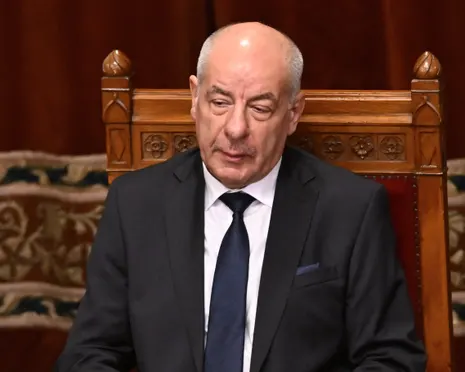
The campaign has been visible across Melbourne for nearly a month, with billboards showcasing images of Allan wearing a black pointed hat and visible warts, accompanied by ads for a local brothel. While the visual elements are designed to evoke a sense of caricature, the phrase itself has been interpreted as a blunt attack on Allan’s leadership. Albanese, during a press conference in Canberra, called the campaign “sexist” and “totally unacceptable.” He stressed that public figures should be judged on their policies and ideas, not subjected to personal ridicule.
“We want to encourage women to enter public life and it should be a contest of ideas, not personal attacks,” Albanese said.
Albanese further remarked on the need to “turn the temperature down” in political rhetoric, particularly after an incident where threats against politicians had surged. He highlighted the importance of respectful dialogue, noting that while differing opinions are valid, reducing individuals to sexist slurs is unacceptable. “You can have a disagreement with people’s policy position by all means. You don’t have to denigrate them in such a personal way,” he added, though he did not specify which media outlets were involved in the attacks.
Historical Precedent and Personal Attacks
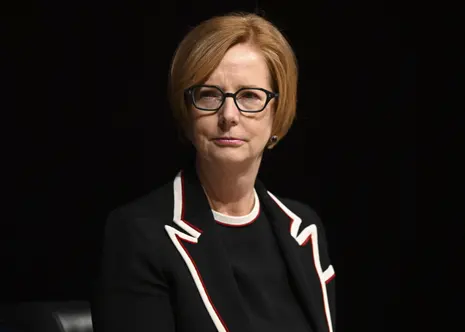
For Gillard, the phrase “ditch the witch” carries deep personal significance. She referenced it in a social media statement, expressing her disappointment in its revival. “This was a slogan used against me as prime minister fifteen years ago,” she recalled, linking the current campaign to past instances of gender-based hostility. In 2011, then opposition leader Tony Abbott had stood beside a poster bearing the same phrase during an anti-carbon tax rally, which became a symbol of the sexism directed at Gillard at the time.
“I was offended when the leader of the opposition went outside in the front of parliament and stood next to a sign that said ‘Ditch the witch,’” Gillard said in her now-iconic “misogyny speech,” which was later hailed as one of the most memorable moments in Australian TV history.
The slogan had been used to mock Gillard’s leadership and was a focal point in her powerful address to the Australian parliament. Today, she sees its reappearance as a reminder of how far women have come in politics, yet how easily sexism can resurface. “In the years since, my view has been that things were slowly improving for women in politics,” she noted. “Sexism hasn’t gone away, but it is less ferocious in the political mainstream, though social media continues to be a toxic sewer.”
Political Backlash and Funding Claims
The campaign’s funding has been a point of contention, with The Age reporting that some of the billboards were partially paid for by Franco Puleo, the owner of a brothel in South Melbourne. Puleo defended the slogan, claiming it was not sexist but rather a reflection of public sentiment. “She doesn’t answer questions. She’s not accountable to everything … It’s just how people are feeling. That’s what they’re resorting to,” he reportedly said.
Despite Puleo’s justifications, the campaign has drawn sharp criticism from state Labor MPs. Victorian Attorney General Sonya Kilkenny, in a social media post, called for an end to the abuse of women in political roles. “Women in public life should not have to accept abuse and misogyny as part of the job,” she wrote. “You can disagree with a politician. You can disagree with a government. That’s democracy. Reducing a woman to a sexist slur is not.”
State Opposition and National Leaders React
The Victorian opposition leader, Jess Wilson, clarified that her party had no involvement in the billboard campaign, describing the language as “inappropriate.” “That sort of discourse should never be used in politics,” she said. “We shouldn’t see this happening on our streets.” Meanwhile, Nationals leader Matt Canavan acknowledged the campaign’s impact, stating that while he wouldn’t endorse the specific method, he understood the Labour party’s outrage. “We all know that political ads can be controversial,” he remarked, though he left room for debate on the slogan’s intent.
Albanese’s comments also touched on the broader implications of the campaign, particularly its effect on public perception. “What I don’t want to do is to have a press conference in this courtyard after a tragedy,” he said, referencing the potential for the slogan to escalate tensions. The premier’s response to the campaign, which included a public statement condemning sexism in political debates, has been seen as a direct challenge to the imagery and language used in the billboards. “People are entitled to disagree with me. That’s democracy,” she said. “But I care that this attacks women. And I care about who’s next.”
As the debate continues, the campaign serves as a microcosm of the ongoing struggle between political messaging and gender equality. While some argue that the slogan is a creative way to highlight public discontent, others see it as a regression to a harmful form of rhetoric. The intersection of AI-generated imagery and traditional political advertising raises new questions about the role of technology in shaping public opinion and the potential for amplified bias. With the campaign now in the spotlight, the pressure mounts on all political actors to reflect on how such language affects the representation of women in leadership.
Julia Gillard’s historical context adds weight to the current criticism, as her experience with the phrase underscores its recurring nature. The revival of the “ditch the witch” slogan not only reignites discussions about sexism in politics but also highlights the importance of vigilance in maintaining inclusive dialogue. As the movement for women’s empowerment gains momentum, the challenge remains to ensure that public figures are respected, regardless of the policies they champion.
In the wake of these condemnations, the campaign’s creators may face increased scrutiny. While Franco Puleo maintains that the messaging is a reflection of public sentiment, the combination of the slogan with AI-generated images has been perceived as a calculated effort to undermine Allan’s credibility. The controversy has also sparked conversations about the influence of social media in spreading such messages, with Gillard noting that platforms often serve as breeding grounds for toxic commentary.
With the political landscape in Victoria now under a microscope, the campaign’s success or failure may hinge on its ability to shift public opinion rather than merely provoke outrage. As debates unfold, the focus remains on whether such imagery can be seen as a legitimate form of political expression or a form of gendered harassment. For now, the “ditch the witch” slogan continues to be a rallying point for those advocating for a more inclusive and respectful political environment.