Dowry Murders in India No Longer Spark Public Anger or Debate, Study Finds
Dowry murders in India no longer – A recent study has revealed a striking shift in the way dowry-related violence is perceived in India. Once a catalyst for widespread public outrage and political discourse, the practice of killing women due to dowry disputes has now become less prominent in both societal and legislative conversations. Despite the continued toll of thousands of lives lost annually, the issue no longer generates the same level of collective grief or activism that characterized the 1970s and 1980s. Dr. Kriti Kapila, a social anthropologist at the King’s India Institute, notes that this change reflects deeper societal transformations and the growing control of dissent within contemporary Indian political systems.
Case Study: A Silent Tragedy in Greater Noida
One such incident, which recently captured attention, involved Nikki Bhati, a 28-year-old woman from Greater Noida, a new satellite town near Delhi. In August 2022, Bhati was set ablaze by her husband in front of their six-year-old son, an act linked to a dowry dispute. The event was filmed and circulated online, sparking brief moments of public outrage and protests in Delhi. However, as the media coverage waned, the momentum of the case faded, illustrating a broader trend where dowry deaths are no longer central to public discourse.
“Political protest is problematic globally today. We have strong-handed regimes, including in India, where protest is highly controlled,” Kapila remarked. “Expression of dissent or dissatisfaction is controlled or subject to self-censorship.”
Kapila’s research highlights how the social and political landscape has evolved since the 1961 ban on dowries. While the law aimed to curb the practice, it has not eradicated the underlying social pressures that drive dowry demands. The study argues that the persistence of these demands, often tied to caste, class, and education, has transformed dowry from a ritual offering into an extractive system where grooms are seen as economic assets rather than individuals.
From Public Outcry to Private Shame
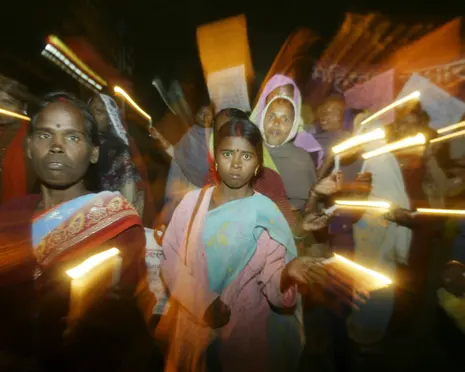
Historically, dowry disputes led to dramatic, public killings—such as the infamous “kitchen fire” cases of the 1970s and 1980s, where women were murdered in staged accidents. These incidents galvanized feminist movements, becoming one of the earliest mass campaigns by women in post-independence India. However, the research suggests that this dynamic has changed. As paraffin, or kerosene, was phased out of Indian homes in the 1990s, the alibi of “accidental” burns became less credible. Instead, hostile in-laws increasingly drove young brides to take their own lives, turning public outrage into personal shame.
“The more urgent question is not why the anti-dowry law hasn’t worked, but why the killing has stopped generating the kind of collective grief that once brought thousands of women on to the streets,” Kapila said. “That disappearance is not accidental – it has a structure.”
According to the study, the legal reforms aimed at dismantling caste hierarchies have altered the way dowries function. While these changes have reduced the overtly ritualistic nature of the practice, they have not eliminated the social structures that sustain it. Kapila explains that dowries have become a “premium on the male child,” with families using them to secure financial advantages. When the bride’s family fails to meet these expectations, the groom’s family may retaliate with violence, often without public scrutiny.
Demographic Shifts and Silent Feminism
The research also points to demographic changes as a contributing factor. The 2001 Indian census revealed a skewed child sex ratio, with a national average of 927 girls for every 1,000 boys. In parts of Punjab, the ratio dropped even further, to 754 girls per 1,000 boys. Kapila attributes this to the rise of sex-selective abortions, which are increasingly used to avoid future dowry obligations. “Anecdotally, I know people across classes and castes are not contrite about aborting a foetus because they were having a daughter,” she noted. “The effects are demographic. Fewer women, but also fewer sisters.”
This shift underscores a broader pattern of women’s activism being subdued. In the past, dowry deaths were a rallying point for collective action, but today, they are often internalized. Kapila suggests that the lack of public mobilization stems from the perception that dowry-related violence is a private matter rather than a societal crisis. “It’s difficult to challenge, to find solidarity around issues that challenge social norms,” she added.
The Legacy of Feminist Movements
The study draws inspiration from the 1970s and 1980s feminist movements, which were fueled by the dramatic nature of dowry murders. These protests, organized by women, became a symbol of resistance against patriarchal structures. However, the research argues that the movement has waned as the method of killing has shifted from public spectacle to more隐蔽 (hidden) forms of violence. This change has made it harder to sustain large-scale activism, as the victims are no longer seen as public figures but as individuals who have chosen to end their own lives.
Kapila emphasizes that the decline in public anger is not solely due to the absence of dowry deaths but also because of the way these deaths are framed. “The more urgent question is not why the anti-dowry law hasn’t worked, but why the killing has stopped generating the kind of collective grief that once brought thousands of women on to the streets,” she said. “That disappearance is not accidental – it has a structure.”
Despite this shift, Kapila remains hopeful that new forms of resistance may emerge. She believes that while the current climate suppresses overt protests, women will continue to find innovative ways to challenge dowry practices. “Even though dowry continues to be practised and continues to be fatal for many women, it is curious that dowry deaths no longer animate any political discussion or mobilisation,” she remarked. “Women will possibly find other ways to protest against dowry deaths.”
Structural Barriers to Change
The study also highlights structural barriers that prevent sustained public outrage. Kapila argues that the normalization of dowry-related violence has made it easier for families to perpetuate it without fear of backlash. “The effects of these changes are not just immediate—they are systemic,” she said. “They create a cycle where women are expected to bear the burden of financial obligation, and their families are incentivized to enforce it through violence.”
With the rise of digital media, the spread of information has become faster, but so has the erosion of public sentiment. Cases that once dominated news cycles and inspired mass demonstrations now receive fragmented attention, often overshadowed by more “newsworthy” events. Kapila’s analysis suggests that this pattern reflects a broader acceptance of dowry deaths as a routine part of life, rather than a social emergency.
In summary, the research paints a picture of a society where dowry murders, though still prevalent, are no longer the driving force of public discourse. This shift is attributed to a combination of legal reforms, changing social norms, and the privatization of violence. While the past saw waves of feminist activism sparked by these deaths, the present reveals a more subdued approach, where the trauma of dowry-related violence is internalized rather than shared. Kapila’s work serves as a reminder that the fight for women’s rights in India is far from over, but it now takes on new forms and challenges in a world where public outrage is harder to sustain.