Hungarian Public Media Halts Broadcasts in Post-Orban Shift
Magyar’s Announcement Marks a New Media Era
Hungarian public media outlets halt broadcasting – Following a sweeping election victory in April, Hungary’s new prime minister, Péter Magyar, has announced a significant shift in the country’s media landscape. Public media outlets closely aligned with Viktor Orbán’s regime have paused their transmissions, signaling the end of a 16-year dominance over information. Magyar, who leads the Tisza party, expressed pride in these changes, stating on Facebook: “A historic day. Today marks the end of propaganda broadcasts on public media platforms. They lied at night, they lied during the day, they lied on every wavelength. That is now over.” This declaration underscores the political transition’s impact on Hungary’s media environment, which has long been a cornerstone of Orbán’s ideological control.
Orbán’s Grip on the Information Sphere
Viktor Orbán’s tenure as prime minister, spanning over a decade, was defined by his tight grip on the media. By transforming Hungary into a self-proclaimed “illiberal” democracy, he restructured state institutions to align with his nationalist agenda. Public broadcasters became tools for promoting his policies and vilifying opponents, including figures like George Soros and Volodymyr Zelenskyy. Under his leadership, an estimated 80% of the media landscape was controlled by Fidesz loyalists, encompassing both state-run and private outlets. This consolidation allowed for a parallel information reality, where independent journalism faced challenges in maintaining credibility.
Media Suspension and Immediate Effects
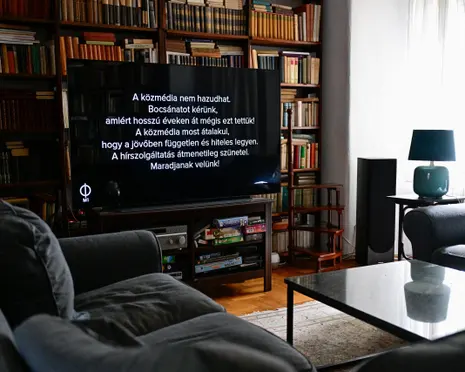
As of Tuesday afternoon, key public media platforms such as Kossuth Radio and M1 Television had ceased operations. M1’s broadcast featured a stark message: “Public media should not lie. We are sorry for doing it for so long.” The station also pledged to “reform so it will be independent and trustworthy,” with its news programme temporarily suspended. Viewers were urged to “stay tuned” as the channel transitioned into a new phase. Meanwhile, Kossuth Radio redirected its frequencies to a classical music programme by Béla Bartók, a move reported by Agence France-Presse journalists. Both M1 and Kossuth’s websites were inaccessible, highlighting the abrupt nature of the change.
Government Overhaul of Media Management
Magyar’s administration has taken swift action to reshape the media sector. Shortly after assuming power, it replaced the leadership of state television and radio, implementing a “comprehensive and immediate” review of public service media and its funding. This overhaul was part of a broader strategy to dismantle Orbán’s influence, with Magyar vowing to create “a truly balanced, objective news service.” The move also targeted private broadcasters linked to Orbán’s allies. At TV2, one of Hungary’s leading private networks, main news anchors were replaced, and the news director was removed, reflecting the extent of the transition.
Election Campaign and Media Shifts
During the campaign, state media painted Magyar as a figurehead of Brussels, an absent father, and a traitor to national values. This portrayal aimed to weaken his public appeal and frame his victory as a mandate to reform the media. In contrast, Magyar criticized state outlets for their role in spreading misinformation, comparing their coverage to propaganda from North Korea and Nazi-era Germany. His rhetoric emphasized a clean break from the Orbán era, positioning the new government as a force for transparency and accountability.
Orbán’s Response to the Media Reforms
Reacting to the changes, Orbán took to social media, calling the situation “another example of Tisza tyranny.” He encouraged viewers seeking “the truth” to turn to Hír TV, the channel associated with his Fidesz party. This response highlights the ideological clash between the two leaders, with Orbán framing the reforms as an attack on his legacy. Despite the suspension of key platforms, the new administration has left some state media operations intact, such as the continuation of non-news programming on M1.
Press Freedom Rankings and Information Reality
Hungary’s position in the press freedom index has deteriorated sharply since 2010. In 2026, the country fell to 74th place from 23rd, a decline attributed to government efforts to shape public discourse. This shift has created a parallel information reality, where state media and allied outlets dominate narratives, often marginalizing independent voices. Analysts note that while the new government has targeted Fidesz-linked media, the influence of these outlets remains strong due to their popularity among certain demographics.
Independent Journalism Under Orbán
Despite the Fidesz loyalists’ dominance, independent journalists continued to uncover scandals and challenge the regime. Their persistence, however, was met with resistance, as Orbán’s government sought to control the narrative through media manipulation. The current reforms aim to restore balance by reducing the concentration of power in the hands of a single party. Yet, the transition is not without challenges. While some private outlets may survive the shift, their editorial lines could evolve under the new political climate.
Implications for Hungary’s Media Landscape
The suspension of public media broadcasts marks a pivotal moment in Hungary’s media history. It reflects a deliberate effort to create a more independent information environment, though the process may take time. Magyar’s government has prioritized this change, signaling a commitment to redefining the role of media in Hungarian society. As the reforms take effect, the media landscape will likely see a mix of continuity and transformation, with state and private outlets adapting to new constraints and opportunities.
Global Context and Media Impact
Hungary’s media reforms are part of a larger trend in Europe, where governments have increasingly sought to influence public opinion through controlled narratives. The country’s decline in press freedom rankings highlights the risks of such concentration, as independent journalism becomes a casualty of political agendas. The current shift, however, offers hope for a more pluralistic media environment, though its success will depend on the implementation of reforms and the resilience of independent voices.
Conclusion and Future Outlook
The suspension of public media broadcasts represents a significant step toward dismantling Orbán’s legacy in the information sphere. While the changes are underway, the full impact of Magyar’s reforms will only become clear over time. As the new administration works to establish an independent media framework, the balance between state control and editorial freedom remains a critical issue for Hungary’s democracy. The journey ahead will test the effectiveness of these efforts, shaping the nation’s media landscape for years to come.