French prosecutors investigate racist abuse of Kylian Mbappé by Paraguayan senator
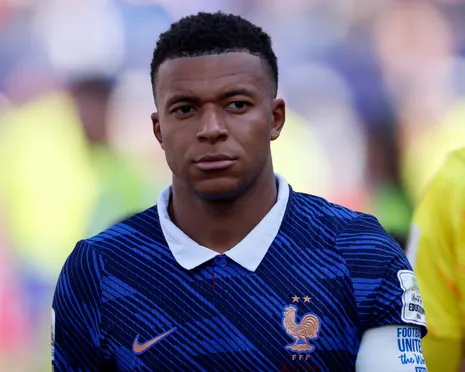
French prosecutors investigate racist abuse of Kylian – French authorities have initiated a probe into the alleged racist remarks directed at Kylian Mbappé by a Paraguayan senator following a contentious match at the World Cup. The Paris prosecutor’s office announced the inquiry on Tuesday, stating that the French Football Federation (FFF) had submitted a formal complaint to the national unit tasked with addressing online hate. The senator, Celeste Amarilla, of Paraguay’s Liberal Radical party, became the focal point after her outburst on social media following her nation’s defeat to France in the tournament. The investigation is examining whether her comments constitute aggravated public insult or incitement to hatred, with potential legal consequences including up to a year in prison and a €45,000 fine.
Incident sparks global backlash
The racist attack by Amarilla came shortly after France secured a crucial victory in the World Cup, with Mbappé’s penalty kick playing a pivotal role in advancing the team to the quarter-finals. In a social media post, Amarilla mocked the French star, labeling him a “colonised Cameroonian” who was “desperately trying to pass himself off as French.” She further accused Mbappé of being an illiterate “brute” and suggested that Paraguay’s players should have physically confronted him during the game. Her remarks were described as “utterly abhorrent and unacceptable” by the FFF, highlighting the severity of the incident in the context of international sports.
“Madame Celeste Amarilla, you are a despicable woman and unworthy of your position. You do not represent Paraguay, that country which has sweated passion and honour throughout the competition,” Mbappé wrote on social media in response. He criticized her for overshadowing the achievements of Paraguay’s team, accusing her of using racial slurs to divert attention from their historic performance. “Through your recklessness and your brazen racism, the entire world has already forgotten the journey and the historic effort that your players accomplished during this World Cup, making way for an incompetent woman who gives the worst possible image of her country,” he added.
Meanwhile, Amarilla defended her actions in an open letter posted in both French and Spanish. She claimed her insults were a direct reaction to Mbappé’s behavior during the match and France’s alleged shift from elegant play to “dirty football.” She also expressed regret over the “same insults” she had faced as a mixed-race individual, stating she had deleted her original post. However, she reserved the majority of the letter to challenge Mbappé’s response, accusing him of gender-based aggression and demanding an apology. “Who are you to call me indignant or despicable when you don’t even know me?” she questioned, signaling her intent to pursue legal action if the player did not retract his criticism.
French government emphasizes racial justice
French officials have underscored the importance of combating racial discrimination, with the Paris prosecutor’s office noting that Amarilla’s remarks were allegedly motivated by the victim’s “actual or perceived origin, ethnicity, nationality, race, or religion.” The legal framework in France allows for charges of aggravated public insult or incitement to hatred, both of which could apply in this case. The FFF’s complaint highlights the role of social media in amplifying such prejudices, urging authorities to act swiftly against discriminatory speech.
Macron’s office confirmed that the Paraguayan president, Santiago Peña, had sent a message of support to the French leader, condemning the senator’s comments. President Emmanuel Macron himself took to social media to express solidarity with Mbappé, declaring, “Another goal for Kylian Mbappé. Against racism this time,” and reiterating his commitment to defending the values of dignity, respect, and fraternity. His endorsement reflects broader public sentiment in France, where the issue of racial slurs in sports has sparked national debate.
Paraguay distances itself from senator’s remarks
The Paraguayan government has sought to dissociate itself from Amarilla’s comments, calling them “contrary to the values and principles that inspire peaceful coexistence and respect for human dignity.” A spokesperson noted that the senator’s statements “in no way” represented the official stance of the country or its people. This response aims to mitigate any diplomatic fallout, as Paraguay has historically been seen as a champion of multiculturalism and solidarity in international events.
Amarilla’s outburst, however, has not gone unnoticed in Paraguay. Critics argue that her remarks risk tarnishing the nation’s reputation, especially after its commendable performance in the World Cup. The senator’s ability to express her views freely on social media underscores the role of individual voices in shaping public discourse, even when those voices contradict national ideals. Yet, the incident has also prompted reflection on how racial prejudices can persist within societies that pride themselves on inclusivity.
Coach’s condemnation and ongoing scrutiny
France’s assistant coach, Guy Stephan, addressed the situation in a recent interview, stating he had not yet spoken to Mbappé about the abuse but was unequivocal in his condemnation of the senator’s actions. “In three words: it’s disgraceful, vile, outrageous,” he remarked, emphasizing the gravity of the offense. His comments align with the FFF’s position, which views the attack as a significant blow to the spirit of fair play in football.
The case has also reignited discussions about the intersection of sports and social justice. Mbappé, a symbol of diversity and excellence in French football, has faced similar criticisms in the past, but this incident has drawn global attention. The senator’s remarks, which combined racial slurs with personal attacks, have been scrutinized for their potential to marginalize not just the player but also the broader Paraguayan community. The investigation is seen as a step toward holding individuals accountable for their words in an era where social media amplifies voices on a global scale.
As the probe progresses, it remains to be seen whether Amarilla will face formal charges. The case highlights the complex dynamics of international competition, where pride in one’s team can sometimes lead to personal animosity. It also underscores the importance of addressing racism in real-time, particularly in high-profile contexts. French prosecutors, alongside the FFF, are determined to ensure that such incidents do not go unanswered, setting a precedent for future cases of discriminatory speech in sports and beyond.