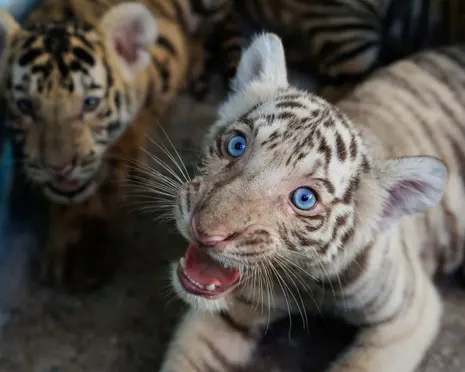
Cuban Zoo Celebrates Birth of Bengal Tigers Amid Energy Crisis
Cuban zoo celebrates birth of Bengal – In the heart of Havana, the Cuban national zoo has become a beacon of hope amid the nation’s ongoing challenges, as the arrival of four Bengal tiger cubs has sparked renewed optimism among staff. For Ángel Cordero, a seasoned zookeeper with 44 years of experience, the sight of the newborns—particularly one rare white tiger—has transformed the bleak backdrop of fuel shortages and prolonged power outages into a moment of pride. Despite the hardships, the cubs’ birth has reinvigorated the team, offering a glimpse of resilience in an otherwise struggling environment.
The energy crisis gripping Cuba has disrupted nearly every aspect of daily life, from transportation to medical care. Yet, within the zoo’s enclosures, the survival of these endangered felines stands as a testament to the ingenuity and determination of its caretakers. Cordero, who has spent decades maintaining the facilities, described the event as a “small miracle,” emphasizing the rarity of the white tiger’s emergence. “It’s only the second time” such a tiger has been born on the island, he said, his voice tinged with both exhaustion and joy. The achievement, he noted, is especially meaningful given the relentless strain on resources.
“And I was there for it,” Cordero added, his gaze fixed on the cubs as they tumbled and pounced within their enclosure. “Everything relies on fuel,” he explained, highlighting the critical role of energy in sustaining the zoo’s operations. “The animals’ movements, and the distribution of food—such as in the African savannah enclosure—must be transported on wheels; there is simply no other way.”
Since the US-imposed oil blockade began, the zoo has faced an unprecedented struggle to maintain its routines. Daily operations, including the feeding of a wide range of species from buffalo to rhinoceroses and hippopotamuses, now depend on a meager five-liter allocation of diesel fuel, far below the 20 liters required to keep the zoo functional. This shortfall has forced staff to adapt, relying on alternative methods to navigate the sprawling 375-hectare grounds. Horse-drawn carriages and electric tricycles have become the primary tools, replacing vehicles powered by gasoline or diesel.
Juan Carlos Santos, the zoo’s director, acknowledged the severity of the situation but pointed to the staff’s perseverance and new alliances with local businesses as key to maintaining stability. “Despite the energy crisis, the animal population has remained steady,” Santos told Reuters, underscoring the collaborative efforts that have kept the zoo’s ecosystem intact. These partnerships, he explained, have provided essential supplies, allowing workers to sustain the enclosures even as fuel rationing persists.
While the cubs’ birth has brought joy, the broader implications of the energy crisis remain stark. For Cordero, the challenges extend beyond mere logistics. “The enclosures I helped build are now under constant pressure,” he said, reflecting on how the blockade has intensified the zoo’s reliance on external support. He described the situation as a “unprecedented challenge,” one that has tested the limits of both infrastructure and human endurance. The once-reliable systems for feeding and monitoring the animals have become fragile, requiring constant adjustments and creative solutions.
Amid these difficulties, the zoo’s focus on conservation has taken on added significance. The Bengal tiger, a species on the brink of extinction, represents not just a biological rarity but also a symbol of the country’s commitment to preserving biodiversity. Cordero’s pride in the cubs’ survival is palpable, even as he grapples with the daily realities of a resource-scarce environment. “Every successful birth is a step forward,” he remarked, his words carrying the weight of both hope and hardship.
Officials have hinted at potential solutions, citing recent economic reforms that could shift Cuba’s socialist model toward a free-market approach. These changes, they argue, might unlock new avenues for foreign investment and scientific collaboration, providing the zoo with the resources needed to thrive. “If these reforms are implemented, the zoo could see a renewed era of growth,” said one unnamed official, suggesting that the institution’s future hinges on the country’s ability to adapt to new economic realities.
Despite the uncertainty, the zoo’s staff continues to push forward, driven by a shared mission to protect endangered species. The birth of the cubs, while a small victory, serves as a reminder of the resilience required to sustain life in the face of adversity. For Cordero, it’s a personal triumph—a testament to the enduring bond between humans and the animals they care for. “We’ve managed to keep them alive,” he said, “and that’s what matters most.”
As the energy crisis lingers, the Cuban zoo’s story highlights the intersection of global challenges and local efforts. While the nation wrestles with shortages, the survival of these tigers offers a glimmer of optimism. It also underscores the delicate balance between conservation and resource management, a balance that remains precarious but not impossible to maintain. For now, the cubs’ existence is a quiet celebration of perseverance, a symbol that even in the darkest times, life can find a way to endure.