Prime Minister Anthony Albanese Endorses Sydney Opera House Expansion, Calling Himself Part of the “Fun Faction” in a Live Update
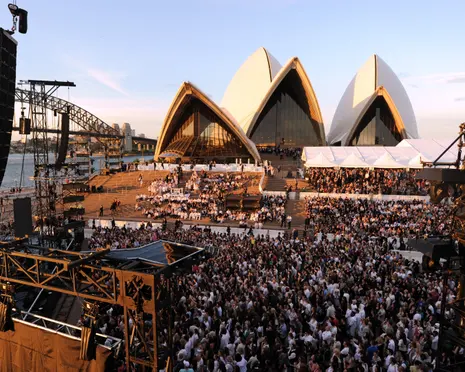
Wanderstayfinder.com – The government’s decision to boost the Sydney Opera House’s outdoor event capacity and volume allowances has garnered support from Prime Minister Anthony Albanese, who praised the move as a step toward maximizing the iconic venue’s potential. During a live blog session, Albanese highlighted the importance of leveraging cultural spaces to foster both economic activity and public enjoyment, a sentiment echoed by the New South Wales state government. The changes, which include extending performance hours and increasing the number of attendees permitted for evening shows, aim to modernize the Opera House’s operations and accommodate growing demand for outdoor entertainment.
Capacity and Sound Adjustments for Enhanced Visitor Experience
Under the new policy, the maximum number of people allowed at outdoor events will be raised from 5,000 to 6,000 for medium-scale gatherings and from 6,000 to 7,000 for major productions. This adjustment follows complaints from residents about the noise levels during a Florence + the Machine performance in 2015, which resulted in a $15,000 fine. The Opera House, a UNESCO World Heritage Site, has long been a symbol of Sydney’s cultural identity, and these changes are intended to ensure it remains a vibrant hub for community engagement and international events.
“I’m a member of the fun faction,” Albanese stated, reflecting his personal connection to the venue. His comments came after he joined the public on the Opera House’s forecourt, where he witnessed performances by English band Florence + the Machine and American rockers the Pixies. The prime minister emphasized that the Opera House should be a place of celebration, not just a backdrop for formal ceremonies. “It’s an asset that should be maximised,” he said, underscoring the need to balance cultural offerings with practical considerations like crowd management and noise control.
The policy shift also involves aligning late-night sound levels with daytime maximum thresholds, allowing major events to maintain higher volume without disrupting neighboring areas. This change is expected to create more flexibility for performers and organizers, while still addressing community concerns. The NSW government has framed the updates as part of a broader strategy to revitalize the Opera House’s role in the city’s social and economic fabric.
Aukus Momentum Amid Political Rivalry
Albanese’s endorsement of the Opera House changes coincided with his reaffirmation of Australia’s commitment to the Aukus defense pact, a trilateral security agreement with the United States and the United Kingdom. The prime minister reiterated that the pact, which involves the acquisition of nuclear-powered submarines, is “full-steam ahead.” This comes as the Greens have raised concerns about the deal’s potential to draw Australia into a military conflict with China, warning that the $368bn agreement could escalate tensions. Albanese dismissed these concerns, arguing that Aukus strengthens Australia’s strategic position in the Indo-Pacific region.
Meanwhile, internal debates within the One Nation party have highlighted inconsistencies in its approach to policy, particularly regarding housing reforms. Labor Minister Amanda Rishworth described the party’s mixed messages as evidence of the “chaos” it brings to governance, noting that its MPs have struggled to present a unified stance. This lack of cohesion has been further exacerbated by the appointment of Lincoln Folo, the Nationals party director, as the Liberal Party’s new top strategist. Folo’s role is to help rebuild the Liberal campaign infrastructure after consecutive electoral setbacks, a move seen as a strategic attempt to counterbalance the influence of One Nation in the political landscape.
Victorian Crime Legislation Shows Early Signs of Impact
Turning to state-level developments, the Victorian government reported early positive outcomes from its newly implemented crime laws, which include a ban on machetes and stricter post-and-boast regulations. These measures, introduced alongside changes to bail procedures and the establishment of a violence reduction unit, have been credited with reducing crime rates. Minister Harriet Shing, who defended the legislation during a Sunday press briefing, stated that the policies are “working” and have led to a measurable decline in criminal activity. She noted that over 18,000 weapons were surrendered or seized since the 2025 amnesty, with 17,000 machetes specifically removed from retail shelves.
“What we are doing is working,” Shing said, pointing to the correlation between the new laws and falling crime statistics. While acknowledging that more work remains, she highlighted the effectiveness of police efforts and the symbolic impact of banning machetes. The government’s strategy has been met with mixed reactions, however, as opposition figures like David Southwick argued that the measures have not curbed knife attacks, which continue to rise in certain areas. Southwick criticized the lack of tangible results, claiming the policies have failed to deliver the desired consequences.
As the nation grapples with both cultural and security challenges, Albanese’s emphasis on the Opera House’s expanded role reflects a broader vision of Australia as a dynamic, forward-thinking society. The prime minister’s comments on the “fun faction” also resonate with public sentiment, as many residents view the venue as a cherished space for celebration and artistic expression. This contrast between policy pragmatism and public engagement is a recurring theme in current political discourse, with leaders across the spectrum seeking to balance economic growth with social welfare and national security.
International Climate Talks and the Road to Cop31
Adding to the week’s political highlights, Climate Change and Energy Minister Chris Bowen has been tasked with leading negotiations at the upcoming Bonn climate change conference. This event will serve as a precursor to the Cop31 summit, co-hosted by Australia and Turkey, where global leaders will finalize key climate targets. Bowen, appointed “president of negotiations” under a new agreement, will represent the Pacific nations of Fiji and Tuvalu in preliminary discussions before the main summit in Antalya, Turkey. His role is critical, as the conference is expected to address the urgent need for reducing greenhouse gas emissions and accelerating the transition to renewable energy sources.
Albanese’s focus on the Opera House expansion underscores the government’s commitment to cultural investment, a priority that contrasts with the Greens’ push to prioritize environmental concerns over military commitments. While the Aukus deal has sparked debates about Australia’s alignment with US interests, the prime minister has framed it as essential to securing the country’s long-term security and economic stability. Similarly, the Victorian crime laws have demonstrated that policy interventions can yield measurable results, even if they are not universally welcomed.
As the live blog concludes for Sunday, the focus shifts to the broader implications of these developments. From cultural revitalization to defense alliances and crime reduction, Australia’s political leaders are navigating a complex landscape of priorities and public expectations. Albanese’s advocacy for the Opera House, combined with his steadfast support for Aukus, illustrates a government determined to leave a lasting legacy in both domestic and international affairs. The coming weeks will test the effectiveness of these initiatives, but for now, the momentum appears to be strong.