Earthquake in Venezuela Claims Lives of Recently Deported U.S. Citizens
Venezuelans newly deported from US missing – Hours before a series of powerful earthquakes struck Venezuela on Wednesday, a deportation flight from Miami arrived in the country, carrying 146 Venezuelans, including 19 women and seven children. The group was temporarily housed at a hotel in La Guaira, where they were scheduled to receive identification documents and undergo medical screenings before being sent back to their homes. However, the seismic events disrupted this plan, leaving dozens of deportees missing and sparking a chaotic search for survivors and the deceased, as reported by survivors and local authorities.
Disaster Strikes Amid Deportation Process
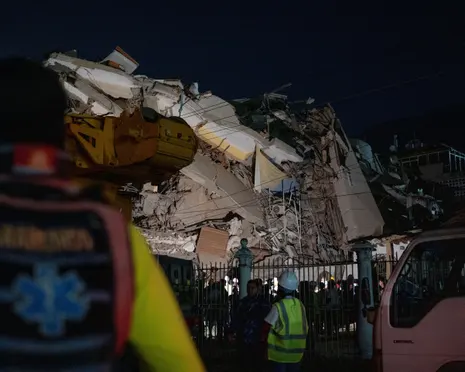
The first tremor, measuring 7.2 on the Richter scale, was followed by a second, stronger quake at 7.5, causing significant damage to the hotel and surrounding areas. Lisbeth Portillo, 58, described the harrowing experience of escaping the collapsing structure. “We walked about five kilometers, and I cried and cried … there was no communication,” she recounted in a phone interview from her home in Maracaibo. Portillo, who shared the second floor room with 16 other women, was among those who managed to flee the rubble. She recalled the moment the ground began to shake, “I started hearing, ‘Papa, papa papapa,’ and I saw the women next to me start to fall,” she said, describing the sounds and panic of the earthquake.
“I fall and end up buried and covered by a beam, but the shaking shifted everything where I was buried and I was able to get out,” Portillo said, her voice trembling as she described the ordeal.
The hotel, named Hotel Santuario La Llanada, became a focal point of the disaster. Survivors reported seeing people emerge from the debris, some naked and others barefoot, as the building crumbled. “There was a lot of screaming for help,” Portillo added, her trauma evident in her words. The collapse left at least 100 deportees unaccounted for, with rescue teams working tirelessly to locate survivors and recover bodies from the rubble.
Broader Context of Deportation Flights
The incident occurred during a surge in U.S. immigration enforcement efforts. In May, the ICE Flight Monitor, an initiative by Human Rights First, recorded 288 deportation flights to 38 countries, including Venezuela. The U.S. operated three deportation flights per week to Venezuela, part of a broader campaign targeting Venezuelans in the country. These flights had paused for 13 months before resuming in February 2025, according to ICE data.
Portillo’s experience reflects the challenges faced by deportees during their initial days in Venezuela. Upon arrival, they were taken to the Hotel Santuario La Llanada, where they were given time to rest and prepare for their return. “They were told they would go home the next day,” she said, highlighting the optimism that accompanied their journey. However, this hope was shattered when the earthquakes hit, leaving them stranded in a precarious situation.
Survivors’ Stories and Emotional Toll
Among the deportees, Jenny Rodriguez, 24, shared her harrowing account of the collapse. “I was trapped under the rubble. A colleague who had been on the same flight came by; I managed to free my hand from the debris, grabbed him by the trousers, and begged for help,” she explained. “Thanks to God – and to him – I was able to get out of there.” Rodriguez’s testimony underscores the immediate danger faced by the group, even as they awaited their next steps in the country.
“I was born again; God gave me a second chance,” Portillo said, her voice filled with both gratitude and sorrow.
Meanwhile, Liliana Rojas, who was separated from her 33-year-old partner, expressed frustration over the lack of information. “No one is giving an answer about anything,” she said, recounting how the detention center in El Paso, Texas, only informed her that he had been deported. Rojas now spends her days trying to track his whereabouts, a search that has grown increasingly difficult in the wake of the disaster.
The Venezuelan government reported that the earthquakes resulted in over 1,700 fatalities nationwide, with La Guaira and other regions bearing the brunt of the destruction. While the primary focus of the quakes was on the broader population, the deportees’ situation added a layer of complexity to the crisis. Their presence in the hotel, a temporary shelter, meant that their fate became a poignant symbol of the challenges faced by those newly arrived in the country.
Communication Breakdown and Aftermath
Survivors described the disorienting aftermath, where communication networks were overwhelmed and rescue operations struggled to keep pace with the devastation. Portillo, who sustained bruises across her body, emphasized the emotional weight of the event. “I am traumatized,” she said, her voice breaking after a pause. The lack of immediate support and the uncertainty of their survival left many in a state of distress, even as they sought shelter in a nearby national guard building.
The situation also prompted questions about the preparedness of Venezuela’s infrastructure to handle such crises. The hotel, which had been intended as a safe space for deportees, became a site of tragedy, raising concerns about the risks associated with housing large groups of migrants in areas prone to natural disasters. Local officials and humanitarian groups are now calling for greater oversight of the deportation process, particularly in regions with vulnerable buildings.
Global Perspective on Deportation Trends
As the search for survivors continues, the incident has reignited discussions about the global trend of mass deportations. The ICE Flight Monitor’s data reveals that the U.S. has maintained a steady pace of deporting Venezuelans, with 12 flights to the country in May alone. These flights, often part of a broader strategy to address immigration issues, have been criticized for their impact on individuals and families, particularly in times of crisis.
The tragedy in La Guaira serves as a stark reminder of the human cost of such policies. For the deportees, the earthquake was not just a natural disaster but a test of resilience and survival. Their stories, emerging from the chaos, highlight the vulnerability of those who have recently been displaced from their homeland, now facing the dual challenges of a new environment and an unexpected catastrophe.
As the dust settles, the focus remains on finding missing individuals and providing aid to those affected. The Venezuelan government has shared a video of the deportees arriving at Caracas airport, showcasing their initial reception. Yet, the footage contrasts sharply with the current reality of their plight, underscoring the sudden shift from arrival to disaster. The incident has left families in despair, with many still searching for answers about the lives lost and the future of those who survived.
The events in La Guaira are now being analyzed in the context of broader geopolitical tensions. While the U.S. continues its deportation efforts, Venezuela’s own struggles with economic instability and political turmoil have created a backdrop of vulnerability. The earthquake, though a natural occurrence, has amplified the challenges faced by those navigating a complex and often unforgiving system.
As rescue teams work around the clock, the stories of Lisbeth Portillo, Jenny Rodriguez, and others serve as a testament to human endurance. Their experiences, etched into the memories of those who witnessed them, will likely shape the narrative of this disaster for years to come. In the face of such tragedy, their voices remind us of the personal stakes behind large-scale policies and the urgent need for compassion in times of crisis.