Police units deployed across South Africa before anti-immigrant marches
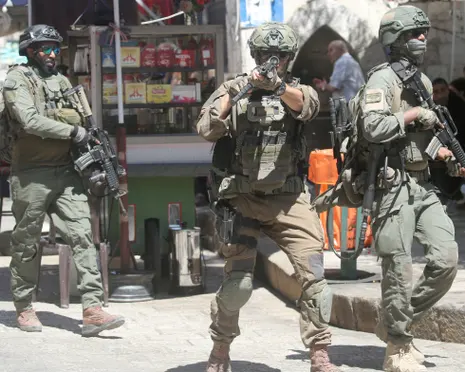
Police units deployed across South Africa – South African authorities have stationed security forces in key urban centers ahead of scheduled demonstrations targeting undocumented foreign nationals. Reports from local media indicate that police and military personnel were actively monitoring high-traffic areas, including Johannesburg’s central business district, where some shopkeepers opted to remain closed on Tuesday to avoid potential confrontations. The presence of trucks and assets from the South African National Defence Force further underscores the scale of the preparedness, as officials aim to preemptively manage the anticipated unrest.
Protest organizers and their demands
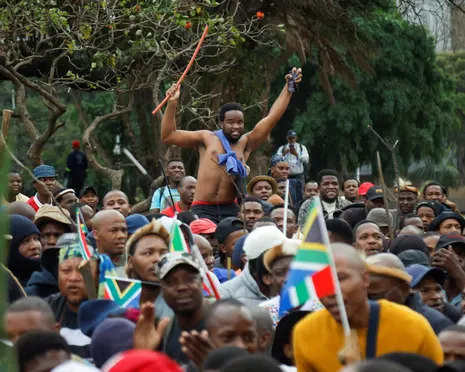
The demonstrations are being led by anti-immigration vigilante groups, with March and March among the most vocal. These organizations have set an unofficial deadline of 30 June, urging undocumented migrants to depart the country within this timeframe. Despite their claim of peaceful intent, the protests have already drawn criticism for escalating tensions. Jacinta Ngobese-Zuma, the group’s leader, emphasized that the campaign is focused on “undocumented migrants” and that violence is not their goal. “We are not calling for violence… No one will be killed on 30 June, and no looting will take place in our name,” she stated in a recent address, attempting to reassure citizens and international observers.
Historical parallels and growing concerns
The current police strategy is reminiscent of past efforts to quell anti-migrant riots. In 2008, widespread protests led to 62 deaths and significant property damage, marking a turning point in South Africa’s relationship with its migrant population. More recently, in July 2021, the country experienced its deadliest unrest since the end of apartheid, with over 350 fatalities. This outbreak followed the jailing of former President Jacob Zuma for contempt of court, which some analysts linked to heightened public frustration over economic inequality. As the 30 June deadline approaches, concerns have intensified about whether similar levels of violence could recur.
Targeted harassment and the human cost
Across Johannesburg and Durban, groups of men carrying sticks and chanting “abahambe” – a phrase from the isiZulu and isiXhosa languages meaning “they must leave” – have been seen entering shops and interrogating migrant workers. In some cases, these individuals have physically assaulted undocumented residents, with five Mozambican nationals reported killed in the process. While the organizers insist their actions are focused on documented immigrants, many victims have expressed fear of being unfairly targeted. “We are not asking for anything more than what is fair,” said one shopkeeper, whose business was briefly ransacked by protesters earlier this week.
Migration statistics and economic pressures
According to official estimates, foreign-born migrants account for approximately 4% of South Africa’s population of 62 million. However, claims of a much larger number – up to 15-20 million – have fueled public sentiment. Many of these migrants work in the informal sector, often filling roles in industries that South Africa’s domestic workforce avoids due to economic challenges. Neighboring countries such as Mozambique, Zimbabwe, and Lesotho have seen rising unemployment and economic instability, prompting thousands to seek opportunities in South Africa. Yet, despite their contributions to the economy, African migrants continue to face suspicion and hostility.
Crime data and the scapegoating narrative
Crime statistics reveal that only a small fraction of offenses are attributed to foreigners, challenging the narrative that migrants are the primary cause of unrest. However, in a society where wealth is largely concentrated among the white minority and unemployment rates remain among the highest globally, African migrants are frequently cast as scapegoats. This perception has been exacerbated by incidents of targeted harassment, with some communities reporting increased aggression against non-nationals. “We are not blind to the challenges,” said a local community leader, “but when the government does not act decisively, the frustration grows.”
Political rhetoric and international responses
President Cyril Ramaphosa has addressed the issue in recent forums, calling for unity and condemning xenophobia. “There is no place for racism, sexism, tribalism, xenophobia, Afrophobia, or any other form of intolerance,” he asserted during a meeting with traditional monarchs. Yet, critics argue that his government has failed to implement concrete measures to address the root causes of the protests. Meanwhile, countries like Nigeria, Ghana, Malawi, and Uganda have taken proactive steps to repatriate their citizens, with some still stranded in South Africa. Social media has amplified the situation, sharing videos of Malawians gathering outside the consulate in Johannesburg, braving the cold to await transport out of the country before the 30 June deadline.
Broader implications and societal divisions
The protests reflect deepening societal divides in South Africa, where economic strain and cultural identity often collide. While the organizers frame their actions as a fight for national sovereignty, others see it as a movement fueled by xenophobic rhetoric. The phrase “abahambe” has become a rallying cry, echoing sentiments that have historically linked migration to crime and job competition. As the deadline nears, the pressure on both the government and the public intensifies, with calls for decisive action to either protect migrants or curb the violence. The situation remains volatile, highlighting the complex interplay between migration policies, economic realities, and social cohesion in the nation.