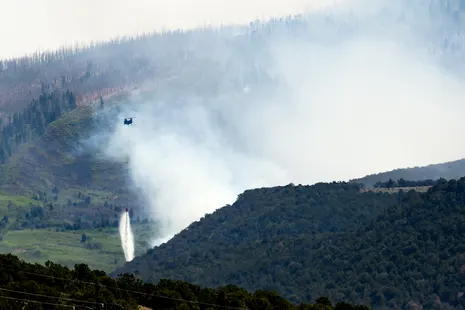
Utah’s Cottonwood Fire Expands Overnight, Now Covers 92,000 Acres
Utah s Cottonwood fire spreads overnight – Utah’s Cottonwood fire has grown rapidly over the past week, prompting increased efforts by hundreds of firefighters to contain the blaze. As of Saturday, the fire had scorched an additional 20,000 acres, bringing its total to over 92,000 acres. This expansion has been fueled by persistently low humidity levels and strong winds, which have accelerated the spread of flames, according to state officials. The fire, which ignited on Monday in the Fishlake National Forest, has become the largest active blaze in the United States, with no containment achieved as of Saturday morning.
While the exact cause of the Cottonwood fire remains under investigation, its rapid growth has already led to significant consequences. A ski resort in Beaver county has suffered property damage, and the entire Fishlake National Forest has been closed to the public. The US Forest Service confirmed that the fire increased from approximately 70,000 acres to more than 92,000 acres overnight, marking a dramatic escalation in its intensity. Despite the efforts of emergency crews, the situation remains critical, with no signs of slowing down in the near term.
Authorities have issued warnings about the potential for extreme fire behavior as the weather conditions continue to shift. While Saturday may bring slightly improved conditions, the afternoon could see renewed danger due to rising temperatures and increased wind speeds. Residents living to the northeast of the fire zone, including those in the small town of Marysvale, have been advised to take precautions against “unhealthy” air quality, as smoke from the blaze lingers in the atmosphere. This has raised concerns about the health risks for local communities and the environment.
A Rare Warning Signals High Risk
The National Weather Service in Salt Lake City issued a red flag warning on Thursday, highlighting the elevated danger of the Cottonwood fire. This rare alert underscores the likelihood of rapid fire spread and life-threatening conditions, particularly given the current climate patterns. The warning comes as part of a broader pattern of extreme weather that has contributed to Utah’s unprecedented wildfire season. This season has seen an alarming number of fires, with 380 incidents reported so far, 273 of which are attributed to human activity.
Among these fires, the Cottonwood blaze stands out for its size and speed. The fire’s behavior has defied historical expectations, with flames spreading farther and faster than anticipated. This has forced officials to take emergency measures, including the temporary suspension of fireworks statewide. Utah’s governor, Spencer Cox, announced the restriction ahead of the Fourth of July, which will commemorate the 250th anniversary of American independence. The decision aims to reduce the risk of new fires during a period of heightened danger.
“This is unlike anything we’ve seen in recent memory,” said Jamie Barnes, director of the Utah division of forestry, fire, and state lands, in a Thursday news release. “We’re seeing fires spread farther and faster under conditions that defy historical expectations. Some of the fires we’ve responded to this year are behaving in ways veteran firefighters simply haven’t seen before. Our teams have been working around the clock, and with resources stretched thin, we cannot afford preventable ignitions during the days ahead.”
The Cottonwood fire’s growth is part of a larger trend affecting Utah’s landscape. The state’s wildfire season has been particularly severe, with fires consuming vast areas of forest and land. In addition to the Cottonwood blaze, two other fires near Eureka, a town about 80 miles south of Salt Lake City, have combined to burn approximately 70,000 acres. These fires have prompted evacuations and forced residents to seek shelter, further straining emergency response systems.
Firefighters continue to battle the blaze with a combination of ground crews and aerial support, but the challenge remains daunting. The lack of containment and the fire’s massive scale have placed immense pressure on resources, with teams working tirelessly to control the situation. The National Interagency Fire Center reports that the Cottonwood fire is now the largest burning in the US, surpassing previous records. This development has prompted officials to reassess their strategies and allocate more personnel to the region.
As the fire spreads, its impact on the environment and local ecosystems becomes increasingly evident. Thousands of acres of vegetation have been reduced to ash, threatening wildlife habitats and altering the region’s natural landscape. The closure of the Fishlake National Forest has also disrupted recreational activities, affecting tourism and economic opportunities in the area. Meanwhile, the smoke from the fire has traveled far beyond the immediate vicinity, prompting air quality alerts in nearby regions.
Residents and officials are now focused on managing the ongoing crisis and preparing for potential future challenges. The forecast for Saturday suggests a slight improvement in conditions, but the risk of extreme fire behavior remains high. This uncertainty has led to heightened vigilance, with communities north of the fire zone staying alert for possible evacuations or additional warnings. The state’s response has been swift, with the governor’s firework restrictions and increased coordination among agencies to address the growing threat.
Utah’s wildfire season has become a stark reminder of the changing climate’s effects on natural disasters. The state has experienced record-breaking heat and prolonged droughts, creating ideal conditions for fires to ignite and spread rapidly. The Cottonwood fire, while the most significant so far, is part of a larger network of blazes that have tested the capacity of firefighting teams and emergency services. As the season progresses, the focus remains on containment efforts and ensuring the safety of both people and property.
The ongoing situation has also sparked discussions about long-term strategies for wildfire management. With 380 fires reported this year and 273 linked to human activity, there is a growing emphasis on preventing accidental ignitions. Jamie Barnes’s comments highlight the need for public awareness and cooperation, as the state works to mitigate the damage caused by these blazes. As the Fourth of July approaches, the focus of the fire crews will shift to protecting communities and preventing further escalation of the Cottonwood fire.