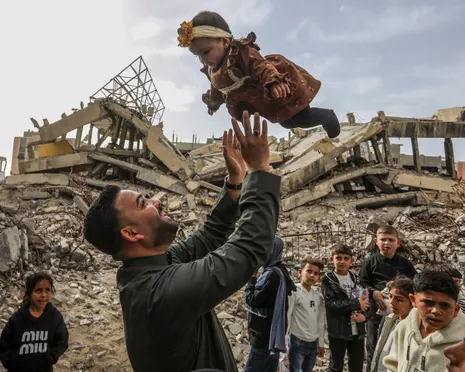
UN Commission Concludes Israel’s Genocidal Acts Target Palestinian Children
Israel continues to commit genocide by targeting – A recent investigation by the United Nations-established independent commission has identified Israel’s ongoing campaign of targeting Palestinian children in Gaza as a key factor in the commission’s determination that the country is committing genocide. The report, released on Tuesday, highlights how Israeli military actions have systematically led to the deaths of children, with approximately 30% of the casualties attributed to the conflict involving minors. This finding follows earlier conclusions from the same commission, which in September had already declared that Israel’s actions in Gaza met the criteria for genocide, citing the deliberate targeting of Palestinian civilians, including children, as evidence of intent to destroy the group as a whole.
The commission’s findings are based on a comprehensive review of incidents since the war began in Gaza, emphasizing the role of Israeli security forces in escalating child fatalities. Despite the implementation of a ceasefire in October 2025, the report states that attacks on Palestinian children continued, underscoring the persistence of genocidal intent. The inquiry also noted that Israel’s use of high-impact munitions in densely populated areas—despite prior warnings about the high number of child casualties—suggests a calculated strategy to maximize harm. “The evidence clearly shows that Israeli forces have targeted children with intent,” said Srinivasan Muralidhar, the commission’s chair, in a statement accompanying the report.
Genocide as the Most Severe Crime
Genocide, a crime formalized after World War II and the Holocaust, is defined by the UN Convention on the Prevention and Punishment of the Crime of Genocide as acts intended to destroy a national, ethnic, racial, or religious group. The commission argues that Israel’s actions in Gaza meet this definition, as they have focused on eradicating the Palestinian population through sustained violence. The report links the high proportion of child deaths to the broader objective of weakening the Palestinian people’s capacity to sustain themselves and shape their future, according to Muralidhar.
Legal experts and human rights organizations have contributed to the commission’s analysis, documenting the systematic nature of Israel’s attacks. The inquiry cites research from entities like Amnesty International and Human Rights Watch, which have observed patterns of violence targeting children. These analyses, combined with the findings of genocide scholars, support the claim that Israel’s actions constitute an intent to annihilate the Palestinian group. The commission further emphasizes that the targeted killings of children, particularly in the context of repeated displacement and food shortages, have created conditions of extreme hardship for the population.
Impact on Children’s Health and Psychological Well-Being
The report details the severe consequences of Israel’s military operations on children’s physical and mental health. Widespread attacks on healthcare infrastructure, including hospitals and maternity units, have disrupted medical care and increased risks to newborns. Additionally, the commission recorded a surge in reported miscarriages and the trauma experienced by children exposed to ongoing conflict. Nearly all children in Gaza have been identified as requiring psychological support, the report states, due to the cumulative stress of violence and displacement. These effects are compounded by the Israeli blockade, which has restricted access to essential supplies, contributing to malnutrition and preventable illnesses among the younger population.
The commission also addresses the role of Israeli forces in perpetuating these conditions. By using weapons that cause widespread destruction in residential zones, Israeli military actions have disproportionately affected children. The deliberate choice to target children collectively, as the report explains, stems from the perception that the civilian population is linked to Hamas and other armed groups. This strategy, according to the inquiry, has been used to erode the Palestinian community’s resilience and future prospects. Muralidhar described the targeting of children as a “systematic attack on the foundation of the Palestinian people’s existence,” highlighting the long-term implications for the group’s survival.
Israel’s Rebuttal and International Support
Israel’s mission in Geneva has dismissed the commission’s findings as a “libellous sham,” arguing that the report is biased. The country has consistently denied allegations of genocide, while receiving diplomatic backing from allies such as the United States and the United Kingdom. However, the commission’s analysis has drawn attention to the inconsistency between Israel’s military actions and its claims of proportionality. Despite the evidence of high child casualties, Israel has maintained that its operations are necessary to counter Hamas and protect its own citizens.
Accusations against Israel have expanded beyond Gaza, with the international criminal court (ICC) issuing an arrest warrant for Prime Minister Benjamin Netanyahu for war crimes. This follows a previous report by the commission, which had already established that Israel’s actions in Gaza met the threshold for genocide. The ICC’s involvement has intensified scrutiny of Israeli officials, including their role in inciting violence against the Palestinian people. Meanwhile, Hamas has rejected claims that it diverted humanitarian aid, accusing Israel of blocking supplies and fuel to sustain its military efforts.
West Bank as a Focus of the Inquiry
The UN commission’s investigation extended beyond Gaza to include the occupied West Bank, where Israel maintains control despite the International Court of Justice ruling its occupation unlawful. In the West Bank, particularly in East Jerusalem, the report identified a sharp rise in violence directed at Palestinian children by Israeli settlers. This includes documented cases of torture and sexual violence during mass arrests and detentions. Palestinian boys, in particular, have been subjected to systemic mistreatment, such as forced stripping, beatings, and food deprivation, the commission stated.
These abuses are classified as crimes against humanity, specifically torture and inhumane acts that cause significant suffering. The inquiry highlights how children in the West Bank face threats not only from military operations but also from settlers and security forces. The report underscores the interconnected nature of Israel’s actions across both territories, suggesting a coordinated effort to suppress Palestinian resistance and diminish the group’s ability to thrive. Legal experts argue that this pattern of violence aligns with the criteria for genocide, as it aims to eliminate the Palestinian population through prolonged and widespread harm.
Broader Implications for International Law
The commission’s findings have reignited debates about the application of international law to conflicts involving children. The report’s emphasis on the intent to destroy a group has sparked discussions about the responsibilities of states in protecting vulnerable populations. Analysts note that the targeting of children is often a strategic move to instill fear and break the will of a community, making it a critical component of genocidal campaigns. The UN’s role in documenting these acts underscores its commitment to holding states accountable for crimes that threaten the survival of entire groups.
As the inquiry concludes, the implications for Israel’s international standing remain significant. The report challenges the country’s narrative of defending its people against attacks, instead framing its actions as a calculated effort to undermine the Palestinian population. With growing evidence of systemic harm to children, the UN’s findings could influence future legal proceedings and diplomatic efforts to address the conflict. The commission’s work also serves as a reminder of the importance of protecting children in times of war, a principle that has been tested repeatedly in Gaza and the West Bank.
The report’s release has prompted a reevaluation of the humanitarian situation in Gaza, where children have borne the brunt of sustained violence. The evidence presented by the UN commission, combined with testimonies from rights groups and legal scholars, reinforces the argument that Israel’s actions meet the definition of genocide. As the international community continues to assess the findings, the focus on children’s safety remains a central issue in the ongoing conflict.