UK Rejoining EU Gains Broad Support Among Citizens
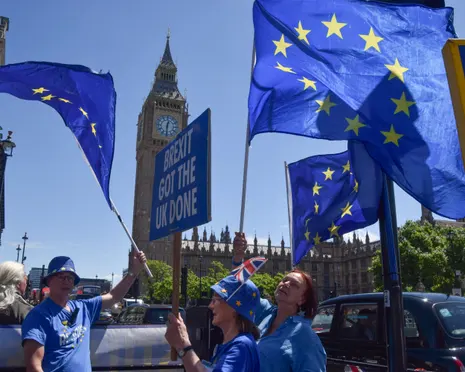
Wanderstayfinder.com – According to a recent survey conducted by the European Council on Foreign Relations (ECFR), a significant majority of EU citizens—two-thirds—expressed backing for the United Kingdom’s potential return to the bloc. This sentiment, revealed in the poll across 15 countries, highlights a growing appetite for renewed European cooperation, even as the UK continues to debate its post-Brexit trajectory.
EU Sentiment Reflects Shift in Perception
The findings indicate that 66% of respondents from EU nations viewed UK membership as a positive development, whether as a “very good,” “good,” or “neither a good nor a bad” option. This figure comfortably outstripped the 59% who supported closer ties with the UK and the 46% who preferred maintaining the current relationship. The support for rejoining varied by country, with the Netherlands and Denmark showing the highest levels at 75% and 73%, respectively, while Bulgaria recorded the lowest at 56%.
Notably, even voters from far-right and EU-critical parties expressed openness to closer collaboration. A majority of Poland’s Confederation supporters (71%) and Germany’s AfD backers (58%) indicated they would endorse a return to European integration. France’s National Rally also saw a majority (58%) of its adherents align with the idea of enhanced UK-EU ties. These results suggest that political divisions within the EU may not prevent a collective desire for reconciliation with the UK.
“We need a UK voice in Europe. We really miss you guys.” – Alexander Stubb, Finland’s president
European leaders echoed this trend. France’s President Emmanuel Macron emphasized the EU’s readiness for dialogue, stating that the door to reintegration is “always open.” Spain’s Prime Minister Pedro Sánchez reiterated that his country would “absolutely” support British membership. Finland’s President Alexander Stubb explicitly named the UK as a candidate for reentry, underscoring the bloc’s willingness to welcome back a former member.
UK Voters’ Shift in Sentiment
Meanwhile, within the UK, the same survey found a clear shift in public opinion. Across party lines, voters—ranging from Reform UK supporters to others—expressed dissatisfaction with Brexit’s impact on key national issues. The cost of living, economy, youth opportunities, and trade all faced significant challenges, with 66% citing the cost of living as a primary concern and 65% pointing to economic repercussions.
Support for rejoining the EU has also grown among UK citizens. A striking 75% of respondents favored a closer relationship with the bloc, even as the UK grappled with the consequences of its departure. When asked about trade and economic ties, 66% endorsed increasing cooperation, signaling a potential path toward reconciliation. Perhaps most notably, 63% of voters—60% of whom had previously supported Brexit—expressed willingness to accept freedom of movement in exchange for stronger trade ties. Only 18% rejected this compromise.
This openness to freedom of movement, even among those who prioritized immigration as a key issue, suggests that one of Brexit’s core motivations is no longer a dominant factor. Despite earlier concerns, 44% of voters who had cited immigration as their top priority now accept the idea of shared mobility in return for economic benefits. This indicates a nuanced evolution in public sentiment, where the initial emphasis on sovereignty has softened in favor of pragmatic collaboration.
Political Opportunities and Future Prospects
Mark Leonard, director of the ECFR and author of the report, noted that the poll demonstrates the EU’s openness to the UK’s return. He argued that the British public has moved beyond the original Brexit narrative, with many realizing that the hoped-for benefits of leaving the EU have not materialized. “Brexit was the insurgent vehicle for a nation rejecting the status quo,” he explained. “A decade on, Brits understand that their expectations for a better life outside the EU remain unfulfilled.”
Leonard also highlighted the broader implications of the findings. The data suggests a “very broad permissive consensus” for a more ambitious approach to European integration than the current government’s “reset” strategy. This could pave the way for the UK to participate in initiatives like an alternative European nuclear deterrent, with almost two-thirds (63%) of respondents supporting such involvement.
The survey categorized UK voters into three distinct groups: “optimists” (28%), who view European alignment as essential; “realists” (35%), who advocate for closer ties but still prioritize US relationships; and “loners” (27%), who remain committed to national sovereignty. Despite these divisions, the report found that Europe has become the preferred security partner for a majority of voters, with 58% favoring closer defensive ties compared to just 18% who see the US as an ally.
This growing European alignment has also influenced views on defense spending. A majority of UK respondents indicated a preference for sourcing weapons from Europe rather than the US, with over 60% supporting a “buy European” policy. Such trends reflect a broader cultural shift, where the UK’s economic and political identity is increasingly intertwined with European interests.
As the UK navigates its post-Brexit landscape, the survey reveals a potential turning point. While the initial Brexit vote was fueled by a desire for independence, the data suggests that public support for closer ties with the EU has regained momentum. This could signal a new era of cooperation, where the UK seeks to balance its sovereignty with the tangible benefits of European integration. With leaders across the bloc expressing openness and voters reevaluating their priorities, the prospect of rejoining the EU may now be more than just a political possibility—it could be a strategic necessity.