Global framework for reparatory justice adopted at landmark conference in Ghana

Global Framework for Reparatory Justice Adopted at Accra Conference
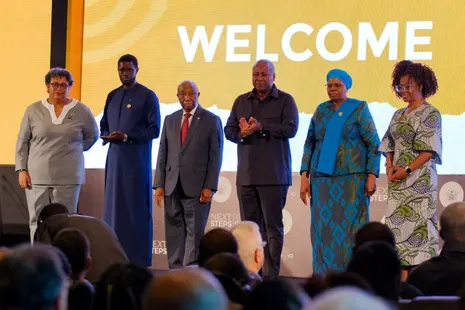
Wanderstayfinder.com – On Friday, a historic three-day conference in Accra, Ghana, concluded with the formal adoption of a groundbreaking global framework for reparatory justice. This milestone event gathered heads of state, government officials, and representatives from over 80 nations, marking the first major international gathering since the United Nations (UN) passed a pivotal resolution in June 2026. That resolution had declared the transatlantic slave trade and its enduring legacy as the gravest crime against humanity, setting the stage for this collaborative effort to address its long-term consequences.
The Significance of the Resolution
The framework builds on the UN resolution, which redefined the historical trauma of enslaved Africans as a foundational injustice requiring global acknowledgment and action. The decision to adopt the 19-point strategy underscores a collective commitment to rectify past wrongs, with participants emphasizing the need for fair compensation, cultural restitution, and debt relief as core pillars of the movement. This resolution, hailed as a turning point for Africa’s reparatory justice agenda, calls for inclusive dialogue and prompt restitution of heritage and property to countries of origin, ensuring equitable redress for affected communities.
Key Components of the Framework
The 19-point plan outlines a multifaceted approach to reparatory justice, focusing on both financial and symbolic reparations. It includes resolving to provide just compensation for Africans and people of African descent who have endured the consequences of enslavement, colonialism, genocide, and apartheid. Additionally, the framework mandates the swift return of cultural artifacts, human remains, archives, and heritage items to their countries of origin. A significant aspect is the call for multilateral measures to tackle sovereign debt burdens, such as debt relief initiatives, to mitigate the socioeconomic impacts of historical injustices.
Participants in the conference highlighted the importance of global collaboration, stating,
We recognise and honour the extensive efforts undertaken over generations by several governments, intergovernmental organisations, our forebearers, individuals and civil society partners across Africa, the Caribbean, the Americas, as well as in Europe and Asia in shaping the global reparations agenda.
The document further asserts that the adoption of this framework serves as a foundation for international cooperation, with a pledge to foster transparent and constructive dialogue among all state and non-state actors to advance reparations.
The Role of Global Panels
As part of the conference’s outcomes, three global panels were established to support the implementation of the reparatory justice framework. These panels—comprising an advisory group, an expert committee on cultural restitution, and a legal body—were announced on the final day of the event. Ghana’s president, John Mahama, who also holds the title of African Union Champion on Reparations, explained that the panels are designed to strengthen existing efforts rather than replace them. “These panels are not intended to replace the work of governments, regional organisations, or international institutions,” Mahama stated. “Rather, they are intended to provide intellectual, technical, and policy support as the international community moves from recognition to meaningful action.”
The advisory panel includes leaders from countries historically linked to the transatlantic slave trade, such as Mahama himself, Barbados’ Prime Minister Mia Mottley, and presidents from Liberia, Namibia, and Senegal—Joseph Boakai Sr, Netumbo Nandi-Ndaitwah, and Bassirou Diomaye Faye. Their role is to guide the reparatory justice initiative, ensuring that diverse perspectives are integrated into the global strategy. The expert panel on cultural restitution will focus on the recovery of artifacts, while the legal panel will address policy frameworks and enforcement mechanisms.
Inclusive Process and Regional Engagement
Ruth Ogbewekon, a project lead at the Pan African Lawyers Union, described the development of the framework as a deliberate effort to include a wide range of voices. “The process tried to be inclusive, given the pressures to build on the momentum of the resolution toward a unified global movement,” she noted. Ogbewekon revealed that consultations spanned several weeks, involving representatives from Africa, the African diaspora, and non-African allies. “Ultimately, it was a process where people wanted to be heard and to see that their contributions were acknowledged,” she said. The Accra conference provided a platform for this dialogue, bridging continents and disciplines to forge a shared vision.
The conference, themed “Next Steps,” began on Wednesday and featured a mix of formal discussions and cultural events. On Thursday, participants attended documentary screenings, a music performance, and a stage play that highlighted the historical and contemporary struggles of enslaved communities. These activities, combined with speeches from heads of state and leaders of international organizations, reinforced the emotional and intellectual weight of the agenda. Mahama, in his keynote address, stressed the importance of unity. “We must act as a single front to ensure that the legacy of injustice is not forgotten,” he said, urging sustained engagement from all stakeholders.
Historical Context and Future Implications
The adoption of the framework occurred nearly three months after the UN General Assembly passed a resolution spearheaded by Ghana on behalf of African Union member states. This resolution was a landmark moment, reclassifying the trafficking of enslaved Africans and the racialised system of chattel enslavement as the most severe crime against humanity. It laid the groundwork for the Accra conference, which now formalises the transition from symbolic recognition to actionable steps. The framework’s emphasis on multilateral cooperation and debt relief reflects an understanding that historical injustices have far-reaching economic consequences, requiring coordinated efforts to rectify.
Reparatory justice, as defined by the document, encompasses not only financial reparations but also the restoration of cultural identity and the redistribution of power. The 19-point strategy aims to create a lasting impact by addressing the systemic effects of enslavement and colonialism. This includes initiatives to support education, healthcare, and economic development in affected regions, alongside legal mechanisms to hold accountable those who profited from historical exploitation.
A Call for Collective Action
Throughout the conference, there was a strong emphasis on the need for a unified approach to reparatory justice. Delegates from various regions expressed their commitment to working together, with many underscoring the importance of global solidarity. “The events in Accra represent a critical moment for the African continent and its diaspora,” said one participant, highlighting the conference’s role in amplifying the voices of those historically marginalised. “This framework is a step toward justice, but it requires sustained effort and political will to translate into tangible outcomes.”
The framework’s adoption is seen as a catalyst for future action, with participants hopeful that it will inspire new policies and international partnerships. By formalising a shared plan, the conference aims to transform historical grievances into a roadmap for reconciliation and equity. As the global panels take shape, their work will be pivotal in ensuring that the principles outlined in Accra are implemented effectively across borders and generations.
Legacy and Forward Momentum
The Accra conference not only solidified a global commitment to reparatory justice but also reinforced the importance of cultural and historical narratives in shaping contemporary policies. With the UN resolution as a foundation, the framework now provides a structured path for addressing past injustices. As Mahama concluded, “The journey toward reparatory justice is just beginning, and this conference has set the stage for a more just and equitable world.” The establishment of the panels and the adoption of the 19-point plan signify a major shift in how nations and organisations approach the legacy of slavery, ensuring that its impact is acknowledged and rectified on a global scale.