US-Iran Peace Talks in Switzerland Aborted Amid Escalating Regional Conflict
Wanderstayfinder.com – The scheduled US-Iran discussions in Switzerland, aimed at advancing a peace agreement, were abruptly terminated on Friday following a deadly exchange of attacks between Israel and Hezbollah. The conflict, which intensified in the region, saw Hezbollah killing four Israeli soldiers and Israel retaliating with airstrikes that claimed the lives of at least 18 civilians in south Lebanon and the Bekaa Valley. This escalation has raised concerns about the stability of the ceasefire that was recently established.
Originally set to begin in the Swiss village of Obbürgen, the talks were intended to follow the signing of a memorandum of understanding (MOU) two days prior. The MOU was designed to create a 60-day window for negotiations on a permanent accord regarding Iran’s nuclear program, while also facilitating the resumption of oil traffic through the Strait of Hormuz. The White House expressed its eagerness to “initiate technical discussions as soon as possible,” though it announced that JD Vance, the lead negotiator for the Trump administration, would not be traveling to the event.
A White House spokesperson noted late on Thursday that the logistics of the negotiations had become more complex than anticipated, with Vance’s team not departing Washington that evening. The sudden cancellation left Vance’s staff and a group of journalists gathered at Joint Base Andrews, anticipating the trip. Meanwhile, dozens of officials and media personnel were already in Switzerland, preparing for the anticipated arrival of the US delegation.
The cancellation coincided with a renewed cycle of violence between Israel and Hezbollah. Overnight on Friday, Hezbollah launched multiple rocket salvos and drone strikes against Israeli forces near Nabatieh, a southern Lebanese city that has been a flashpoint since the ceasefire was announced. Israel responded with a series of airstrikes on the city and surrounding areas, targeting Hezbollah positions. According to Lebanon’s Ministry of Health, these strikes left at least 18 people dead and 33 injured.
Hezbollah claimed its actions were directed at Israeli troops attempting to move toward the foothills near Nabatieh, a region that has seen sporadic clashes since the US-Iran truce. Before the ceasefire, Israeli forces were actively advancing toward the city, which Hezbollah perceived as a strategic threat. The killing of Israeli soldiers ignited outrage within Israel, with National Security Minister Itamar Ben-Gvir demanding a “scorched earth” strategy in Lebanon. “With all due respect to the Americans, Israel must make it clear to the entire world that the blood of our sons and the security of our citizens are not up for bargaining. All of Lebanon must burn,” Ben-Gvir stated in a public statement.
France’s Foreign Minister, Jean-Noël Barrot, urged Israel to halt its strikes in Lebanon and called on the US to exert pressure to uphold the ceasefire agreement. “This agreement provides for a cessation of hostilities, and the Israeli government must respect it. The United States, in particular, must apply all necessary pressure to ensure this remains the case,” Barrot emphasized during a broadcast on France Info radio.
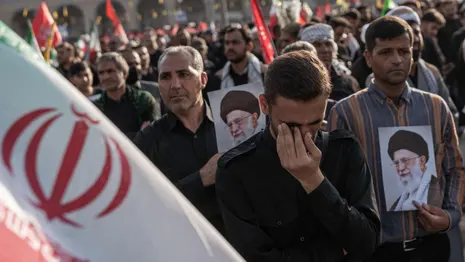
The abrupt termination of the talks has drawn attention to the fragility of the interim agreement. Iran’s Supreme Leader, Ayatollah Mojtaba Khamenei, had previously endorsed the MOU despite some reservations, while the US officially lifted its blockade of Iranian ports as part of the deal. However, before the talks were called off, Iran’s semi-official Tasnim news agency indicated that its negotiators required visible progress on the interim agreement from the US before proceeding with further negotiations. It noted that there was no confirmation of the Iranian delegation’s participation in Geneva.
The delay in sending the Iranian delegation was attributed to a report from Al Mayadeen, an Arabic-language news network aligned with Hezbollah. The report stated that Tehran was postponing its representatives’ arrival in Switzerland due to Israel’s continued military operations in Lebanon. Israel, not a party to the peace agreement, has maintained its offensive, accusing Hezbollah of violating the ceasefire. In response, the armed group asserted that Israel was the primary aggressor, with Hezbollah fighters reportedly destroying three Israeli tanks in the southern region.
The current conflict began on March 2, when Hezbollah launched rockets at Israel in retaliation for the assassination of Iran’s former supreme leader, Ayatollah Ali Khamenei, by US and Israeli forces. Since then, Israel has conducted a bombing campaign in south Lebanon, escalating tensions in the region. The US-Iran agreement, while a step toward normalization, has not fully pacified the situation, as both sides continue to assert their military objectives.
With the talks canceled, the focus has shifted back to the immediate crisis. The United States faces pressure to demonstrate its commitment to the ceasefire, while Iran seeks assurances that the interim deal will lead to tangible progress. The abrupt nature of the cancellation highlights the challenges of maintaining diplomatic momentum amid ongoing hostilities, raising questions about the future of the peace process and the potential for renewed conflict.
As the situation unfolds, the international community watches closely. The MOU was seen as a critical opportunity to address regional security concerns, but its effectiveness now depends on the ability of both parties to curb violence and adhere to the ceasefire terms. The coordination between Iran and Hezbollah, which has been a cornerstone of the agreement, remains under scrutiny as the attacks continue to disrupt the fragile peace.
The US and Iran must now navigate a complex geopolitical landscape. While the talks were intended to solidify their collaboration, the current escalation underscores the difficulties in achieving lasting stability. The White House’s decision to cancel the meetings signals a prioritization of immediate security concerns over the long-term negotiation process. This move may also influence the broader regional dynamics, particularly as Israel continues its military campaign and Hezbollah retaliates, keeping the conflict alive.
Amid these developments, the role of international mediators becomes more critical. France’s intervention highlights the need for multilateral efforts to de-escalate tensions, while the US must balance its support for Israel with its commitments to Iran. The cancellation of the talks serves as a reminder that diplomatic progress is often contingent on the cessation of hostilities, and any setbacks could delay the realization of a comprehensive peace deal.
As the situation evolves, the outcomes of this crisis will have far-reaching implications. The US-Iran agreement, though a significant milestone, remains vulnerable to regional instability. The next steps in the peace process will depend on the willingness of both sides to demonstrate goodwill and address each other’s security concerns. Until then, the conflict in Lebanon and the surrounding areas will continue to shape the geopolitical landscape, keeping the world on edge.