Zelenskyy’s ‘If Ukraine Burns, Your Moscow Will Burn’ Warning
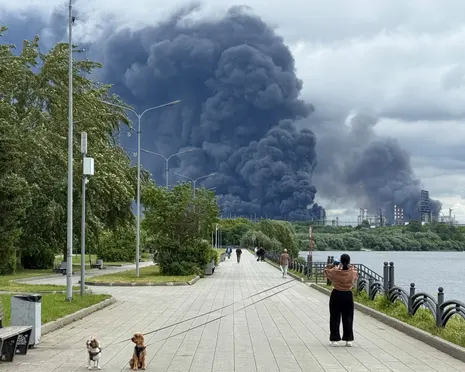
Wanderstayfinder.com – During an EU summit in Brussels, Ukraine’s president, Volodymyr Zelenskyy, issued a bold warning: “If Ukraine burns, your Moscow will burn,” as tensions rose after a series of drone strikes targeting Moscow. The attacks, which hit the city’s oil refinery for the second time this week, highlighted Ukraine’s growing ability to strike deep within Russian territory. Zelenskyy’s message, relayed through a voice recording shared with journalists, underscored the risk of a broader conflict and the potential consequences for Russia’s leadership. This declaration came as international allies debated how to further support Kyiv’s war effort.
Strategic Strikes on Moscow
Moscow experienced coordinated drone attacks overnight, focusing on key energy facilities to disrupt Russia’s strategic infrastructure. The oil refinery, a vital hub for fuel production, was again targeted, signaling a shift in the war’s dynamics. Analysts noted that these strikes aimed to pressure Russian authorities and demonstrate Ukraine’s capability to strike at the heart of the capital. The assault, which lasted through the early hours, marked a new phase in the conflict, with Moscow’s vulnerability becoming a central point of discussion among NATO and EU officials.
“We don’t want this war, we never did, and everyone knows it,” Zelenskyy stated. “But if Ukraine burns, your Moscow will burn.”
The president emphasized the need for sustained international solidarity, urging Europe and the U.S. to enforce economic sanctions on Russia’s defense and energy sectors. Zelenskyy argued that these measures could force President Vladimir Putin to reconsider his aggressive strategy and pivot toward peace. His remarks reflected a strategic pivot in the narrative, framing Ukraine’s survival as critical to Russia’s geopolitical stability and the survival of its leadership.
Hegseth’s NATO Push
Earlier in the day, U.S. Secretary of Defense Pete Hegseth criticized NATO allies, accusing them of acting as “a dependency of the United States” and failing to deliver on commitments. Hegseth described NATO’s response to recent strikes as “shameful,” calling for a stronger U.S. military presence in Europe. His comments aligned with efforts to realign the alliance with Washington’s strategic goals, particularly in light of Russia’s expanding influence and the threat of further attacks on Moscow.
Hegseth’s remarks highlighted internal divisions within NATO, as some members lagged in financial and logistical support. Plans to strengthen U.S. military installations in Poland and Lithuania were seen as key steps to address this imbalance. These nations, eager to deepen ties with the U.S., are positioning themselves as critical partners in countering Russian advances. The strategic realignment aims to ensure Europe’s defenses are bolstered against potential future conflicts.
EU Summit and Membership Talks
The EU summit, held in Brussels, marked a significant milestone for Ukraine’s path to membership. European Council President António Costa called the week “historic,” as formal accession negotiations began. He emphasized the collective effort of the EU, U.S., and allies like Canada, Japan, and the UK to sustain support for Kyiv amid the war. Ukraine’s resilience and territorial gains were cited as evidence of progress toward a lasting peace, though challenges remain in securing long-term commitments.
Ursula von der Leyen, the European Commission’s president, echoed Costa’s sentiment, stating that Ukraine “deserves it” due to its reforms and determination. She highlighted Russia’s economic struggles and digital censorship as signs of the war’s growing impact. Meanwhile, Moldova initiated its first round of EU accession talks, with Lithuanian President Gitanas Nausėda expressing confidence in the process. The war in Ukraine is increasingly seen as a catalyst for shifts in Moscow’s political landscape.