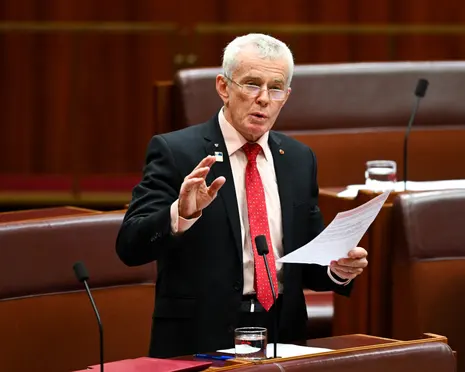
One Nation Senator Malcolm Roberts Advocates for Comprehensive Abortion Ban
Wanderstayfinder.com – At a recent Brisbane Christian conference, Senator Malcolm Roberts, a prominent figure in the One Nation party, expressed his intent to push for a complete abortion ban within the party’s policy framework. His remarks mark a significant shift from the current stance of the party’s leader, Pauline Hanson, who has previously emphasized a more moderate approach. Hanson stated during a National Press Club address earlier this week that abortions should be restricted to the first 20 weeks, allowing women to make decisions up to that point. Roberts, however, argued that the party should take a stronger position by aiming to eliminate abortion entirely.
Contrasting Views Within the Party
The weekend Church and State summit, which brought together various conservative and religious groups, highlighted the internal debates within One Nation. Roberts was asked why the party hadn’t adopted a stricter policy, prompting him to respond, “That’s becoming my goal.” He plans to propose a full ban to the party leadership, suggesting that while the current policy focuses on reducing the most extreme cases, a more radical approach is necessary. “We need to reconsider some things,” he said, adding that the issue would be subject to a conscience vote among members.
Hanson’s position has been a point of contention, as she has defended early-term abortions for medical reasons. During her press club appearance, she stated, “I’d rather educate women to use contraceptives than to go through an abortion. Too many abortions in this country, anyway.” This contrasts with Roberts’ more absolute stance, which aligns with the views of the anti-abortion movement. The movement, which has gained momentum since Australia’s abortion laws were decriminalized, now seeks to reintroduce stricter regulations.
Political Strategy and Religious Influence
Roberts credited his evolving perspective to the Church and State organization, particularly its founder, Dave Pellowe. At the summit, Pellowe delivered a compelling argument, describing himself as a writer and speaker focused on Christian engagement in public life. He emphasized the moral implications of abortion, stating that women who “commit child sacrifice” are condemned by God and considered guilty of murder. “Feminism has had a demonic influence on the culture,” Pellowe claimed, noting that it has contributed to the normalization of abortion as a routine procedure.
“Every murderer knows they’re guilty of murder,” Pellowe asserted, framing the debate as a spiritual and cultural battle. His remarks reflect the broader mission of Church and State, which aims to “effectively redeem the culture” by integrating religious values into political discourse. Pellowe has previously discussed the “long march” to infiltrate political parties in large numbers, stating, “Let’s end the careers of politicians who want to keep funding the killing of Australians. They must be replaced … Until you do, you are fired. You’re gone.”
Roberts’ alignment with Pellowe’s vision underscores the growing influence of religious groups in shaping One Nation’s agenda. The senator’s recent remarks suggest a strategic shift toward more conservative policies, potentially challenging the party’s existing positions. This internal conflict highlights the diverse opinions within the party, with some members advocating for stricter abortion laws and others supporting a more balanced approach.
Legislative Efforts Across States
Recent legislative activity in several Australian states illustrates the increasing pressure to regulate abortion. In Queensland, a bill aimed at stopping nurses and midwives from prescribing abortion medication was defeated. Similarly, a South Australian proposal to restrict abortion access from 25 weeks faced a narrow loss in the lower house, with a 36-9 vote split. Meanwhile, a sex-selective abortion bill is currently under consideration in New South Wales.
These efforts are part of a broader campaign by anti-abortion groups to reintroduce criminal penalties for abortions. The movement has formed alliances with organizations such as the Australian Christian Lobby, FamilyVoice, and Answers in Genesis. Matthew Cliff, representing Cherish Life, described the collaboration as a “two-year strategic effort,” noting the group’s commitment to working “with other like-minded organizations” to drive policy changes.
“We keep on working, we’re always strategising,” Cliff said, emphasizing the persistent nature of the movement’s campaigns. This includes not only legislative proposals but also efforts to replace politicians deemed insufficiently aligned with their goals. The recent Queensland bill, introduced by former One Nation MP Sarah Game, who later joined Family First, was supported by key figures including the premier, Peter Malinauskas, and several opposition members. Despite this backing, it ultimately failed, highlighting the challenges faced by the movement in gaining widespread political support.
The push for stricter abortion laws has intensified since the overturning of Roe v Wade in the United States, which has inspired similar movements in Australia. While the current One Nation policy seeks to “roll back brutal and extreme abortion law,” Roberts’ proposal represents a more aggressive strategy. This divide within the party raises questions about the future direction of One Nation’s platform and its potential impact on national debates around reproductive rights.
Healthcare and Social Implications
Healthcare professionals have voiced concerns about the potential consequences of such policies. The Royal Australian and New Zealand College of Obstetricians and Gynaecologists issued a statement warning that the Queensland bill “would eliminate access to abortion in serious and complex circumstances.” The group criticized the bill for overlooking the “quality of a woman’s life” and the importance of reproductive choices in maintaining physical and mental wellbeing.
Despite these objections, the anti-abortion movement continues to grow in influence. Roberts’ advocacy, coupled with the efforts of Church and State, suggests a movement that is both ideologically driven and politically active. The senator’s focus on a “conscience vote” indicates a willingness to allow members to align with more extreme positions, potentially reshaping the party’s legislative priorities.
As the debate over abortion continues to evolve, the actions of figures like Roberts and Pellowe may play a critical role in determining the future of reproductive rights in Australia. Their vision of a comprehensive ban contrasts sharply with the more nuanced approaches taken by other political leaders, setting the stage for a contentious and transformative period in the nation’s policy landscape.