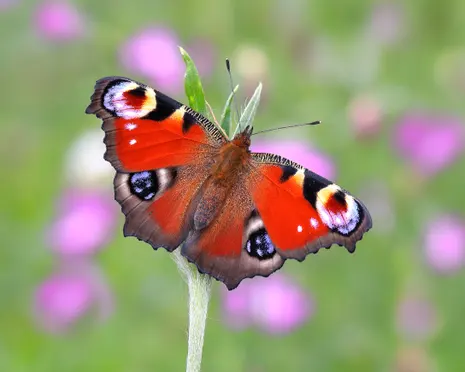
Britain’s Favourite Butterfly Revealed – and It’s a Familiar Backyard Beauty
Wanderstayfinder.com – Results from the latest poll have unveiled the nation’s favorite butterfly, and it turns out the winner is a species that many Britons have encountered in their gardens, parks, or suburban areas. The peacock butterfly, with its striking eye spots and vibrant coloration, has emerged as the top choice in a survey organized by Butterfly Conservation, which received over 20,000 votes. This common yet visually stunning insect, often spotted during the warmer months, has captured the public’s affection despite the presence of dozens of other native butterfly species in the competition.
The Poll and Public Engagement
The survey, the first of its kind, allowed participants to select their preferred butterfly from a list of 60 native species. While the peacock took the lead, the rest of the top five included the orange-tip, red admiral, holly blue, and brimstone, all of which are frequently observed in urban and rural environments. These species are widely recognized for their accessibility, making them popular among those who may not have deep expertise in entomology but still appreciate their beauty.
Interestingly, the more rare and exotic butterflies struggled to make an impression. The swallowtail, Britain’s largest butterfly, came in ninth, possibly due to its limited presence outside of specific habitats like the Norfolk Broads. The purple emperor, a butterfly revered by dedicated enthusiasts, was surprisingly placed 15th, highlighting the gap between specialist admiration and general public appeal.
“The response to Britain’s favourite butterfly has been absolutely wonderful, and we’re not surprised. It’s clear that people up and down the country love butterflies of all shapes, sizes, and colours, and voted in their thousands for their favourites,” said Kate Merry, head of engagement at Butterfly Conservation. “The peacock is a worthy winner; it’s a true showstopper and a species that I bet a lot of us picture when we think of butterflies. It’s been really special seeing people get so passionate about their favourites and throw their support behind them!”
Peacock’s Appeal and Ecology
Although the peacock butterfly may not be the most showy in terms of size or color, its widespread presence and distinctive patterns have made it a favorite among casual observers. Its lavender and yellow eye spots, combined with the rust-red and black markings, create a visually arresting effect that stands out even in crowded natural spaces. This species is known to thrive in a variety of environments, from woodland edges to meadows, and its life cycle spans the entire spring and summer season, ensuring it is a regular visitor to gardens and parks.
Experts believe the peacock’s dominance in the poll is also tied to its adaptability. Unlike some butterflies that require specific conditions or are migratory, the peacock is well-suited to the UK’s climate and landscape. Its caterpillars feed on stinging nettles, which are abundant in many areas, allowing the population to remain stable. This resilience, paired with its appealing appearance, likely contributed to its popularity among voters. The survey also noted that the peacock’s presence is often a sign of healthy ecosystems, as it thrives in habitats that support diverse plant life.
The Big Butterfly Count and Future Outlook
With the peacock’s victory, attention now shifts to the upcoming Big Butterfly Count, a major annual event that aims to track butterfly populations across the country. The count, set to begin on 17 July, will see thousands of volunteers spend 15 minutes in their local outdoor spaces, documenting the species they encounter. This year, the peacock is expected to dominate the sightings, as caterpillar numbers are currently at a high, suggesting a significant emergence in mid-July.
Meanwhile, the painted lady, which ranked tenth in the poll, is also anticipated to be a notable presence this summer. As a long-distance migrant from Africa, the painted lady has been arriving in large numbers recently, with its caterpillars feeding on thistles before the next generation is born. This influx could further boost the count’s data, providing valuable insights into butterfly distribution and environmental health. The event serves as a critical tool for scientists and conservationists, helping to monitor trends and identify areas of concern.
The poll’s findings underscore a broader trend in public interest in butterflies. While more elusive species like the swallowtail and purple emperor may not have won the hearts of the general public, their inclusion in the survey highlights the diversity of Britain’s butterfly fauna. The results also reveal a preference for species that are easily observable, which could influence future conservation strategies. By focusing on widely seen butterflies, the survey may encourage more people to participate in monitoring efforts, even if they are not familiar with the rarer varieties.
Full List of Poll Results
Here is the complete ranking of the 60 native butterfly species that participated in the poll: 1. Peacock 2. Orange-tip 3. Red admiral 4. Holly blue 5. Brimstone 6. Comma 7. Common blue 8. Small tortoiseshell 9. Swallowtail 10. Painted lady 51. Grayling 52. Lulworth skipper 53. White-letter hairstreak 54. Large skipper 55. Essex skipper 56. Large heath 57. Chequered skipper 58. Black hairstreak 59. Silver-spotted skipper 60. Small pearl-bordered fritillary
The survey not only celebrates the peacock’s popularity but also serves as a reminder of the importance of preserving butterfly habitats. As climate change and habitat loss continue to threaten many species, the public’s engagement with these pollinators is more crucial than ever. The results may inspire further efforts to protect the environments where butterflies thrive, ensuring their continued presence in British ecosystems for years to come.